How to Direct an AI Character Like an Actor
Creating more credible performances in AI by directing gestures, gaze, rhythm and emotional continuity.
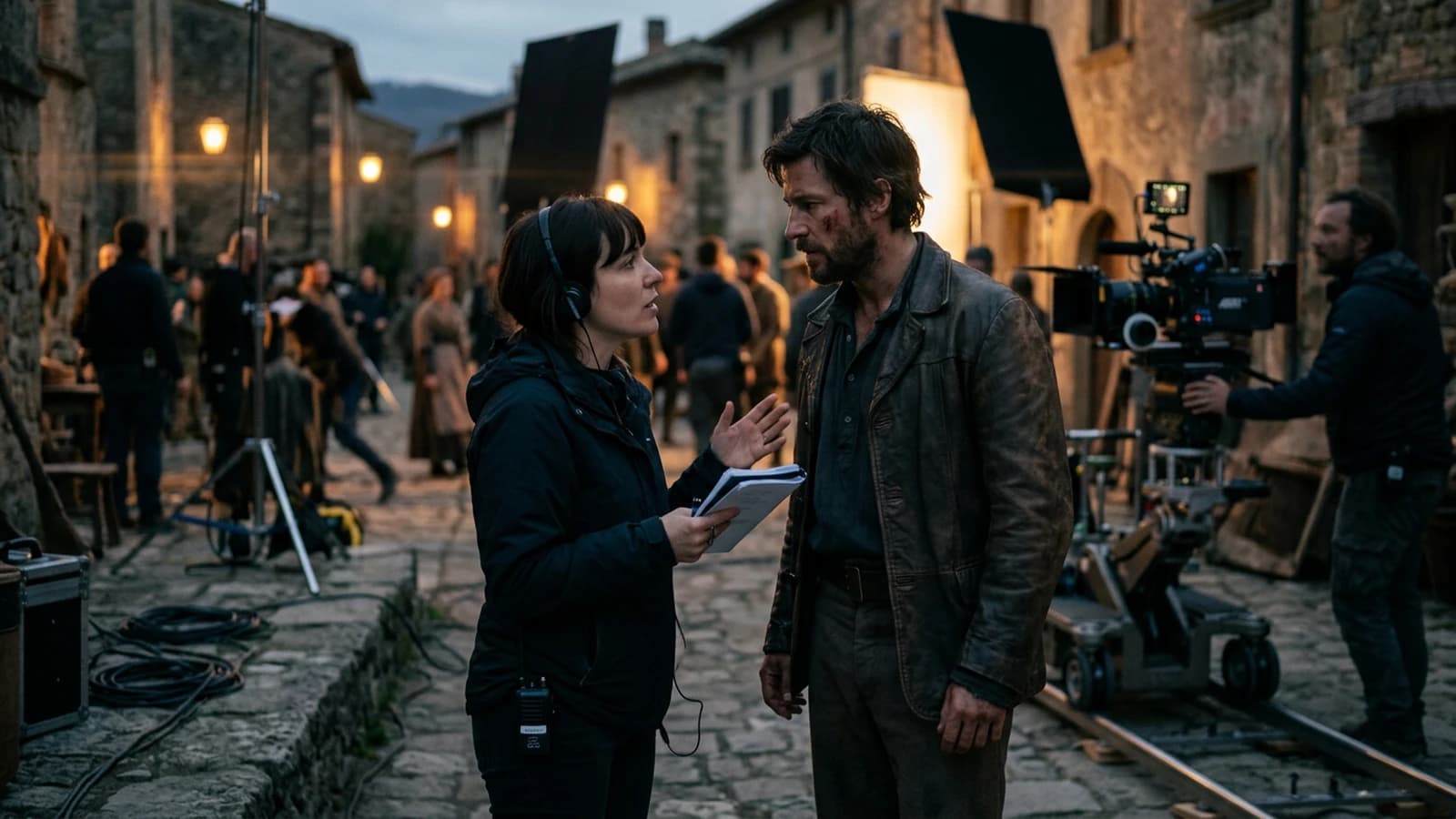
An AI character becomes credible when it plays an intention. Not when it "poses".
Directing an AI character means writing playable actions, not personality adjectives. "sad" gives little information. "looks at the door then clenches the jaw before breathing" gives a performance. To stabilize this direction across several shots, connect with how to write a prompt for a realistic, consistent character.
Direction method
- Give the character a goal.
- Describe a precise physical action.
- Describe a visible micro reaction.
- Define the emotional change at the end of the shot.
Prompt template
| Mistake | Effect | Fix |
|---|---|---|
| "be sad" | generic expression | action + gaze + breathing |
| too many gestures | confusion | one key action per shot |
| frozen emotion | inert character | micro progression |
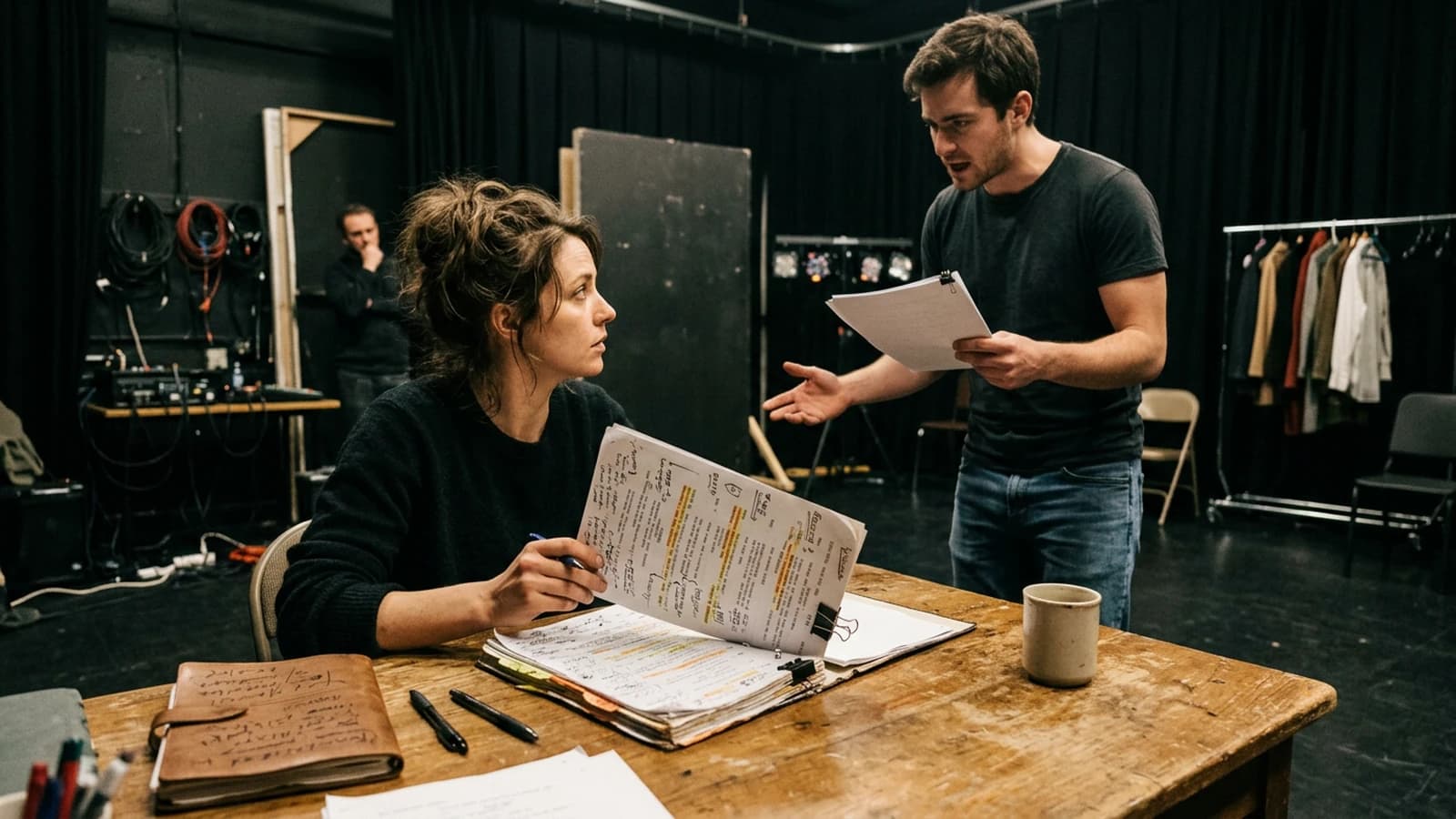
Key things to internalize:
- how to clarify an intention before execution
- how to translate an idea into an actionable instruction
- how to avoid vague directives
To keep this direction in a real shot breakdown, complete it with how to build a cinematic scene shot by shot.
Trench warfare
- directing in adjectives ("charismatic", "intense")
- forgetting the body and directing only the face
- changing personality between shots
- too much parasitic movement
- cutting before the end of the intention
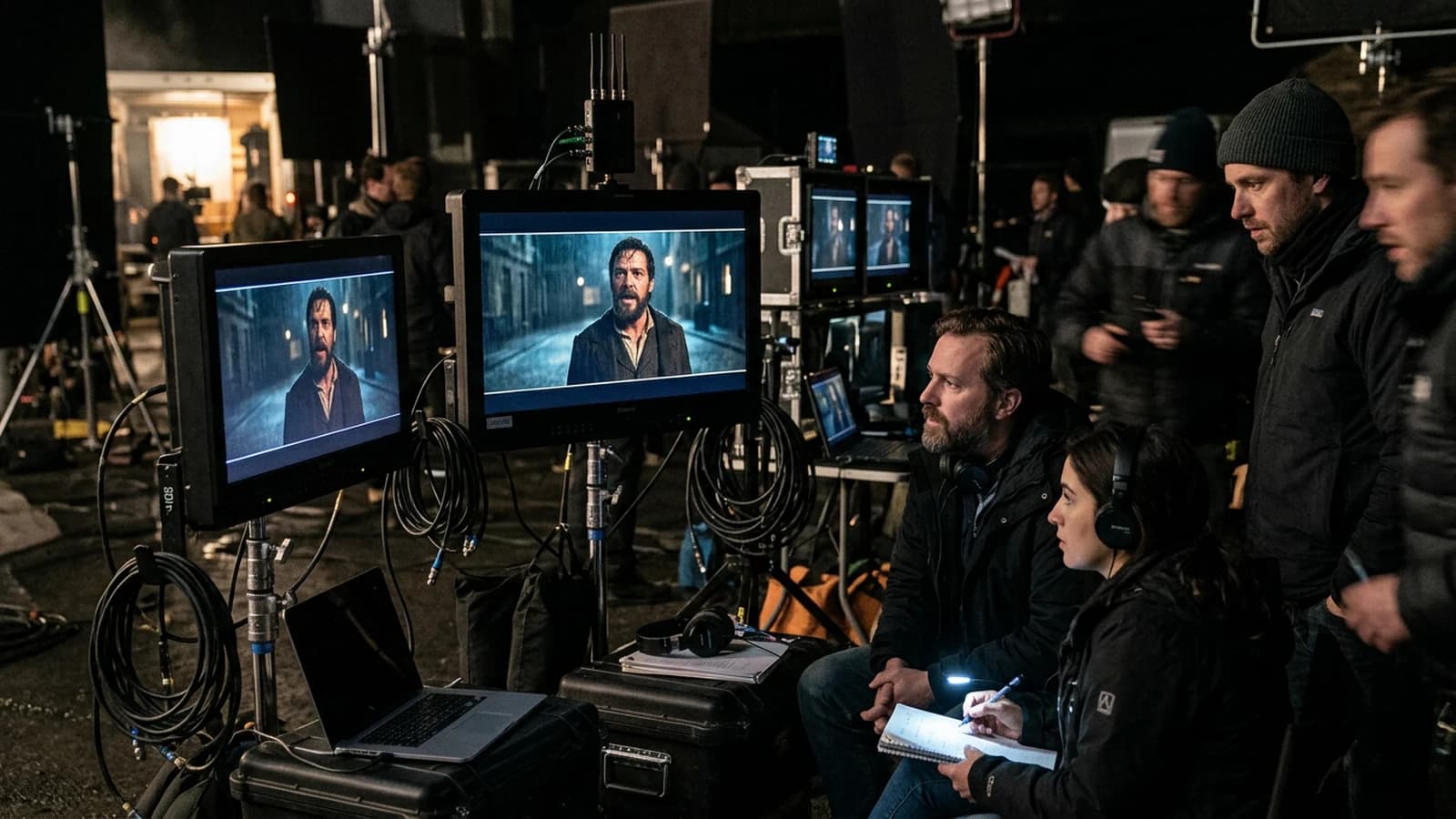
What "directing" means in AI
You are not directing a person in front of you. You are directing a synthetic performance.
So you have to translate your intention into observable elements:
- gaze
- posture
- breathing rhythm
- micro-gesture
- emotional shift
If you stay in adjectives, the result will be generic.
Pro insight A good AI direction looks like a precise actor instruction, not a vague mood.
3 detailed beginner scenarios
Scenario 1, "intense" but empty character
You write "intense face, dramatic expression". Result, a frozen and artificial expression.
Fix:
- define a character goal
- describe a physical action
- describe a change at the end of the shot
Scenario 2, inconsistent character between shots
The same character does not "play" the same way.
Fix:
- keep the scene's emotional goal
- maintain the base body language
- limit the unmotivated variations
Scenario 3, performance too theatrical
You ask for too much emotion at once.
Fix:
- micro progression
- gradual intensity
- priority to the gaze and the breathing
Ultra-granular direction workflow
Step 1, internal goal
Formula: "The character wants X, but Y stops them."
Step 2, external action
A visible action:
- clenches the jaw
- lowers the gaze
- steps forward
Step 3, reaction
A micro reaction after the action.
Step 4, change
What changed emotionally?
Step 5, continuity
Repeat the same core in the following shots.
AI actor direction table
| Intention | Bad instruction | Good instruction |
|---|---|---|
| Sadness | "be sad" | "looks at the photo, inhales, looks away" |
| Contained anger | "angry face" | "clenched jaw, short breathing, fixed gaze" |
| Doubt | "confused" | "hesitates, moves the hand forward, steps back slightly" |
| Relief | "relieved" | "released shoulders, long breath, more stable gaze" |
Massive trench warfare
1) Adjectives with no actions
Fix: always associate emotion + gesture.
2) Too many actions per shot
Fix: one main action.
3) No progression
Fix: a minimal evolution between shots.
4) Maximum expression from the start
Fix: build up the intensity.
5) Looking at the camera with no reason
Fix: orient the gaze according to the stake.
6) Forgetting the body
Fix: posture and breathing count as much as the face.
7) Changing intention at each shot
Fix: a constant goal per scene.
8) Performance with no context
Fix: always link the action to the place/object.
9) Editing that cuts the micro-reactions
Fix: leave a slight time after the key gesture.
10) Sound disconnected from the acting
Fix: align the breathing/ambiences with the performance.
11) Too much stylization that masks the acting
Fix: simplify the look to let the character read.
12) Absence of external feedback
Fix: ask "what did the character feel in your opinion?".
13) "Robot" character
Fix: introduce asymmetry and micro-imperfections.
14) Too many cuts on strong emotion
Fix: let a shot hold.
15) Final with no shift
Fix: show what changed in the character.
Practical case, a decision scene
Shot 1: the character receives an information. Shot 2: visible hesitation. Shot 3: decisive gesture. Shot 4: emotional consequence.
Each shot must add a layer, not repeat the previous one.
Hook, the frustration we see in production
You work hard. You test prompts. You launch local renders for hours. And in the end, you feel it does not hold like a real film.
The problem is not your general level. The problem is more precise: directing an AI character like an actor. As long as this brick is not solid, everything else stays fragile.
Here we are going to settle this concretely, set-oriented, edit-oriented, results-oriented.
Core concepts, what to lock before generating
Here is the minimal foundation to lock:
- emotional intention per shot
- clear visual hierarchy
- material and light continuity
- rhythm consistency between shots
- a consequence logic at the end of the scene
If a single one of these bases is missing, the credibility drops immediately. Even with a clean render.
Pro insight What makes it pro is not the complexity of the setup, it is the consistency of decision from start to finish.
3 detailed beginner scenarios
Scenario 1
A main character with no clear goal in the scene. This case happens very often when you try to compensate for a vague intention with more style.
What breaks:
- no explicit shot mission
- too many parameters moving at the same time
- purely aesthetic validation
What fixes it:
- one mission sentence per shot
- one variable modified at a time
- a reading test with an external person
Scenario 2
An inconsistent performance between two yet-close shots. Here, the defect is not only technical, it is narrative.
What breaks:
- absent emotional progression
- inconsistent cuts
- loss of focal point
What fixes it:
- a wide-to-tight progression
- controlled gaze and light matches
- a radical simplification of the secondary elements
Scenario 3
An accurate facial expression but a false, rigid body. The render may seem ambitious, but the viewer quickly feels the fabrication.
What breaks:
- texture too clean
- aggressive contrast
- movement or angle with no motivation
What fixes it:
- realistic material and micro imperfections
- sober grading
- a story-oriented shot choice
Practical workflow, ultra-granular method
Step 1, scene brief in 5 lines
Write:
- who acts
- what they want
- what stops them
- what shifts
- what changes at the end
Without this brief, no generation.
Step 2, fixed visual charter
Set from the start:
- 16:9 ratio
- dominant light logic
- grain level
- detail density
- material consistency
Step 3, recommended starting settings
| Parameter | Starting value | Why |
|---|---|---|
| Resolution | 1536x864 | balance of quality and speed |
| Steps | 28 to 42 | useful detail with no drift |
| CFG | 4.5 to 6.5 | strong but natural guidance |
| Seed | fixed per shot | reproducibility |
| Denoise img2img | 0.25 to 0.45 | controlled iteration |
| Upscale | x1.5 to x2 | clean finishing |
Step 4, production in passes
Pass 1, pure readability. Pass 2, emotion. Pass 3, material finishing. Pass 4, cut verification.
Step 5, quick human test
Show the sequence to someone who does not know your process. Ask three questions:
- what did you understand first
- which moment seemed fake to you
- what did you feel at the end
You adjust according to these answers, not according to your attachment to a shot.
Step 6, stabilization pass
- remove the beautiful but useless shots
- realign the weak shots with the intention
- harmonize the material
- tighten the rhythm
Step 7, final check
Checklist:
- readable with no sound
- credible at normal speed
- consistent frame by frame
- clean on mobile and on a large screen
Trench Warfare, what beginners do wrong and how to fix it
- Generating too fast, correcting too late. Fix, write the intention before launching the slightest render.
- Chasing a style instead of a story. Fix, each shot serves a narrative verb.
- Too many variations at the same time. Fix, one variable per iteration.
- Keeping weak shots because they are pretty. Fix, cold elimination.
- Forgetting the edges of the frame. Fix, a systematic edge-to-edge scan.
- Inconsistent lighting. Fix, a stable main source.
- Artificial skin or fabric material. Fix, material prompts and subtle post.
- Contrast pushed too far. Fix, come back to a realistic curve.
- A clip editing rhythm. Fix, cut on intention.
- No final emotional consequence. Fix, the last shot must transform something.
- No settings log. Fix, record seed, cfg, steps.
- Solo validation only. Fix, a short external test.
- A set too cluttered. Fix, remove the visual competitors.
- Monotonous shot scale. Fix, a structured progression.
- Neglected eye-line match. Fix, a gaze map before export.
- Inconsistent focal lengths. Fix, a scene focal charter.
- Too much post to save a weak shot. Fix, correct at the source.
- Overloading the prompts. Fix, dense, prioritized sentences.
- Forgetting the sound narrative. Fix, ambience and narrative accents from the pre-edit.
- Not reviewing the render the next day. Fix, mandatory cold validation.
Foire aux questions
Réponses rapides aux questions les plus fréquentes sur cet article.
Do I have to be an expert to apply this method
No. You mostly have to be rigorous. The method is designed for motivated beginners. If you apply the steps in order, you will quickly produce more readable and more credible results.
Why do my renders stay fake despite good local models
Because credibility does not come from the model alone. It comes from the intention, the consistency of choices, the material, and the cuts. A powerful model amplifies your qualities as much as your mistakes.
How long does it take to see real progress
With short, disciplined daily practice, often in one to two weeks you see a clear jump. The secret is to repeat comparable cases and to note what works.
How do I avoid getting lost in the settings
Set a base preset then touch a single variable per pass. It is the fastest way to understand the real effects of your choices.
What simple test guarantees better readability
The 2-second test. You show a shot very briefly, then you ask what the person saw and felt. If the answer is not aligned, your shot must be simplified.
Should I favor realism or style
You must favor readability then consistency, and only then style. Without readability, style looks like a filter. With readability, style becomes a signature.
Advanced workshop, directing a credible performance
You want a character that really plays, not an animated mannequin. This workshop focuses on the internal goal, gestures, micro reactions, and acting continuity.
Module 1, strict preparation
Duration, 30 minutes.
You write a single scene sheet with:
- the main emotional goal
- the secondary stake
- the expected progression
- the fixed technical constraints
- the non-negotiable failure criteria
This document must stay visible during the whole work. As soon as you deviate, you go back to the sheet.
Module 2, controlled batch production
Duration, 90 minutes.
You produce short batches, never uncontrolled marathons.
- batch A, a sober version
- batch B, a more tense version
- batch C, a more intimate version
You compare according to a single grid, not according to the impression of the moment.
Module 3, cold review
Duration, 20 minutes.
You step away from the screen for five minutes, then you come back with this checklist:
- instant readability
- material consistency
- visual continuity
- emotional progression
- overall feeling of naturalness
If two criteria fall, you do not finalize.
Module 4, test delivery
Duration, 15 minutes.
You export a short cut and have an external person watch it. You note their feedback word for word, with no arguing.
Only then do you correct.
Quick decision table
| Situation | Beginner reaction | Pro reaction |
|---|---|---|
| A shot is beautiful but inconsistent | keep it | delete it |
| The render is too clean | add effects | correct material and light |
| The narrative is vague | generate more | simplify the structure |
| The edit is soft | speed up everywhere | reinforce the shift points |
| The emotion does not come through | push the grading | correct the shot direction |
Complementary trench warfare, 10 silent mistakes
- You validate too fast when it is pretty. Fix, a mandatory comprehension test.
- You adjust the color instead of the meaning. Fix, correct the intention first.
- You accumulate versions without deciding. Fix, the rule of 3 variants max.
- You forget the mobile effect. Fix, check on a small screen too.
- You use vague words in the prompts. Fix, concrete, visible verbs.
- You confuse density and disorder. Fix, prioritize the elements.
- You do not note the winning settings. Fix, a minimum production log.
- You correct in post what should be corrected in generation. Fix, go back to the source.
- You ignore decision fatigue. Fix, short sessions and clear goals.
- You deliver with no break. Fix, cold validation the next morning.
Complementary FAQ
How do I know I am really ready to publish
When the sequence is understandable with no explanation, visually stable, and emotionally readable by an external person. If you have to explain your intention a lot, the render is not ready yet.
I am short on time, what is the minimal version of the method
Do three things, a 5-line brief, production in 3 batches maximum, a 2-minute external test. This trio is already enough to avoid the most costly mistakes.
How do I keep a personal signature without falling into cliché
The signature comes from the coherent repetition of useful decisions, not from an aggressive visual effect. Choose a light register, a rhythm, a way of framing, then hold it across several projects.
The biggest lever to progress in 30 days
The review discipline. Produce less, observe better, correct precisely. It is less spectacular in the moment, but it is what gives you a real, durable level.
Related articles
 Tutoriels
How to Frame an AI Image Like a Cinema Pro
Concrete framing methods to give your AI images a clear, cinematic visual reading.
 Tutoriels
How to Think Like a Director With AI
Move from a simple prompt to a real staging logic for credible AI images and videos.
 Tutoriels
How to Write a Prompt for a Realistic, Consistent Character
Character sheet, invariants, safe angles, and handling hands and the profile.