How to Convince a Client with an AI Video (Proof, Not Promise)
Pitch, demo, social proof and legal framework: how to get an AI video accepted by a skeptical decision-maker without lowering your price.
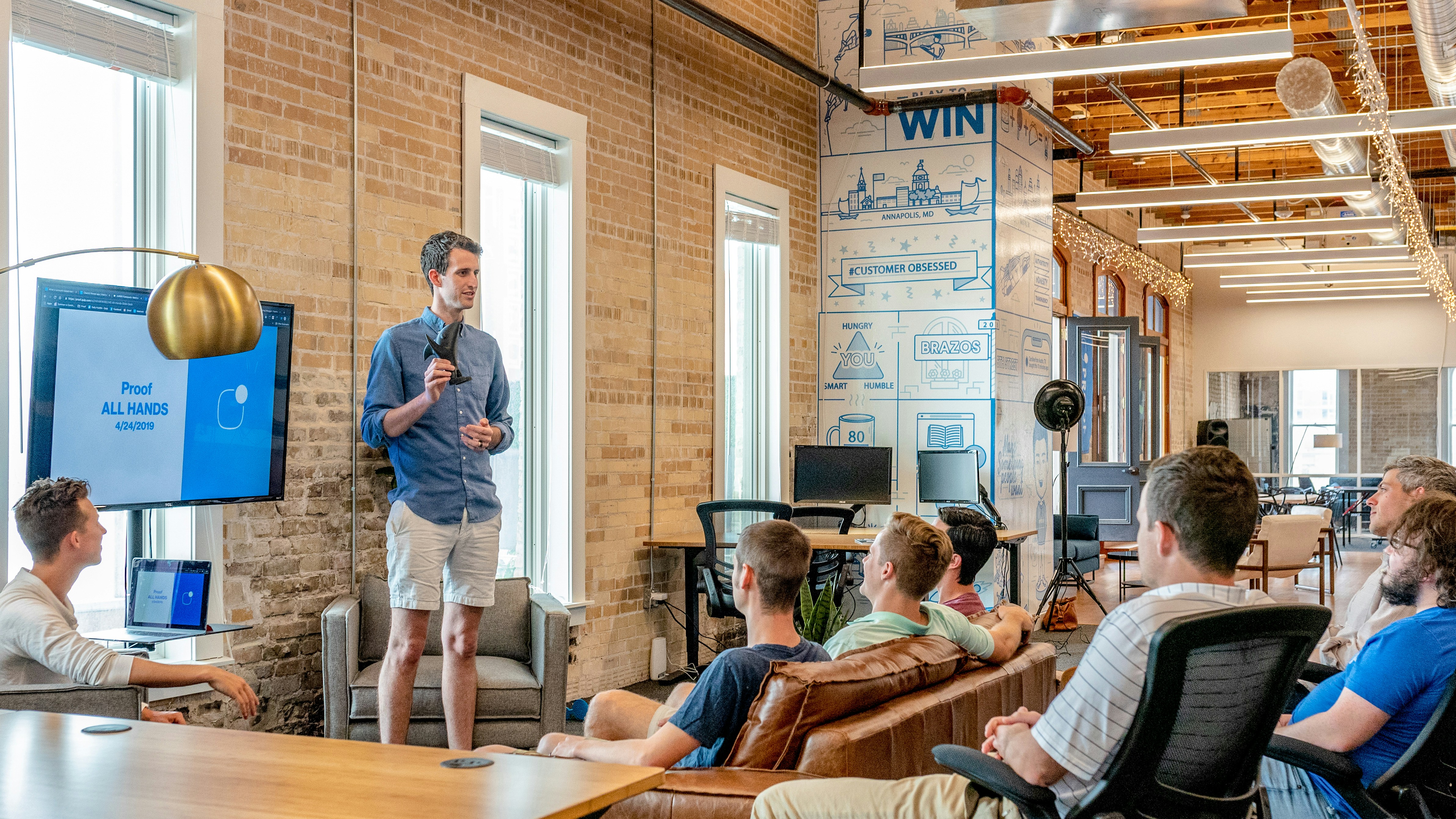
You know your video holds up. The client hesitates. They talk about "risk", "brand image", "committee". Convincing with an AI video is not an artistic duel. It is a structured sale of trust.
The client does not always refuse the technology. They refuse the uncertainty: uncertainty about the result, the deadline, the rights, the public perception. Your job is to replace the uncertainty with actionable proof and a clear framework.
This guide gives you a field method: diagnosis, use-oriented demo, packaging the risk, progressive validation, and handling objections without dropping to your knees commercially.
The real obstacle: the fear of regret
A decision-maker mostly fears two regrets.
Regret 1: choosing a creative that will look "cheap" and harm the brand.
Regret 2: choosing a provider unable to deliver on time without drama.
Your video must answer the first point. Your process must answer the second.
💡 Frank's Cut: in a presentation, talk less about "generation" and more about "validation". Humans buy checkpoints, not miracles.
Before the demo: making the right diagnosis
Without a diagnosis, your demo is a show with no target.
Useful questions:
- what action do you want after viewing?
- on which medium does the video play in priority?
- what would make the project fail in the committee's eyes?
- which elements are non-negotiable (logo, claims, tone)?
If you do not know what would make the project fail, you cannot convince. You can only impress.
To frame the sale like a studio, link your approach to our guide to selling AI videos to clients.
Choosing the right demonstration video
A good demo is not your best image. It is the video closest to the client's problem.
Rules:
- same sector or same type of use
- same expected level of sobriety
- real finishing (sound, edit)
- short duration
If you show an ultra-stylized clip to a sober corporate client, you lose the trust even if it is beautiful.
For a credible narrative, lean on our method to structure an AI video like a real film.
Table: frequent objections and useful answers
| Objection | What the client really fears | Effective answer | Proof to show |
|---|---|---|---|
| "It looks AI" | cheap / fake | direction + finishing | before/after finishing |
| "The rights" | dispute | contractual framework | sample clauses |
| "The committee" | internal disagreement | validation phases | milestone process |
| "The deadline" | delay | realistic schedule | schedule template |
| "The budget" | vague ROI | measurable goal | mini KPI or test |
This table must become your cheat sheet before each meeting.
Packaging the demo: an 8-minute structure
Minute 0-1: business context and goal.
Minute 1-3: the main video, with no interruption.
Minute 3-5: the "what is locked / what is iterable" breakdown.
Minute 5-7: the validation plan and the deliverables.
Minute 7-8: the next step and the expected decision.
If you go over ten minutes with no clear decision, you lose the energy of the meeting.
Showing the process reduces the fear more than the result
Many creatives only show the final result. Serious decision-makers want to see the path.
Show:
- a short brief
- a moodboard
- the shot segmentation
- the version choice
- the finishing
You do not have to show everything. You have to show enough to prove that you master it.
For the storyboard as proof of seriousness, cite our professional AI storyboard guide.
Proof by comparison: honest A/B
A useful comparison is not "ugly vs beautiful". It is "risky vs stable".
Example:
- a spectacular but fragile version in distribution
- a sober but stable version in mobile reading
Explain why you recommend B for their use.
This honesty increases the trust more than a single "perfect" demo.
Sound: the silent argument that often closes the sale
A client may not know how to analyze the image. They always hear the sound.
A video with a clean mix, a credible voice, and a coherent ambience sounds like "real budget".
For the voice, link your pitch to our ElevenLabs tutorial for ultra-realistic voices.
Progressive validation: selling with no risky "big bang"
Propose validation in three tiers:
- intention + style
- rough sequence
- final finishing
Each tier has an internal sign-off on the client side.
This model reduces the committee's fear and avoids massive late feedback.
Legal and transparency: defusing without dramatizing
You must be able to explain clearly:
- music sources
- AI vs human voice
- usage rights
- ethical limitations you refuse
The basics of FTC disclosures and the vocabulary of WIPO help set a serious framework, even if your client is not US-only.
Commercial proposal: linking the video to a decision
At the end, propose a simple decision:
- option A: 5-day sprint, short deliverable
- option B: full production, extended milestones
With no option, the client postpones.
For the pricing, keep a clear grid internally and align your options with measurable deliverables, not with vague promises.
Slides or no slides: how to avoid the PowerPoint that kills the emotion
If you use slides, keep five slides maximum.
Slide 1: goal. Slide 2: constraints. Slide 3: demo. Slide 4: process. Slide 5: next step.
The rest is conversation. The best sales are often dialogues, not monologues.
The silence after the video: do not panic
When the video ends, many creatives talk too fast out of anxiety.
Wait two seconds. Let the client formulate a thought.
Then, ask a precise question: "what would make you say yes today?" or "which point makes you doubt the most?".
This controlled silence increases the quality of the discussion.
Remote vs in-person: adapting the proof
Remote, optimize the streaming quality: a local file if possible, a stable screen share, a short preloaded version.
In person, control the room's light and the sound volume.
The client must not "guess" your quality through a catastrophic compression.
Marketing committee vs legal committee: two languages
Marketing wants impact, differentiation, speed.
Legal wants clarity, traceability, risk limitation.
Prepare two mini-blocks in your pitch, even if the meeting is single. You avoid being caught in the trap of a late question that blocks everything.
B2B vs B2C: adjusting the promise
In B2B, credibility often comes through sobriety, precision, and proof.
In B2C, emotion matters more, but the promise must stay honest.
The same video does not convince two different worlds without reframing.
When the client says no: useful follow-up
An immediate no is not always a definitive no.
In your follow-up, add:
- a summary of the objections
- a new micro-proof
- a smaller option
With no toxic insistence. With an honest closing date.
Internal role play: training for objections
With a peer, train on ten objections for thirty minutes.
Goal: short, factual answers, with no defensiveness.
The sale often plays out on the tone, not on the volume of arguments.
"Proof before the meeting" checklist
- video exported in two qualities (HD demo + light streaming)
- backup file on a key or offline cloud
- PDF slides as a backup
- sample contract ready
- milestone calendar ready
- examples of music/voice rights
This checklist avoids the technical shame of "it's glitching".
Convincing without lying about what AI can do
If the client wants an impossible promise, refuse with an alternative.
A signed impossible promise becomes a conflict. A calm refusal becomes respect.
Advanced use cases: proof by scenario
Scenario 1: homepage redesign
Show product readability, social proof, CTA, and the mobile version.
Scenario 2: paid social campaign
Show three hooks, same structure, fast iteration.
Scenario 3: internal training
Show pedagogical clarity, rhythm, and a stable voice.
Practical cases: three real situations and how to win them
Case A: CMO skeptical about the "fake"
Strategy: show sobriety + process + QA + disclosures.
Case B: nervous legal team
Strategy: clear contract, sources, traceability, no extreme promises.
Case C: hostile internal creative
Strategy: position AI as an accelerator, not a replacement, and propose co-creation.
Mistakes that kill the conviction
Mistake 1: tool jargon. Mistake 2: demo too long. Mistake 3: no plan B if the committee does not like it. Mistake 4: "unlimited" promise. Mistake 5: neglecting the distribution context.
After the meeting: a recap email that locks it in
Within two hours, send:
- the decisions made
- the identified risks
- the next step
- the client's response deadline
This email becomes the compass of the project.

Measurement: how to know if you convinced
Positive signals:
- questions about the schedule and the contract
- a request to forward it to another decision-maker with a clear brief
- a request to adjust the scope rather than refuse
Negative signals:
- vague compliments with no follow-up
- free requests "just to see"
Presentation storytelling: the guiding thread that avoids dispersion
Your meeting must have a guiding sentence repeated twice: at the start and at the end.
Example: "Today I show you how we get a credible video in a campaign, with a validation process that reduces the risk."
Each section must reconnect to this sentence. Otherwise the client hears interesting pieces with no conclusion.
"Show us something else": how to pivot without panicking
When a client asks for another style, do not rush into ten directions.
Answer with a question: "does the doubt concern the tone, the message, or the level of finishing?".
Then, propose a second direction, bounded, with selection criteria.
This method protects you and shows that you are steering.
Using a modest but real quantified proof
You do not need a Harvard case.
A small honest number is enough: "on this type of hook, we observed a rise in CTR in an internal test" if you can defend it.
If you have no number, use a solid qualitative proof: faster validation, reduction of cycles, better multi-shot consistency.
Managing the phantom decision-maker
If the person present is not the decision-maker, your goal changes.
You have to give them a "transmission kit":
- a one-page summary
- a private video link
- three questions the decision-maker must answer
Otherwise your work dies in an intermediate mailbox.
Anticipating the price question without fleeing
You can set a frame early: "to give you an order of magnitude, our jobs of this type are generally between X and Y depending on rights and volume".
It is not a quote. It is a filter.
It avoids investing ten hours for an incompatible budget.
Proof by deliverables: showing what the client really receives
Show an anonymized sample folder: exports, readme, versions.
B2B buyers love to see that you know how to deliver cleanly.
Ethical framework: what you refuse (and why it is a strength)
A small list of ethical refusals can increase the trust.
Possible examples:
- non-consensual deepfakes
- misleading content
- visual identity usurpation
You are not looking for controversy. You are looking to show a framework.
Commercial posture: calm confidence
Talk slower when the client challenges you.
Lower your tone when you explain a risk.
Calm is interpreted as mastery.
Additional practical cases: selling through a partner agency
When you go through an agency, the proof changes.
They want discretion, clean files, deadlines, and little friction.
Show an example of white-label delivery: naming, layers, versions.
Post-sale ritual: turning the signature into impeccable onboarding
The moment you convince is not the signature. It is the first 48 hours after.
A clean onboarding reinforces the client's decision and reduces the regret.
Operational conclusion
Convincing with an AI video means convincing with framed proof. The video opens the door. The process walks into the room. The contract closes the loop.
When you master these three levels, you no longer need to beg.
The difference between an anxious creative and a credible studio is often ten more minutes of framework, not ten more hours of generation.
If you apply one thing tomorrow morning, train yourself to end your meetings with an explicit decision, even a small one. It is that detail that turns admiration into a signature.
You do not need to be the best speaker. You need to be the clearest about what you propose, what you refuse, and what you expect from the client to move forward.
It is simple. It is rare. So it works.
Foire aux questions
Réponses rapides aux questions les plus fréquentes sur cet article.
Should I show prompts to reassure?
Rarely. An isolated prompt does not prove the delivery quality. Instead show a chain: brief, direction, choices, finishing. If you show a prompt, make it a simplified pedagogical illustration, not an ego demonstration. The client wants to understand how you avoid the cheap, not how you write technical gibberish. Finally, always link the prompt to a decision: "we chose this version because it minimizes the risk of artifacts on a face close-up", for example.
How do I handle a client who wants to "see other styles" endlessly?
You frame it: two directions maximum per phase, then mandatory validation before opening a new phase. Otherwise you enter a spiral of free exploration. Explain that each style multiplies the risk of brand inconsistency. Serious clients often accept this frame if it is set calmly and early. If the client insists anyway, propose a paid "extended creative exploration" option with bounded deliverables, otherwise you turn your studio into a free laboratory.
What do I do if the committee wants to compare with traditional production?
Do not oppose the two worlds like a fight. Show their criteria: deadline, cost, iteration, risk. Position AI as a tool in a professional chain, not as a religion. Propose a bounded comparison test: same brief, two approaches, clear decision criteria. You can also propose a hybrid: minimal shooting + AI complements, when relevant, because it often reduces the fear of "all virtual".
How do I avoid overpromising on "cinema" quality?
Define what "cinema" means for them: readability, texture, light, sound, rhythm. Then, show an example that matches this definition, not your personal fantasy. If their expectations are unrealistic for the budget, say it early with a realistic alternative. An honest promise beats a heroic promise that explodes in post. Add a sentence of pedagogy about the cost of finishing: many people confuse "generation" and "broadcast-ready".
Should I offer a free mini video to convince?
Avoid unbounded free work. If you must, propose a paid diagnosis or a very limited micro-sequence with a single goal. Full free work teaches the client not to pay. If you offer something, make sure to exchange it for a signal of commitment: a decision meeting, a written brief, or a schedule validation. And document even the mini deliverables as internal cases if you can do it cleanly, because they feed your portfolio without devaluing yourself.
How do I integrate the "no visible AI" constraint on the brand side?
Talk instead about the result and the compliance. Some brands want to avoid any "gimmick" perception. In that case, emphasize the broadcast finishing, the consistency, and the quality control. AI can stay an internal production detail as long as the legal and ethical transparency is respected according to the context. Also prepare an internal note for their comms team: it often reassures more than a creative speech.
What is the best time to talk price?
After aligning the goal and the proof, not before. If you talk price too early, the client compares with no context. If you talk price too late, you waste time on impossible expectations. The right timing comes when the client starts asking operational questions: formats, deadlines, revisions. If the budget is a blocker, propose a smaller option rather than breaking your quality level on an impossible promise.
How do I close a meeting without being heavy-handed?
End with a closed question and a date: "Would you like to go with the sprint option this week? I can send the quote today and start Monday if you validate before Friday 5 PM." Clarity reassures as much as talent. If the client hesitates, propose a micro action: send a schedule example or a brief template, to keep the momentum without toxic pressure. If you reuse the same demo between prospects, change the intro and the conclusion: two minutes of specific contextualization are enough to avoid the copy-paste effect.
Also explain why this case stays relevant despite the sector differences: method, controlled risks, level of finishing, and validation criteria.
This small personalization effort costs little time and strongly increases the conversion, because it proves that you listen before you show.
Related articles
 Business
How to Build a Credible AI Portfolio (That Gets You Signed, Not Just Liked)
Structure, proof, use cases, and finishing: the method to show a serious AI practice with no hollow showcase effect.
Business
How to Use AI to Create Profitable Ads (Not Just Pretty Ones)
A creative and media method to produce AI ads that perform: angle, hooks, tests, budget and iterations.
Business
How to Stand Out in the Creative AI Market (With No Buzz Race)
Positioning, proof, style, process and niche: a realistic strategy to get out of the noise and attract clients who pay.