AI Film Distribution: Strategies to Explode Your Visibility
A concrete action plan to distribute an AI film, activate the right channels and transform a finished project into a real audience, with a launch workflow, useful KPIs and a creator-oriented FAQ.

You just finished a generated or hybrid short film. You are proud of the result. You upload it once, you cross your fingers, and three days later you feel stupid because the views stagnate. It is not that your film is bad. It is that you confused publishing and distributing. AI film distribution is not a click. It is a campaign, with formats, follow-ups, proofs, and a niche that understands why your project exists.
In 2026, visibility is mostly won when you treat your film as a hub: one long piece at the center, and around it a constellation of native clips, making-ofs, breakdowns, and messages that speak to precise communities. If you stay on the idea of the single big night, you will hit the wall of indifference. This guide gives you a trench method, real scenarios, and a list of classic mistakes to fix before rewiring your whole strategy.
Core concepts: the new logic of AI film distribution
The first concept to lock is the format hierarchy. The feature or the complete short is rarely the first contact. On social, people stumble on a vertical excerpt, a twelve-second hook, or a comment about your AI process. The whole film becomes the destination, not the entry door. When you organize your calendar like that, you stop judging your success only on an isolated view curve, and you start measuring a funnel: discovery, interest, long viewing, share, then action (subscription, pro contact, newsletter).
The second concept is the niche that beats the mass. An AI film often has a sharp technical, aesthetic or narrative angle. If you dilute your message to please everyone, you talk to no one. Better a clear sub-universe: artisanal science fiction, minimalist thriller, visual experimentation, satire, synthetic documentary. Your positioning must be readable in one sentence, otherwise your thumbnails and your titles will never be able to do the work.
The third concept is the social proof as accelerator. A selection in a festival aligned with your tone is sometimes worth more than a badly targeted paid campaign. A return from a recognized creator, a podcast that breaks down your workflow, a specialized newsletter that cites your project, all that increases the perceived credibility. Pro distribution is not only posting. It is building trust points that make the click less risky for a busy viewer.
The fourth concept is the mandatory iteration. The platforms often reward the freshness and the clarity of the user signal. If you do not retest titles, thumbnails, hooks, and formats, you leave enormous gains on the table. It is not a creative whim. It is steering. You must have a small list of weekly experiments: version A of the hook, version B of the hook, same intention, different execution.
The fifth concept, often neglected, is the narrative continuity between your satellites and your film. If your excerpt promises a tension the film does not hold, you get early abandons and a negative signal. For an AI project, the temptation is to show only the spectacular effect. Yet the viewer stays when the story and the rhythm hold up. So think of your clips as promises consistent with the long piece. To reinforce the perceived quality of the images and the cuts even before the release, also browse our guide to the continuity errors and visual inconsistencies on an AI film.
💡 Frank's Cut: keep a positioning sentence of twelve words maximum in your launch notes. Each hook, each thumbnail, each email must be able to reinject it without distorting it. If you cannot, it means your packaging is still fuzzy.
The trench workflow: distributing an AI film intelligently
Before opening a single publishing tool, you go through a launch kit phase. Short trailer, poster readable in small format, synopsis in three length levels, strong captures with no brutal spoil, clean subtitles, and an honest technical sheet on what is AI, what is not. It is not bureaucracy. It is what lets a curator or a partner relay you without asking you for ten files again.
Then you build a sequence over two to four weeks. Week one, teasing and promise. Week two, launch of the film and explanatory material. Week three, behind the scenes and real error corrections. Week four, social proofs and commented excerpts. This structure avoids the flash-in-the-pan effect. It also gives the impression of a living project, which increases the probability of qualified shares.
Then you activate the pro and community channels: targeted festivals, newsletters, Discord and forums aligned with your genre, podcasts, and specialized accounts that love breakdowns. The classic mistake is to send a hundred generic messages. Better thirty personalized messages with a sentence that proves you know their editorial line.
Finally you link everything to a simple measure. Retention on the long format, click rate on the thumbnails, shares with comments, and useful conversions. The raw views can lie, especially if the audience bounces fast. For more commercial goals, link this plan to our guide on using AI to create profitable ads, because the same discipline of promise and proof applies.
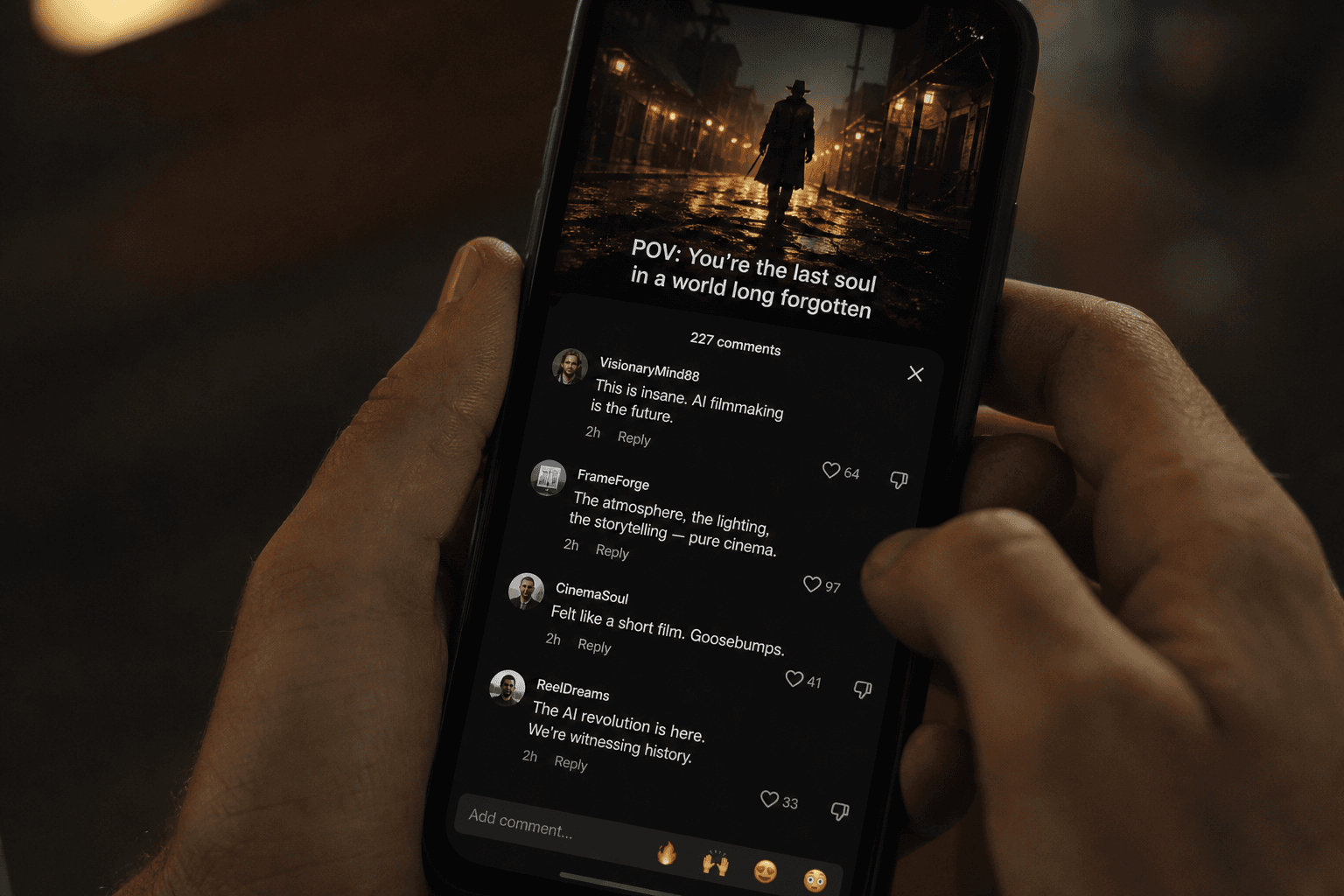
Scenario A: AI science fiction short film, YouTube-priority release
You are solo, your film is eight minutes, your universe is minimalist cyberpunk. You prepare five vertical hooks that show three distinct places and a short line that poses the stake. You publish two hooks before the drop, then the film in 4K with chapters. On the day, you add a short post that explains a color decision with no useless jargon. The next day, you post an error you fixed at the edit, with a light before-after. The third day, you invite your audience to choose between two thumbnails for a next excerpt. You stay in a single promise: a grimy but credible future, with no plastic overexposure.
Scenario B: hybrid film, festival goal plus online presence
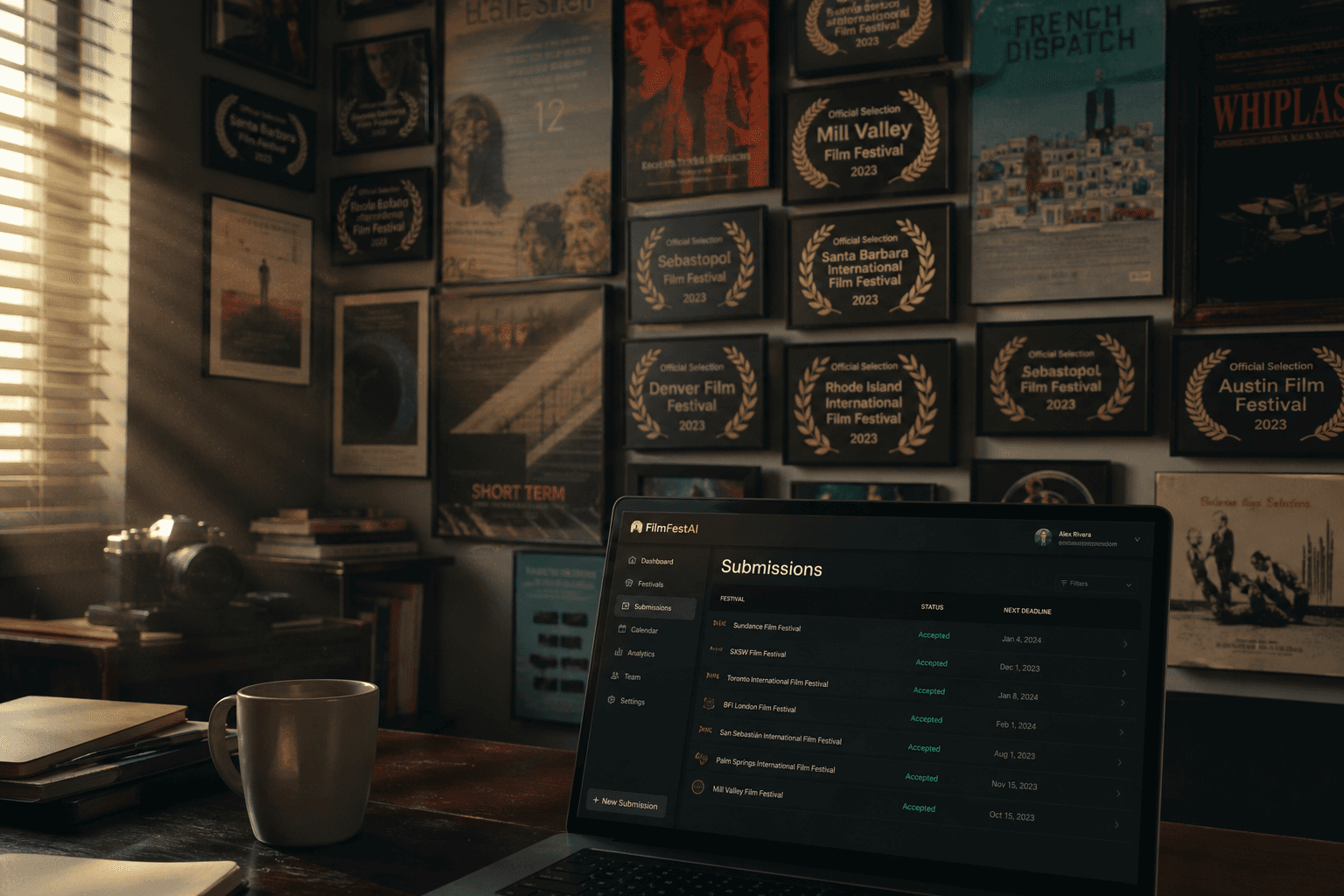
You aim at a handful of festivals that accept AI under transparent conditions. You prepare a short EPK PDF: intention, team, tool credits, and a clear declaration on the data and the consent if you use faces or voices. In parallel, you maintain a weekly making-of thread, not to flex, but to show the method. When a selection arrives, you translate the news into content: jury quote if available, screenshot of the selection, and an excerpt that matches the most cited scene. You link this scenario to a page or an article that explains your pipeline, which reinforces the perceived E-E-A-T.
Scenario C: project to land video clients
You are not looking for a million views. You are looking for ten useful contacts. In that case, your film becomes a proof of method. You publish a twenty-minute breakdown on a secondary channel, and you keep a short version on the main channel. You add a case study PDF with goal, constraints, deliverables, and observed results. Each public excerpt must end with a clear intention: portfolio, contact, or newsletter. For the short and striking ad format, our guide on creating a video ad with AI gives useful landmarks on the promise and the hook.
Step 1: package the launch like a product
Start by defining three public promises compatible with your film. An emotional promise, a style promise, a mystery or twist promise. Then, for each promise, create two video hooks of ten to twenty seconds, with burned subtitles for mobile. Add three testable thumbnails, not three futile aesthetic variations, but three different readings of the same strong shot.
Also document an honest making-of angle. People quickly feel the bluff. If you used a precise model, a lip sync tool, or a ComfyUI chain, say it soberly and explain the real time gain. It positions your film as a production, not as an empty technical demo.
Finally, prepare a landing page or a pinned post that groups links, credits, and a mini FAQ. You reduce the friction for the curators. The documentation standards for creators, including on content transparency, are a good global landmark: the official documentation for YouTube creators insists on clarity, regularity, and optimization of the discovery elements.
Step 2: publication waves rather than a single peak
The first wave must be short and emotional. Few words, a lot of image, an open question at the end of the clip. The second wave carries the complete film and a text that explains why this project exists now. The third wave shows the work: errors, false leads, iterations. The fourth wave amplifies the social proof: quotes, commented excerpts, audience reactions.
Between the waves, watch the signals. If the retention drops at thirty seconds on the long, it is not necessarily the fault of the whole film. It can be an intro badly calibrated for cold traffic. Cut an alternative version of the first thirty seconds and test. It is thankless work that pays off big.
Step 3: festivals, curators, and qualified relays
Choose festivals that match your tone and your legal constraints. The submission platforms like FilmFreeway concentrate the calls, but the quality of the targeting takes precedence over the quantity. Read the rules on AI. Prepare a clean master, a stable audio file, and a clear technical sheet.
When you follow up with a programmer, stay brief. One contextual sentence, one link, one capture. If you have no answer, a reminder at ten days is enough. Harassing kills your image. For the newsletters and independent media, propose a light exclusive: a scene as a preview, a short interview, or a tutorial linked to your pipeline.
Comparative table: AI film distribution strategies
| Strategy | Best for | Key format | Main indicator | Main risk |
|---|---|---|---|---|
| YouTube hub + satellites | Long-term growth, search | Film + horizontal excerpts | Retention and subscribers | Weak thumbnails |
| Native short networks | Fast discovery | Vertical 9:16, tight hooks | Completion and shares | Promise not kept |
| Targeted festivals | Credibility, pro network | DCP or festival file, EPK | Selections and mentions | Strict AI rules |
| Newsletter and communities | Warm audience | Behind the scenes, breakdown | Click rate | Editorial time |
| Creator partnerships | Audience transfer | Short collab, value exchange | New qualified subscribers | Tone mismatch |
Troubleshooting: what beginners break in distribution
The first breaking point is the single release. You post, you wait, you conclude it does not work. Fix by planning at least eight contact points over fourteen days, even simple ones. A hook, a question, a scene, a behind the scenes, a poll, a quote, a thank you, an announcement of a subtitled version.
The second point is the format mismatch. You recycle a horizontal into a vertical with no real reframe. Fix by reframing for the subject, increasing the readability of the faces, and adding subtitles. On mobile, if you do not understand the stake in two seconds, you scroll.
The third point is the generic thumbnail. If your image could illustrate any AI film of the moment, it does not sell your story. Fix by choosing a shot with clear tension, a readable contrast, and three words maximum if you add text.
The fourth point is the absence of a niche. You talk to everyone and you reach no one. Fix by writing five sentences about your ideal viewer: what they love, what they hate, what they share, what they criticize. Then rewrite titles and hooks for this person only.
The fifth point is the technical shame. You hide the AI and it creates a gray zone that scares off the pros. Fix by being transparent about the tool and generous about the method, with no hollow self-promotion. Trust is not a speech. It is the consistency between what you promise and what you show.
The sixth point is the fuzzy measure. You do not know if the problem is the thumbnail, the intro, or the story. Fix by isolating variables. One week you test thumbnails, another you test the intro, another you test the short hook. Note everything in a simple log.
For durable visibility off-platform, keep in mind the SEO bases: clear titles, useful texts, pages that explain the project with natural keywords. The Google SEO Starter Guide stays a sober reference to structure readable and useful pages, without cheating with empty tricks.
💡 Frank's Cut: if you only have one hour a week, dedicate half to the making of hooks and the other half to the targeted follow-ups. Not the opposite. The hooks feed the funnel, the follow-ups feed the partners.
Foire aux questions
Réponses rapides aux questions les plus fréquentes sur cet article.
Should you release first at a festival or online?
It depends on your main goal and the rules of the festivals you aim at. If you look for credibility and pro meetings, a well-chosen festival circuit can open doors a raw release will not give right away. If you look for a broad audience and usage data, an online release with native satellites is more suitable. In many cases, a hybrid model works: selective presentation in physical or online, then public publication after a window, or the opposite, depending on the constraints. The important thing is to decide early, because a bad sequence can invalidate a selection or kill the social momentum. Write in black and white what you optimize first: credibility, views, or business leads.
How many derivative contents to plan for an AI short film?
For a short, aim for at minimum ten to twenty reusable pieces over three to four weeks, with different roles. Some clips must explain the story, others the process, others a strong scene with no spoil. Add hook variants to test distinct angles. The goal is not to spam, but to prevent your project from disappearing after forty-eight hours. Also prepare short text formats: three threads, five captions, two carousel posts if the platform allows it. The derivation must stay consistent with the promise of the film to avoid the early abandons on the long version.
How to distribute with no advertising budget?
With no budget, you bet on the clarity of the positioning, the quality of the hooks, and the targeted collaborations. Choose a few communities where your universe makes sense, and bring value before asking for a share. Propose simple exchanges: a breakdown against a mention, an exclusive excerpt against a short interview. Avoid the copy-pasted messages. Personalize, be short, and show why your project interests their audience, not only yours. Finally, optimize your organic discovery elements: thumbnails, titles, descriptions, chapters, and subtitles.
Does SEO really help an AI film?
Yes, especially for the long tail. People search for making-ofs, tool comparisons, mistakes to avoid, and films by theme. If you publish a page or an article that explains your project with natural keywords, you capture a different intention from the social feed. Combine useful text, honest credits, and links to the video. Avoid keyword stuffing. Aiming for real usefulness aligns better with what the engines value today: clear, expert, and stable content.
Which KPIs to watch in priority on an AI film release?
Start with the retention on the long video, the click rate on the thumbnail, and the completion on the short excerpts. Add the qualified shares, that is with a comment or a mention, rather than the empty shares. If you have a business goal, measure the useful conversions: newsletter sign-up, message, quote request. The views alone can fool you if the audience bounces fast. Use these KPIs to decide what to retest, not to judge yourself morally.
How to transform an AI film into professional opportunities?
Show the method and the real constraints. A simple case study beats a flamboyant demo with no context. Prepare a short version of the film for busy pros, a long version for the audience, and a breakdown that proves your mastery of the steps. When you contact a potential client, talk about their problem, not only about your tool. The film becomes a proof, not a conversation about the models. For the commercial follow-up, our article on selling AI videos to professional clients details sober and effective pitch frames.
What to do if the AI community calls me a cheater?
Own a factual transparency about what is generated, interpolated, or captured. Explain the ethical choices and the limits. Give pedagogical content that helps others produce better. The aggressiveness often drops when you replace the mystery with the method. Stay calm, do not justify yourself in a defensive tone, and show reproducible results. Credibility comes from the visible work, not from thunderous declarations.
Are subtitles and translations worth the cost?
Yes, if you aim for an international audience or a broad discovery. Subtitles increase the mobile readability and the accessibility. Partial translations can be enough at the start: English plus the priority language depending on your market. Keep a human review on the key dialogues to avoid the meaning errors that break the credibility. It is an often underestimated reach multiplier.
Related articles
 Tutoriels
Managing Sonic Depth for an AI Short Film
A practical sound design method to give volume, distance and emotion to a generated scene.
 Tutoriels
Case Study: How I Co-Wrote My Film Using Artificial Intelligence
A field report on an AI-assisted film co-writing: what worked, what failed, and the final method.
 Tutoriels
Generating the Original Score of Your Film or Clip With AI Music
A complete method to generate an AI score that serves the narration, the rhythm and the emotion of a film or a clip.