Copyright and AI Music for a Film Soundtrack
What the tool licenses cover, client clauses, and hybrid composer + AI alternatives.
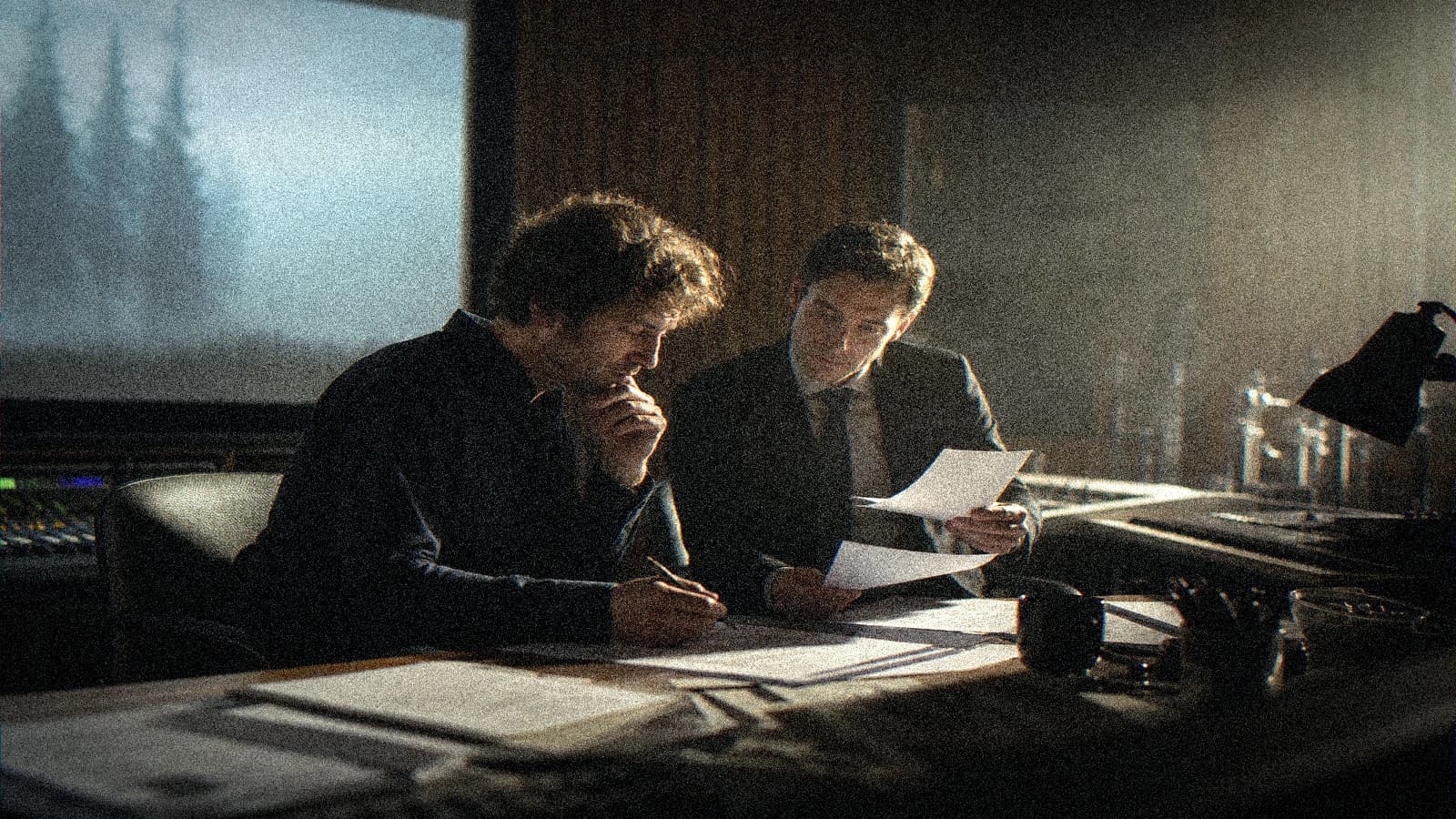
AI music has made sound creation faster, but it has also created a legal gray zone that many ignore until the first client dispute. As long as you do a personal test, the risk seems abstract. As soon as you deliver an ad, a short film, or sponsored content, the rights frame becomes central.
The subject copyright and AI music for a film soundtrack does not come down to "it is royalty-free or not". You must distinguish tool license, commercial usage right, moral right depending on the country, client contractual obligations, and traceability of what you deliver.
This guide gives you a production-oriented field method: how to choose an AI music source, document the rights scope, write the delivery clauses, and build a hybrid strategy when you must secure a premium project.
Understanding the rights layers (with no useless jargon)
When you use AI music, there are at least four layers:
- Conditions of the AI tool (what the platform authorizes).
- Locally applicable law (country of distribution and contract).
- Client contract (guarantees you promise).
- Distribution context (ad, TV, web, festival, paid ads).
The classic trap: believing that a "commercial use" mention is enough for everything.
💡 Frank's Cut: if you cannot explain in three sentences what the client can do with the delivered music, you have not yet secured your project.
What you must check before using an AI music tool
Minimal checklist:
- commercial license included or not;
- geographic restrictions;
- audience volume restrictions;
- liability clauses;
- possibility of sub-licensing to the final client;
- conditions in case of a third-party claim.
Capture the state of the conditions at the moment of production. The terms of service change. Your archive must prove what was applicable.
Legal-practical workflow for an AI soundtrack
Phase 0: musical brief + usage frame
From the start, note:
- use (organic, paid, TV, festival);
- distribution territories;
- planned exploitation duration;
- exclusivity required or not.
This legal brief saves you days later.
Phase 1: AI source selection
Do not choose only by the sound:
- compare the licenses,
- compare the proof options,
- compare the stem export capacity.
The best track "artistically" can be the worst contractual choice.
Phase 2: production and versioning
Archive:
- musical prompt,
- render version,
- generation date,
- project identifier.
If you combine AI + human composition, document precisely the share of each source.
Phase 3: verification before delivery
Before sending:
- reread the usage limits;
- check consistency with the client contract;
- prepare a rights note attached to the deliverable.
Phase 4: transparent delivery
The client must receive:
- final audio file,
- possible stems,
- "authorized / unauthorized use" note,
- recommendation to keep the proofs.
Template rights note to attach for the client
You can structure it like this:
- Music source used.
- Generation / acquisition date.
- Authorized usage scope (commercial, territories, supports).
- Known exclusions.
- Shared responsibility and keeping obligations.
Simple example:
The supplied soundtrack is generated via [tool X], under a commercial license active as of 07/23/2026. Authorized use: organic web and paid social. TV / theatrical use not included without an extension. Keeping the license proofs is recommended for the whole exploitation duration.
When to choose a hybrid strategy (AI + composer)
On sensitive projects (national ad, film, large campaign), the hybrid is often safer:
- AI for mockups and fast exploration.
- Composer / sound designer for finalization and securing.
Advantages:
- better sound identity,
- better contractual traceability,
- reduced conflict risk.
A higher cost, but often profitable against the reputational risk.
Client contract: essential clauses
In your contract or quote, specify:
- nature of the music source (AI, hybrid, library);
- level of guarantee you give (reasonable, not absolute);
- client obligations in case of out-of-scope use;
- procedure in case of a dispute.
Avoid the absolute formulations like:
total guarantee of no conflict worldwide.
Favor realistic and documented formulations.
Three practical scenarios
Case A: local brand social content
Moderate risk.
Approach:
- AI music under a clear commercial license,
- concise rights note,
- use limited to social networks.
Case B: multi-country paid campaign
High risk.
Approach:
- internal legal validation,
- territorial verification,
- reinforced proof archive,
- possible musical plan B.
Case C: festival short film
Specific risk.
Approach:
- check acceptance by the festival platforms,
- secure the screening rights,
- consider an original composition if in doubt.
Mistakes that cost dearly
Mistake 1: delivering with no rights note.
Solution: systematically attach a usage document.
Mistake 2: confusing "royalty-free" and "with no conditions".
Solution: read the exact scope.
Mistake 3: promising too much legally.
Solution: proportionate guarantees, clear formulation.
Mistake 4: no archive of the conditions.
Solution: dated captures + versioning.
Mistake 5: mixing incompatible sources with no traceability.
Solution: an audio production log.
Mistake 6: ignoring the client's future uses.
Solution: anticipate the campaign extension.
Minimal compliance process for a studio
Set up:
- a registry of the tracks used;
- a folder per project with license proofs;
- a rights note template;
- a contractual review before delivery.
Example structure:
audio_rights_registry/
- project_2026_07_brandX/
  - source_docs/
  - license_snapshots/
  - prompts/
  - final_masters/
  - rights_note.pdf
This system transforms a diffuse risk into a mastered routine.
Relationship with the creative workflow
The legal is not a creative brake. It is a guardrail that lets you accept bigger projects with no stress.
Work in parallel with:
- social loudness mastering
- mixing audio and image for a cinema render
- client PDF reporting
- client contract clause for AI content
When sound, image and contractual frame are aligned, the delivery is solid.
The principles of copyright vary by jurisdiction. Your job is not to become a lawyer overnight, but to set up a serious documentary discipline.
Foire aux questions
Réponses rapides aux questions les plus fréquentes sur cet article.
Is AI music automatically royalty-free?
No. It all depends on the tool conditions, the use and the local legal frame. "Generated by AI" does not mean "unlimited use".
Should I provide the full license to the client?
Not necessarily the full raw thing, but at minimum a clear usage-scope note and the necessary proofs in archive.
Can I guarantee 100% the absence of litigation?
In practice, no. You can guarantee serious diligence, complete documentation and a clear usage scope.
What to do if the client wants to reuse the music for a TV campaign?
Check whether the initial license allows it. Otherwise, propose an extension, a replacement, or a secured alternative version.
Is the composer + AI hybrid safer?
Often yes for big stakes. It improves the artistic mastery and the contractual security.
Should I keep the musical prompts?
Yes, with date and version. It is useful for traceability and proof of process.
How to handle urgent requests without botching the legal frame?
Use a ready template: license checklist, standard rights note, automated archive. Speed comes from the structure.
Should I mention the AI source in the credits?
It depends on the contractual obligations and the transparency strategy of the project. Clarify this point from the quote.
What is the biggest mistake of creative teams?
Treating the legal subject at the end of the project. It must be framed from the brief.
How to talk about these limits to the client without worrying them?
With factual, solution-oriented formulations: what is authorized, what is not, and how to extend if needed.
AI music is a powerful tool when it is framed. With no frame, you gain time at the start and lose it back in stress, returns, and risks. With a simple and transparent process, you deliver faster, more serenely, and more premium.
Typical session (70 min)
: 15 min license check, 20 min audio production, 15 min documentation, 10 min usage QA, 10 min client file preparation.
Final checklist
: source traced, license checked, scope written, note attached, archives captured, contract clause aligned.
Risk grid by distribution type
Not all uses carry the same legal risk.
Low risk
- local organic post;
- internal non-public content;
- non-distributed prototypes.
Medium risk
- national paid social campaigns;
- multi-platform sponsored content;
- long-duration web distribution.
High risk
- national TV;
- international multi-territory distribution;
- cinema / festival with broad reach;
- high-exposure brand campaigns.
The more the risk rises, the more solid the hybrid strategy and the documentation must be.
Decision matrix: AI alone vs hybrid
| Criterion | AI alone | Hybrid AI + composer |
|---|---|---|
| Tight budget | favorable | less favorable |
| Very short deadline | favorable | medium |
| High legal risk | fragile | more robust |
| Strong sound identity | medium | excellent |
| Contractual traceability | variable | better |
This matrix helps you justify your choices to the client.
Questions to ask the client before composition
Before any creation:
- Where will the music be distributed?
- For how long?
- On which territories?
- Is exclusivity needed?
- Will there be future variations?
If you do not have these answers, you produce blind.
Reasonable liability clause (example)
Useful formulation:
The Provider undertakes to check, at the moment of delivery, the usage conditions applicable to the tools and music sources used. The Provider cannot guarantee the absolute absence of a challenge by third parties, but undertakes to provide the available traceability elements and to cooperate in good faith in case of a justified request.
This formulation protects without promising the impossible.
Compliance archive: what to keep exactly
Keep:
- a dated capture of the license conditions;
- the generation identifier;
- the main prompt / parameters;
- proof of the final export;
- the rights note transmitted to the client;
- client acceptance exchanges.
If a conflict appears, these proofs save you.
Managing platform claims
Even with a clean frame, a claim can arrive (automatic or manual). Plan a protocol:
- qualification of the claim;
- recovery of the proofs;
- structured response;
- alternative plan if necessary.
Your client wants to know you have a plan, not just an opinion.
"Musical plan B" strategy
On sensitive projects, prepare upstream:
- an alternative version of the music;
- separate stems;
- identical timing.
If a track is challenged, you replace it fast without reassembling the whole film.
Studio legal maturity indicators
You progress when:
- each project has a rights note;
- each delivery has a traceable archive;
- the clauses are consistent between quote/contract/deliverable;
- the disputes decrease.
It is not spectacular, but it is what makes your activity durable.
Advanced FAQ
Can you monetize a video with AI music on all platforms?
It depends on the platform rules and the source license. Check support by support.
Do you need a specific insurance?
Depending on the activity volume and the type of clients, a suitable professional liability insurance can be relevant.
Does a music generated "from scratch" reduce the risk?
Not automatically. The risk also depends on the usage conditions and the platforms' detection mechanisms.
Should I provide the stems to the client?
If planned in the contract or if a future adaptation is probable, yes. Otherwise, at minimum a master + a service option.
How to handle the rights in an international co-production?
Frame it country by country, with local legal support if needed. The approximation costs dearly.
Can the client demand total exclusivity?
Sometimes, but it must be explicit, realistic and priced. The absolute exclusivity can be incompatible with certain AI sources.
Is it serious not to keep the prompts?
Yes, because you lose part of the traceability. It is a frequent mistake.
When should you totally avoid AI music?
When the legal and reputational risk is disproportionate to the gain, or when the client demands an incompatible rights frame.
How to simplify this subject for a non-technical client?
Through a one-page note: "what you can do / what you cannot do / how to extend cleanly".
Does AI transparency scare the client?
Generally no, if it is presented with mastery and concrete solutions.
The good reflex is not to avoid AI music. The good reflex is to use it with a rigorous, documented, and honest frame. It is what lets you create fast without weakening your business.
"Zero panic" protocol for an urgent client request
When a client tells you "we launch tomorrow, can we use this AI track everywhere?", apply this fast protocol:
- qualify the immediate distribution supports;
- check the current license scope;
- write a temporary usage note;
- propose an extension or a plan B if necessary.
This protocol takes less than 30 minutes and avoids imprecise answers.
Simplified decision tree
Ask these three questions:
- Is the use local and short-term?
- Is the license explicit on commercial use?
- Does the client demand exclusivity or a broad assignment?
If at least one answer is uncertain, switch to secure mode:
- legal validation;
- reinforced documentation;
- hybrid option.
Proof library: the vital minimum
Keep at least:
- a capture of the terms of service / license;
- the date and time of generation;
- the project identifier;
- the delivered master version;
- the rights note sent;
- the client acknowledgment of receipt.
With no this base, you are vulnerable in case of a challenge.
Client communication: short script
You can say:
The proposed track is usable within the frame planned in the contract. To extend this use to other territories or supports, we propose a documented extension to keep the project's compliance.
This script is clear, professional, and not anxiety-inducing.
Team training: 45 useful minutes
If you supervise creatives, do a mini internal session:
- 15 min on license notions;
- 15 min on the documentary process;
- 15 min on concrete cases and client answers.
In a month, it strongly reduces the production mistakes.
AI music becomes a competitive advantage when it is framed. With no frame, it becomes a source of permanent friction. With a frame, it accelerates the creation and reinforces the client trust.
Mini documentary kit to hand to the client
For sensitive projects, attach a short kit:
- a usage-scope note;
- a summary of the known restrictions;
- a recommendation to keep the proofs;
- a contact procedure in case of a claim.
This kit avoids the misunderstandings on the marketing, media and purchasing side.
Last guardrail before publication
Just before distribution:
- check that the published version matches the documented version;
- confirm that the real use does not exceed the contractual scope;
- archive a dated copy of the publication.
These three actions take little time and strongly reinforce your position in case of a future challenge.
Add a simple reflex: at each new campaign, reread the usage scope as if it were the first time. Habits are useful in production, but dangerous in legal. A fresh check avoids inherited mistakes.
You can also establish a 5-minute "rights point" at the end of the production meeting:
- use confirmed?
- extension probable?
- proof archived?
This mini ritual immediately aligns creative, production and client relationship. Over ten projects, it avoids hours of documentary correction and rushed decisions.
Last principle: if a legal element seems fuzzy to you, do not compensate with confidence or speed. Compensate with a written clarification. The durable speed in AI production comes from the clarity of the frames, not from improvisation.
In practice, this documentary discipline quickly becomes a commercial argument: it reassures the demanding clients and reduces the validation cycles on the next campaigns.
The clearer your frame, the more you can accept ambitious projects with serenity. It is a creative and business skill in its own right.
This rigor, repeated project after project, builds a reputation of reliability that is often worth more than a spectacular demo.
In the long run, it is this trust capital that secures the recurring budgets and the client recommendations, even during the most exposed campaigns.
Related articles
 Tutoriels
Generating the Original Score of Your Film or Clip With AI Music
A complete method to generate an AI score that serves the narration, the rhythm and the emotion of a film or a clip.
 Notes
NotesCopyright and AI-Generated Images: What You Absolutely Must Know
EU, UK, USA: broad principles, uncertainties, and a practical checklist for creators and clients, without replacing a lawyer.
 Tutoriels
HaiLuo / MiniMax Workflow for a Realistic AI Short Film
A complete HaiLuo and MiniMax chain: brief, pilot, modest movement, QA and post for a credible short film with no demo look.