ElevenLabs Retires Its v1 Voices on July 9: What to Do
ElevenLabs is shutting down its v1 voice models on July 9, 2026. Here is what it changes for an AI film pipeline and how to migrate without breaking your renders.
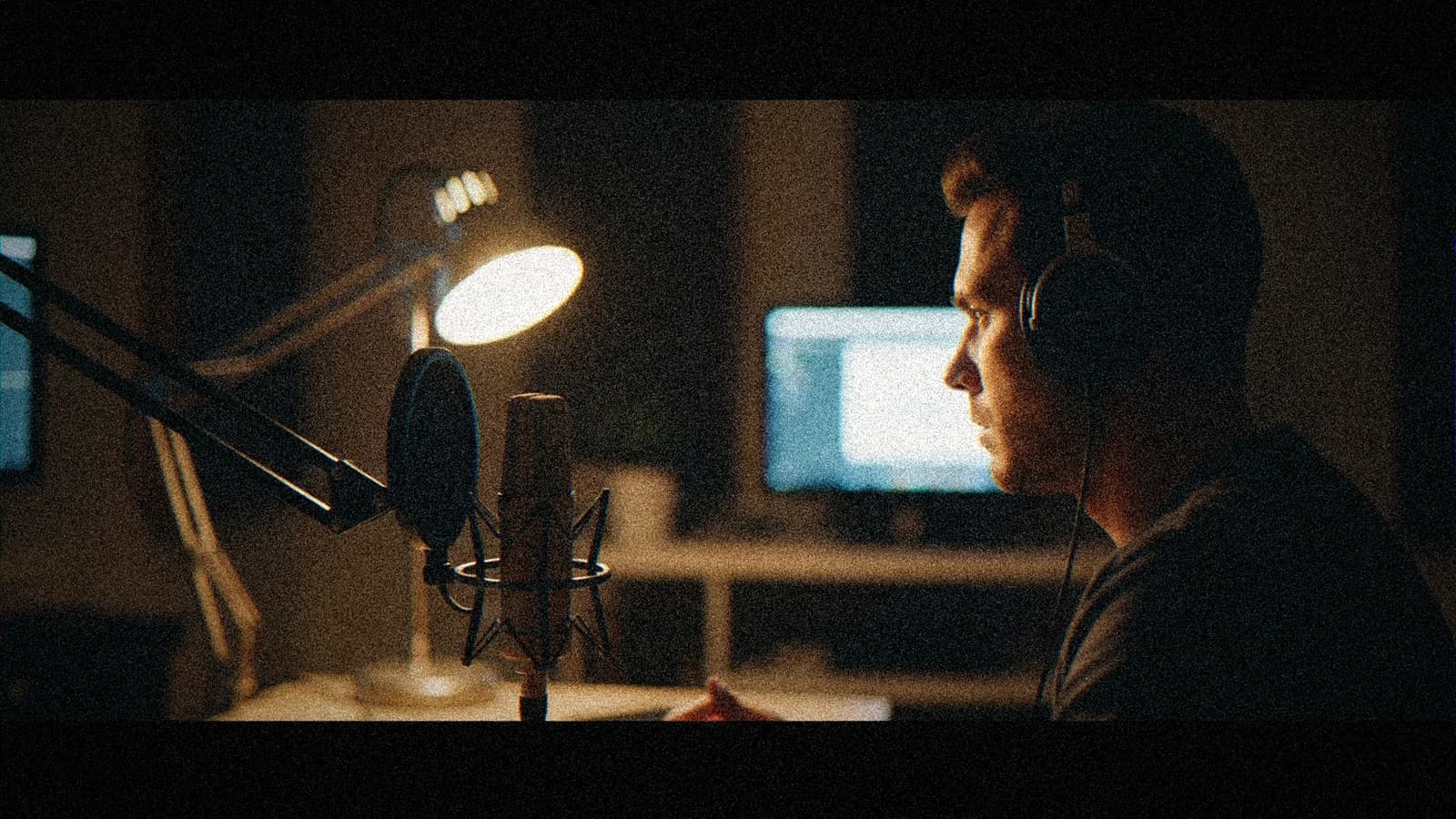
If part of your voice-overs or your AI dialogues goes through ElevenLabs, you have a date to note right away: July 9, 2026. According to the official ElevenLabs changelog dated June 8, ElevenLabs is shutting down its v1 voice synthesis models. Not a cosmetic update. A retirement. The old models disappear, and with them the exact voice you may have been using for months.
The reflex is to shrug. Bad idea. On a film or series project, a voice is not a technical detail, it is a character. If you change model the day before a delivery, you change the grain, the timbre, the rhythm. The client hears it. And you, you go back into re-recording when you thought you had wrapped.
We are going to see what really changes, who is concerned, and how to migrate cleanly before the cutoff date.
What ElevenLabs announces exactly
The June 8, 2026 changelog lists several things, but only one concerns you directly as an image and video creator: the v1 voice models of the synthesis are marked as deprecated and will be retired on July 9, 2026. In the same move, the Scribe v1 transcription model is also deprecated.
The rest of the announcements mainly target the developers of conversational agents: adjustments on turn-taking detection, delay management, knowledge-base synchronization, tool schemas. Useful if you build a voice agent, secondary if you do voice-overs for a short film.
So remember the essential. The v1 voice is over in a few weeks. Everything you have produced stays on your disk, obviously. But you will no longer be able to generate new lines with this precise model after the date. If your project is not finished, it is now that it plays out.
Why it matters for an AI film
A consistent synthetic voice is what separates a credible edit from a patchwork. When you produce a series of shots over several days, you rely on a stable voice to hold the character. The day the model disappears, you lose this stability if you anticipated nothing.
The classic trap: you have 80 percent of a project recorded with a v1 voice, and you have three lines left to add. You come back to it after July 9, the model is no longer there, you generate the three lines with a recent model, and the join sounds false. The human ear is merciless on the voice, far more than the eye on the image.
Another angle: the direction. If you built your voice prompts around the settings of a precise model, stability, similarity, style, these settings do not transpose identically to another model. You will have to recalibrate. Better do it cold, on a test, than in the urgency of a delivery.
Who is concerned, who is not
You are concerned if you still explicitly use a v1 model in your generations. Many creators have already moved to the more recent models without thinking about it, because it is often the default choice in the interface. If that is your case, the impact is low, but check anyway.
You are not concerned for your already-rendered files: an audio export stays an export, it does not evaporate. The retirement touches the generation, not your past deliverables.
The real subject is the projects in progress and the custom voices. If you created a custom voice and you pilot it with an old model, that is where you must test in priority.
The migration method in five steps
Here is the protocol I would apply this week, not on the evening of July 8.
-
Inventory. List the unfinished projects that use ElevenLabs. Note for each the voice and, if you know it, the model. If you do not know which model you use, open the history of your recent generations.
-
Cold test. Take a representative line of your character. Generate it with a current voice model from the catalog. Compare to the v1 render you had. Listen to the grain, the rhythm, the breaths.
-
Recalibration. If the gap is audible, adjust the stability and similarity settings until you find the intention again. Do not look for the perfect identical, look for the credible continuity in your edit.
-
Targeted regeneration. For an almost-finished project, two options. Either you finish before July 9 with your current model. Or you regenerate the key lines with the new model to homogenize, rather than mixing two generations.
-
Clean archiving. Keep a trace: voice name, model used, date. It is exactly the kind of note that spares you from rediscovering the problem in six months on another retirement.
💡 Frank's cut: never migrate a client project the day before delivery. Do your migration test on a personal project or a draft. You want to discover the surprises on something that has no deadline.
What this announcement says about the market
A model retirement is not an accident, it is the norm now. The voice, image and video AI tools evolve fast, and the old versions are retired regularly. The lesson is not specific to ElevenLabs.
Concretely, it means one thing: do not build a production workflow on the hypothesis that a model will be there forever. Always document the version you use. Keep your source files. And when you can, deliver finalized audio masters rather than depending on a future regeneration.
It is also why I push creators to understand voice direction rather than the recipe of a single tool. If you know what you are looking for, light, intention, rhythm, you transpose from one model to another. If you only know a series of magic settings, each retirement sets you back to zero.
To go deeper on the voice, my complete tutorial on ultra-realistic voices with ElevenLabs stays valid on the method, even if the model names move. And if you work the voice-over from A to Z, also look at how to clone and direct a voice for a film. For the complete audio ecosystem, the directory of audio, SFX and music AIs gives you alternatives to test.
Foire aux questions
Réponses rapides aux questions les plus fréquentes sur cet article.
Will my old ElevenLabs audio files disappear on July 9?
No. The announced retirement concerns the generation with the v1 models, not the files you have already exported. A rendered audio master stays on your disk and in your projects. What you lose is the possibility of creating new lines with this precise model after the date. That is why the burning subject is the unfinished projects: if you must still generate lines, do it before, or switch right now to a recent model to avoid an audible join between two different generations.
How to know if I still use a v1 model?
Open your recent generation history in ElevenLabs and look at the associated model. In many cases, the interface has already switched by default to more recent models, so you may already be up to date without knowing it. If you pilot a custom voice with settings you have not touched for a long time, it is the most at-risk scenario: test it in priority. In case of doubt, generate the same sentence with your usual setting and with a current model, then compare by ear.
Will I find exactly the same voice with a recent model?
Not necessarily identical, and that is normal. A model change often modifies the grain, the rhythm and the breath management. The goal is not a perfect clone, it is a credible continuity in your edit. Take a reference line, regenerate, adjust the stability and the similarity until the character holds. If a project is almost wrapped, the safest is often to regenerate the key lines with the new model to homogenize, rather than sticking a recent generation next to old v1 lines.
Do I have to change tool because of this retirement?
Not necessarily. A version retirement is a routine operation on AI tools, not a signal of abandonment. The real answer is to no longer depend on a single frozen model. Document the version you use, keep your source files, and deliver finalized masters when you can. If you still want to compare, test two or three voice solutions on the same line and judge the continuity, the possible direction and the fidelity to the character, not only the first impression on an isolated sentence.
Related articles
 Tutoriels
ElevenLabs: the Definitive Tutorial for Ultra-Realistic Voices
A complete guide to create, direct and mix credible ElevenLabs voices for films, ads and training content.
 Actualité
Lionsgate takes a stake in Runway AI to create short series from its franchises
Hollywood studio Lionsgate takes an equity stake in Runway and will produce short episodic series with generative AI from its existing IP, including John Wick and The Hunger Games.
 Tutoriels
Managing the Voice-Over for AI Documentary Narration
A voice-over pipeline from script to mix to keep clarity, emotion and credibility on a documentary format.