Script translation: the best AI tools to internationalize your videos
Comparison and workflow to translate, adapt and localize your video scripts with AI without losing the tone, the rhythm or the intention.
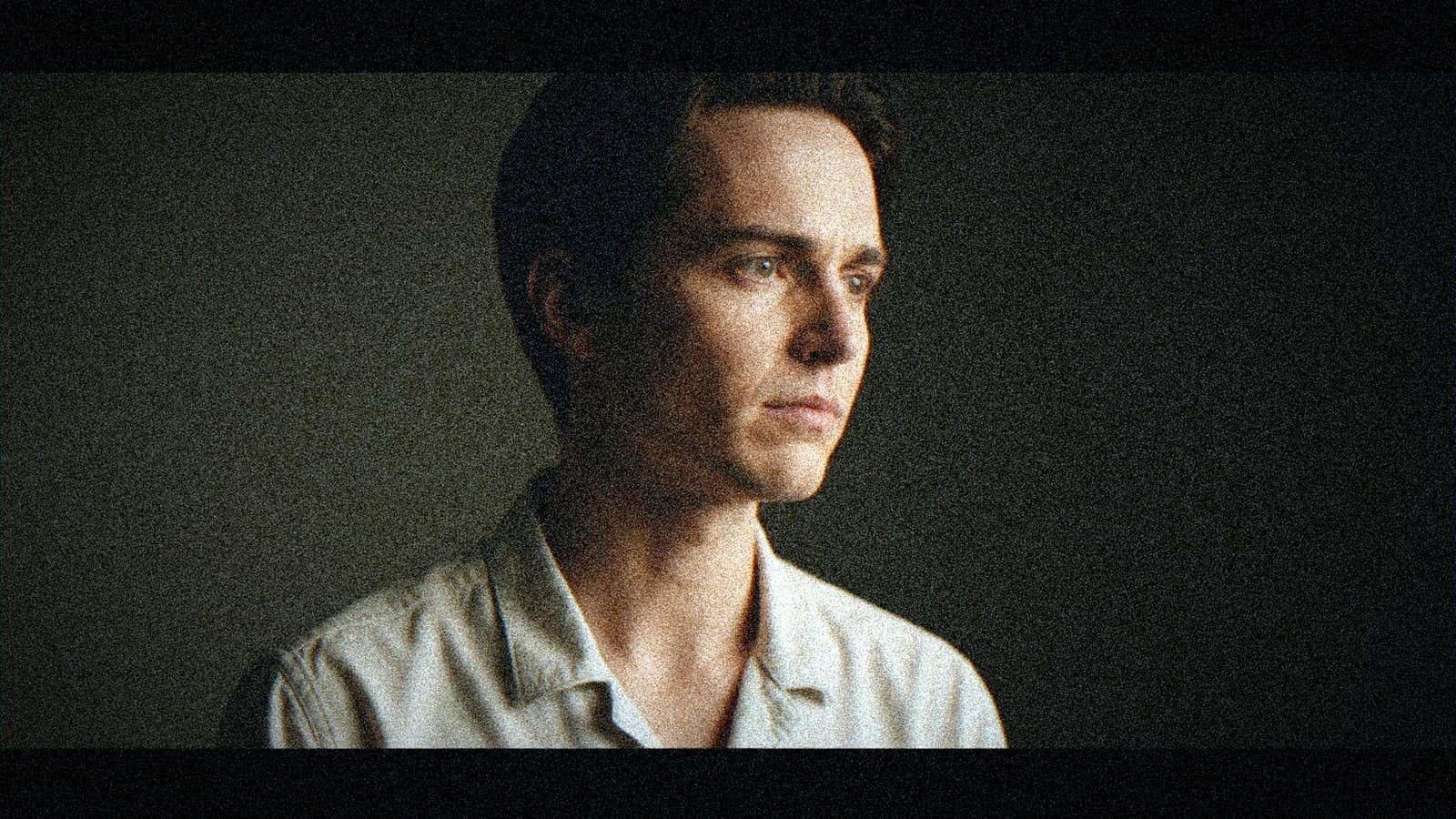
You have a video that works in French.
The subject is good. The edit holds. The message is clear.
Then you want to translate it. And everything breaks.
The jokes fall flat. The subtitles overflow. The tone becomes academic. The dubbed voice sounds like an airport announcement. Script translation with AI can open your content to the international, but only if you respect the difference between translating words and adapting an audiovisual intention.
Translating a script is not translating a text
A video script lives in time. A written sentence can be elegant on a page and impossible to say in voice-over. In audiovisual translation, you have to think rhythm, breathing, duration, synchronization, culture, intention, language level and screen constraints. It is much closer to adaptation than to linguistic copy-paste.
Beginners often make the same mistake: they paste their script into an AI translator and get back a correct version. Grammatically correct, orally dead. The foreign viewer does not know the original version had nerve. He only hears a flat voice that explains too much.
The good approach starts by identifying the type of video. Tutorial, ad, documentary, YouTube video, fiction, training, pitch, vertical short. Each imposes a different translation. An ad must preserve the impact. A training must preserve the precision. A fiction must preserve the subtext. A YouTube video must preserve the rhythm and the personality.
You also have to distinguish subtitling, dubbing and voice-over. Subtitling requires condensing. Dubbing requires a natural orality and sometimes an approximate lip sync. Voice-over requires a sentence that breathes with the image. The same script must not be translated the same way for these three usages.
DeepL, ChatGPT, Claude, Gemini, ElevenLabs, HeyGen or Lokalise can all be useful, but not for the same step. The real workflow combines several AIs: raw translation, cultural adaptation, subtitle reduction, terminology control, voice generation, human verification.
For the creators who also adapt the voice and the dubbing, our comparison on HeyGen and ElevenLabs for AI video will be a logical complement.
Comparison of the best AI tools to translate your scripts
DeepL remains excellent to get a natural translation on European languages, especially when the source text is clean. It is fast, reliable, and often more elegant than a basic translator. But it does not always understand the audiovisual constraints if you do not add them. For a script, use it as a first pass, not as a final version.
ChatGPT is very strong to adapt the tone. You can ask it for a more oral, more concise, more American, more British, more neutral, punchier, or more subtitle-suited version. Its strength is the transformation. Its weakness is that it can smooth the intentions if you do not protect your voice.
Claude is useful for long scripts, video series and documents with context. It often keeps the global consistency better, especially if you give it a glossary, a persona, a channel style and examples of validated translations. For an educational series, it is precious.
Gemini can help in a Google workflow, especially if you work with Docs, Sheets and Drive. It is handy to collaborate, comment, extract versions and organize variants. For a production team that already shares its documents, the integration counts as much as the raw quality.
ElevenLabs, HeyGen and similar tools come after the translation. They are not only used to put a voice. They reveal if your adaptation is speakable. A sentence that seemed good in writing sometimes becomes ridiculous in synthetic voice. The audio test is a merciless judge.
| AI tool | Best usage | Strength | Limit to watch |
|---|---|---|---|
| DeepL | First-pass translation | Linguistic naturalness | Little audiovisual logic |
| ChatGPT | Tone and orality adaptation | Fast versions | Can smooth the voice |
| Claude | Long consistency | Good context | Less direct for short tests |
| Gemini | Google collaboration | Document integration | Variable quality by language |
| ElevenLabs | Voice and dubbing test | Immediate orality | Requires a well-adapted script |
| HeyGen | Video localization | Avatar and dubbing | Risk of too corporate a render |
The trench workflow to internationalize a video
Start by cleaning the source script. It is the part nobody wants to do. Remove the useless sentences, clarify the local references, identify the idiomatic expressions, note the jokes, mark the technical terms. An AI translation of a confused script gives a confused script in another language. Magic, but useless.
Then create a glossary. For a YouTube channel, note the recurring terms, the tone, the forbidden words, the feature names, the validated translations. Example: does "prompt" stay "prompt" or become "instruction"? Does "workflow" stay "workflow" or become "working method"? Decide. The consistency builds trust.
First-pass prompt: "Translate this script from French to American English for an educational YouTube video. Keep a direct tone, field mentor, natural to speak. Do not translate word for word. Preserve the intention, shorten the long sentences, flag the difficult cultural references." There, you get a usable base.
Second pass: oral adaptation. "Rewrite this translation for voice-over. Short sentences, natural breathing, no written turns of phrase. Keep the technical terms from the glossary. Indicate the sentences that risk being too long to say." This step changes everything. A good translated script must be readable with no stumbling.
Third pass: subtitles. "Turn this script into subtitles of maximum 42 characters per line, 2 lines maximum, comfortable reading, with no loss of meaning." The subtitles are not a raw transcription. They are an intelligent compression. Too much text tires the viewer and kills the image.
💡 Frank's Cut: always have the translation read by a synthetic voice before validation. Even if you then use a human. The audio reveals the dead sentences, the impossible breathing and the words that snag.
Example 1: adapting an educational YouTube video
Original French script: "Là, si vous laissez le réglage par défaut, votre image va devenir propre, trop propre, comme une pub de parfum qui aurait avalé un tutoriel LinkedIn." Possible literal translation: "like a perfume ad that swallowed a LinkedIn tutorial." It is funny in French, strange in English. Not impossible, but risky.
American adaptation: "your image starts looking too clean, like a luxury ad pretending to be a tutorial." Less weird, more direct, more understandable. The idea stays: too smooth a render, fake premium. You lost an image, but kept the intention.
Ask the AI for three versions: faithful, natural, punchier. Then choose. Do not let the tool decide alone. A good localization is a series of micro-arbitrations.
For YouTube, watch the hooks. The first ten seconds must be rewritten with care. A French hook can be more indirect. An English YouTube hook must often get to the problem faster. Test several versions.
Example 2: translating a short ad
An ad does not have the luxury of explanation. Every word costs. To translate a 30-second spot, start with the intention: sell what, to whom, with what emotion? Only then, translate the lines.
Prompt: "Adapt this French advertising script into British English for a 30-second spot. Priority: oral impact, elegance, clarity, identical duration. Propose a faithful version and a freer version." You want to see the gap between precision and efficiency.
If the ad contains a brand signature, treat it like a sacred object. Do not translate it automatically. Propose 5 options, test the rhythm, check the connotations. A badly translated signature can make a brand ridiculous.
Example 3: adapting a fiction or a dialogue scene
Fiction is the most dangerous ground. The characters must not all speak like graduate translators. They have a social class, a fatigue, an era, a relationship to silence. The AI can help, but you must give it the voices.
Prompt: "Translate this scene into natural English, but respect the voice sheets: Nora speaks short, avoids emotion, dry irony. Malik speaks faster, uses humor to dodge. Do not make the subtext explicit." This kind of constraint protects your characters.
After translation, ask for an analysis: "List the lines that seem too written or too explanatory." Then read aloud. If you cannot imagine an actor saying the sentence without internally defending himself, rewrite.
To work the voice of the characters before translation, also read our guide on creating realistic dialogues with conversational tools.
The mistakes that ruin a script translation
The first mistake is to believe a grammatical translation is enough. A script must live in a mouth, in an image, in an edit rhythm. A perfect sentence on paper can be catastrophic in voice-over. Always test on the audio.
The second mistake is to not provide context. If you only paste a block of text, the AI does not know who speaks, to whom, with what intention, nor for which format. Add the audience, the platform, the duration, the tone, the language level and the final medium.
The third mistake is to keep the cultural references without checking. A French joke, a TV reference, a regional expression or a local metaphor can provoke nothing elsewhere. Ask the AI to flag the references to adapt, then choose an equivalence.
The fourth mistake is to lengthen the subtitles. Many languages take more space than French, or the reverse depending on the sentences. The subtitling must respect the reading time. Use the recommendations of platforms like Netflix Partner Help Center to understand the professional constraints.
The fifth mistake is to not proofread the technical terms. A video on AI, cinema or marketing contains sensitive words. A badly translated term can break the credibility. Create a glossary and impose it at each pass.
The sixth mistake is to ignore the rights and the confidentiality. Do not paste a sensitive script into any tool without checking the terms of use. For client projects, look into the privacy policies of the tools, in particular DeepL Pro or the enterprise offers of the large models.
FAQ: script translation with AI
What is the best AI to translate a video script?
There is not a single best AI. DeepL is excellent for a first fluid translation, ChatGPT to adapt the tone, Claude to keep the consistency on long scripts, and ElevenLabs to test the orality in voice. The best result often comes from a multi-pass workflow. Raw translation, audiovisual adaptation, terminology control, audio test, human proofreading.
Can you automatically translate YouTube subtitles?
Yes, but the automatic subtitles must be proofread. YouTube can generate and translate subtitles, but the result often lacks nuance, especially for the technical terms, the humor or the fast sentences. For a professional channel, export the script, translate it with reading constraints, then reimport a clean file. The subtitles influence the comprehension, the retention and the accessibility.
How to keep the original tone in another language?
Give the AI a precise description of the voice: rhythm, language level, humor, forbidden words, examples of validated sentences. Ask for several versions: faithful, natural, more oral. Then compare the intention, not just the words. The tone is kept through the choices of rhythm, vocabulary and subtext. A too-literal translation can respect the sentences and betray the personality.
Should you have it proofread by a native human?
Yes, especially for a commercial video, a fiction, a campaign or a sold training. The AI reduces the work enormously, but a native spots the cultural clumsiness, the strange expressions and the badly calibrated language levels. If the budget is limited, have at least the hook, the titles, the signatures, the important subtitles and the emotional passages proofread.
How to adapt a joke in a translated script?
Do not translate the joke word for word. Identify the function: create complicity, break the tension, mock a cliché, speed up the rhythm. Then ask the AI for three cultural equivalents for the target language. The best adaptation can be very different from the original. If no version works, cut. A badly translated joke costs more than an absent joke.
Are AI voices enough to dub a video?
They can be enough for tutorials, trainings, internal videos or market tests. For fiction, premium ads or emotional content, they remain to handle with caution. The AI voice quickly reveals the badly adapted sentences, but it can lack acting, silence and fragility. Use it at minimum as a preview tool before a real recording or a client validation.
Related articles
 Comparatifs
The Best AI Tools to Create, Cut Out and Design Faster
A 2026 field comparison of AI design tools: Photopea, Remove.bg, Looka, Figma, Microsoft Designer, Freepik, Pexels and Shutterstock.
 Comparatifs
The Best AI Video Tools in 2026: Sora, Runway, Higgsfield, Pika Labs
A field comparison of the best 2026 AI video tools: Sora, Runway, Higgsfield and Pika Labs to produce credible shots with no fake render.
 Comparatifs
HeyGen and ElevenLabs: the Best AI Tools for Voice and Avatars?
A field comparison HeyGen vs ElevenLabs to create credible AI voices and avatars in 2026, with a pro workflow, real limits and business use cases.