Adapting Brand Storytelling to AI Video Content
How to keep the brand voice when production speeds up with AI without losing identity or trust.

The client sends you a forty-page brand guidelines PDF, three TikTok references they love, and a deadline in five days. You open Runway, you generate twenty spectacular shots, and in the edit you realize nothing looks like the brand. The colors drift, the tone is generic, and the marketing director tells you politely: "We do not recognize ourselves in this." That is the classic trap of adapting brand storytelling to AI video content: production speed never compensates for the absence of a narrative framework.
This guide comes from the field. I have delivered campaigns where AI speeds up production without diluting the identity, and others where the absence of a narrative bible cost two weeks of retouching. The difference is not the model used. It is the way you translate the brand voice into operational constraints before the first generation.
What the brand really imposes (beyond the logo)
Most creators confuse visual identity with brand storytelling. The logo, the Pantone palette, the typeface: that is the visible layer. Storytelling is the emotional promise, the register of language, what the brand refuses to show, and the narrative tension it maintains with its audience. When you move to AI video, those invisible elements become production parameters.
A sober premium brand does not accept hyperkinetic camera moves just because the engine handles them well. A young, disruptive brand tolerates controlled imperfection, but not a plastic render. An institutional B2B brand needs credibility in the gaze, the posture, the negative space. If you do not formalize these rules, each prompt becomes a personal interpretation by the creator, and the brand disappears shot after shot.
Brand storytelling breaks down into four axes that I systematically lock before any generation:
- Promise: what transformation must the viewer feel in fifteen seconds?
- Register: close, expert, poetic, direct, ironic?
- Narrative arc: problem, revelation, proof, call to action?
- Taboos: what the brand will never say, never show, never suggest.
These four axes feed your shot briefs directly. Not a twenty-page marketing document. A one-page sheet, readable in thirty seconds, that you stick next to your screen during the entire generation session.
To structure this logic on a longer project, cross-reference this guide with how to structure an AI video like a real film and organizing a client brief for AI video production with no fog. These two resources lay the foundation that most teams skip in their rush to go fast.
💡 Frank's Cut: never start with the visual prompt. Start with a brand promise sentence: "After this video, the viewer must think that ___". If you cannot fill the blank in one sentence, your brief is not ready.
Brand matrix: translating identity into AI constraints
Here is the grid I use to turn a brand charter into instructions an image-video pipeline can act on:
| Brand axis | Key question | Prompt / production translation |
|---|---|---|
| Emotional tone | Warm or distant? | Light and casting adjectives |
| Visual density | Minimal or rich? | Number of elements, depth of field |
| Rhythm | Contemplative or nervous? | Shot duration, type of camera movement |
| Credibility | Aspirational or documentary? | Grain, imperfections, type of set |
| Consistency | Series or one-shot? | Visual bible, locked references |
Each cell of this matrix becomes a non-negotiable rule or a zone of controlled freedom. The non-negotiable rules go into every prompt. The zones of freedom are where you can iterate without risking brand drift.
Take a concrete example. A natural cosmetics brand wants to convey authenticity and softness. Operational translation: soft side light, skin with visible texture (never smoothed), real domestic sets, earth and cream palette, slow camera moves, warm voice-over with no commercial over-articulation. Every shot that steps outside this frame is classified C in the sort, even if it is visually impressive.
Conversely, a B2B tech brand wants authority and clarity. Translation: clean directional light, stable framings, few elements in the frame, almost imperceptible camera moves, sober typography in overlay, a steady voice. A "creative" shot with excessive bokeh and Instagrammable grading breaks the institutional credibility.
The Nielsen Norman Group documentation on brand storytelling recalls a principle I apply in production: narrative consistency beats visual surprise over the long term. In AI, the temptation is the opposite. You chase the wow shot. The brand, on the other hand, chases immediate recognition.
Field workflow: from the charter to the validated master
Phase 1: narrative extraction (before any tool)
Ask the client, or yourself, for three short deliverables: a promise sentence, three validated references (not twenty), a list of five absolute prohibitions. If the client sends a PDF charter, manually extract the actionable elements: hex color codes, preferred composition ratio, examples of editorial tone, past campaigns that worked.
Create a brand-story-core.txt file with these elements. This file does not move during production. Everything else iterates around it.
Phase 2: condensed visual bible
Generate four to six reference images that embody the brand, not the subject of the spot. These images set the light, grain, palette, level of realism. Use Flux or SDXL locally to keep control. Archive the validated seeds and prompts.
For the consistency of recurring characters (spokesperson, mascot, brand figure), lean on IP-Adapter and references: locking a face across several shots. A face that changes between shots destroys brand trust faster than a bad framing.
Phase 3: per-format adaptation
A brand does not speak the same way on YouTube, LinkedIn and TikTok. The storytelling stays, the rhythm changes. For each format, define: target duration, ratio, hook duration, information density, subtitling level. The same brand message in 6 seconds vertical does not use the same shots as in 45 seconds horizontal.
Phase 4: generation by narrative batch
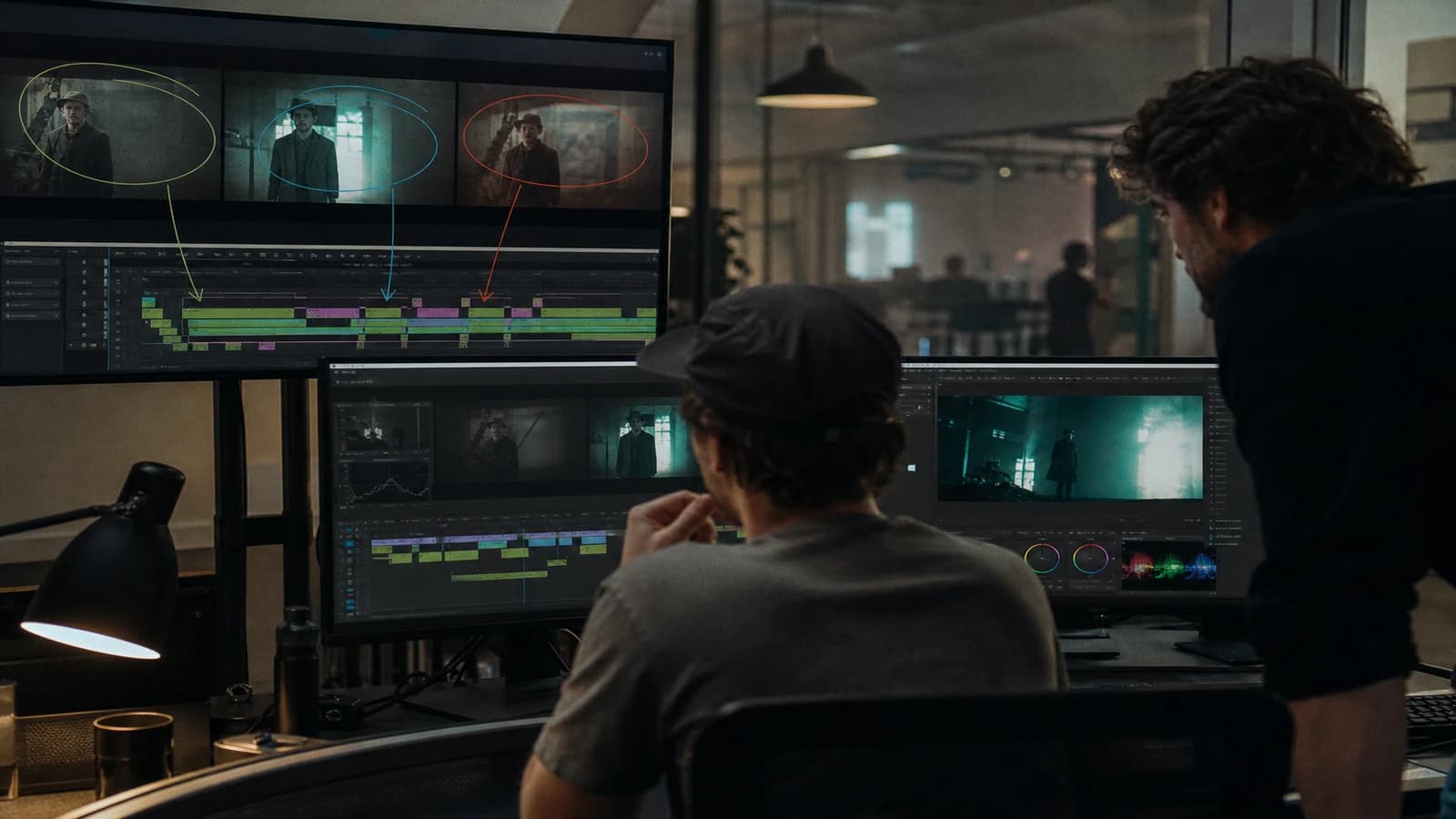
Do not generate shot by shot at random. Work by narrative sequence: hook, development, proof, conclusion. Each sequence has its emotional intention drawn from the brand matrix. Four to six variations per shot, constant frame, a single lever modified per iteration.
Phase 5: brand validation before technical validation
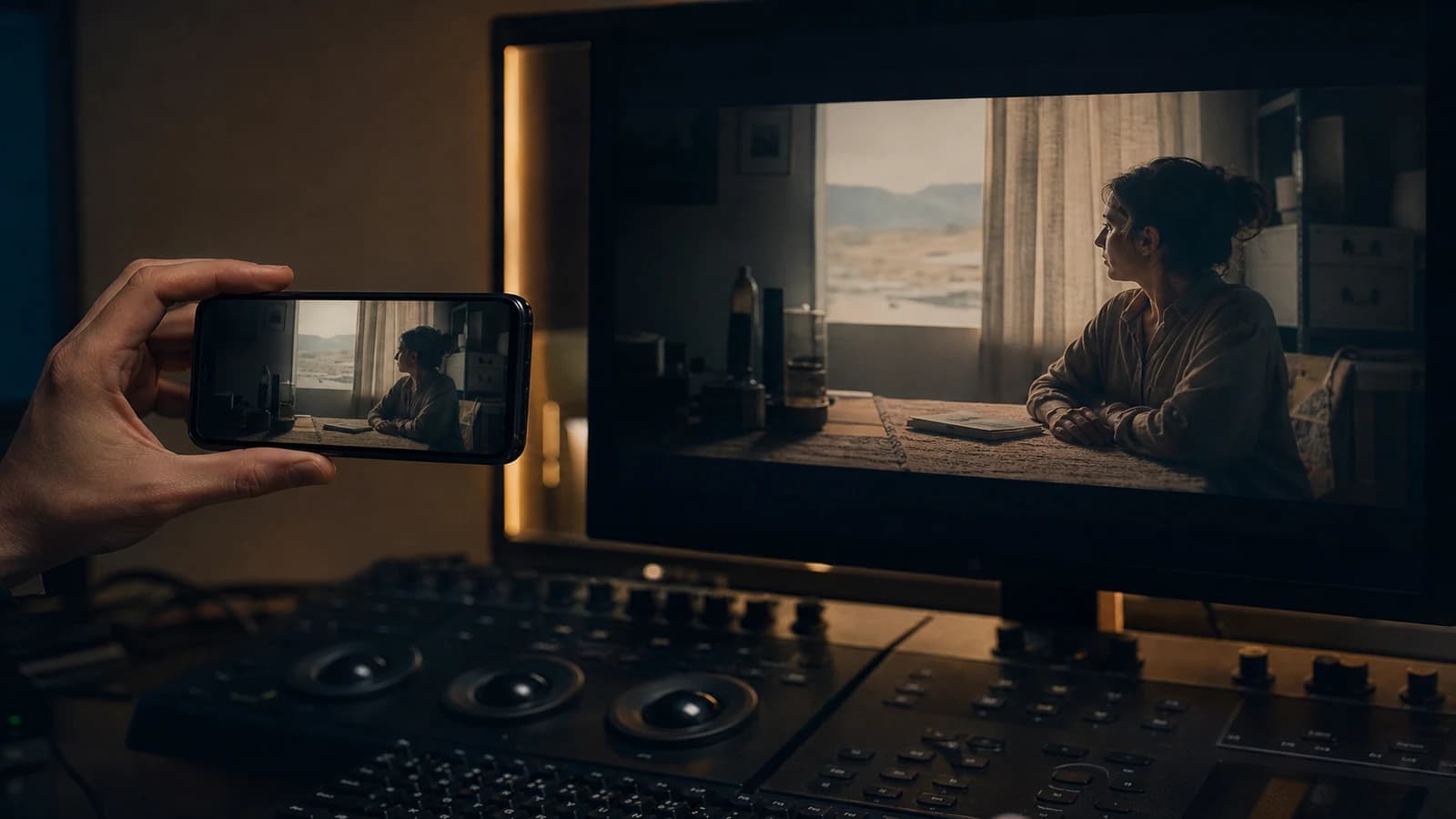
Before checking the resolution or the codec, ask three questions: does it sound like the brand? Does it look like the brand? Does it serve the promise? If one answer is no, the shot is B or C, even if it is technically perfect.
To speed up the cycles without sacrificing the method, integrate the routines from how to optimize your AI workflow to save time. Speed only has value if each iteration moves closer to the brand brief.
Real scenario: product launch campaign in five days
Context: wellness startup, soothing tone, tight deadline, AI-only budget. Day 1: narrative extraction and visual bible (six reference images). Day 2: shotlist of twelve shots, batch generation. Day 3: A/B/C sort, regeneration of the C shots only. Day 4: edit, voice, sober music. Day 5: brand QA with the client checklist.
Result: the client validates on the second send because each shot answered the promise "finding calm in thirty seconds". No useless spectacular shot. The brand recognizes itself without reading the logo.
Frequent mistakes: when the brand disappears
Mistake 1: copying AI visual trends instead of the brand. The "Midjourney premium" render pleases in an internal meeting but serves no identity. Fix: test each shot against the visual bible, not against your Pinterest feed.
Mistake 2: overpromising in the hook. An aggressive hook that contradicts the brand tone destroys retention after three seconds. The viewer feels deceived. Fix: the hook must be strong AND faithful to the register. A sober brand can hook with a direct question, not with a cheap visual shock.
Mistake 3: neglecting sound and voice. The voice-over is the most direct storytelling. A voice too "radio ad" on an authentic brand kills consistency. Fix: define the vocal profile in the brief: pace, warmth, level of articulation. Test two AI voices maximum, not ten.
Mistake 4: validating without the client early. Waiting for the final master for brand validation is expensive. Fix: send an animatic or a fifteen-second moodfilm after day 2. A tone correction at that stage avoids a complete overhaul.
Mistake 5: mixing several registers in the same video. Documentary shot + fantasy shot + motion design shot = brand confusion. Fix: one dominant register per video. The variations stay within the palette, not within the genre.
For the final deliverables, the YouTube encoding recommendations and the W3C guide on media accessibility help you close the distribution without breaking the care put into the identity.
Foire aux questions
Réponses rapides aux questions les plus fréquentes sur cet article.
How do I convince a client that AI will not dilute their identity?
Show them a quick A/B test: two versions of the same shot, one generated with no brand brief, one with a locked bible. The visual and tonal difference speaks louder than a speech. Propose a short fifteen-second pilot before committing to full production. The client sees that AI is a tool for adaptation, not a substitute for their strategy. Insist on the fact that the charter becomes more important, not less, when production accelerates. Without a framework, speed produces generic content.
Should I refuse a project if the brand has no clear charter?
Not necessarily, but you have to budget a narrative extraction phase. Bill that phase separately. Without it, you take on a high risk of retouching. In practice, I block the generation until the promise sentence and the three validated references are written in black and white. This discipline protects your margin and the client relationship. A client who cannot articulate their promise has a strategic problem, not just a production problem.
How do I handle brands that want "something viral" at all costs?
Reframe immediately: viral and faithful are not opposites, but viral with no brand is a disposable acquisition cost. Propose a strong hook calibrated to the existing register. Show examples of high-performing content in their sector that respects the identity. If the client insists on a tone they have never used, document in writing that it is a deliberate break. That avoids the "this is not us" feedback after publication.
Which tools to centralize the brand bible in AI production?
A Notion or a shared folder is enough if the structure is clear: promise, references, prohibitions, validated prompts, seeds, exports. For series projects or recurring campaigns, see Notion AI: organizing the production bible of your film or series. The tool matters less than the habit of updating after each generation session.
How do I adapt brand storytelling between countries and languages?
The emotional storytelling stays stable. The linguistic register and the cultural codes change. Do not translate word for word: adapt the promise. A deadpan humor that works in France can fail elsewhere. Generate visual references per market if the sets or the casting must evolve. Lock the palette and the light, adapt the cultural details. Test each version with a native speaker before validation.
Is music part of brand storytelling in AI?
Absolutely. A premium brand with a cheap stock EDM track sends a contradictory signal. Define: tempo, instrumentation, presence or absence of vocals, energy level. Use licensed libraries consistent with the sector. If you generate with Suno or Udio, keep the same style parameters across the whole campaign. Music is often the first element the viewer feels before analyzing the image.
How many rounds of client validation should I plan?
For a short campaign: a moodfilm on day 2, a rough cut on day 4, a master on day 5. Three touchpoints maximum. Beyond that, you lose the rhythm and the client micromanages every shot. Each validation must be about the brand and the narrative, not about technical details they do not master.
Can you reuse prompts from one campaign to another for the same brand?
Yes, it is even recommended. Build a library of validated prompts by shot type: hero, product, testimonial, mood. Update it when the brand evolves. Document the date and the original campaign. This library becomes an asset: you speed up without rediscovering the same mistake on every project.
Brand storytelling in AI video is not a style exercise. It is operational translation: promise into constraints, constraints into prompts, prompts into recognizable shots. When you set this framework before the first generation, AI becomes an identity multiplier, not a generic smoother. Apply this logic to adapting brand storytelling to AI video content, and your deliveries will finally look like something intended, not something endured.
Related articles
 Tutoriels
Measuring the Performance of AI Video Content After Publication
A simple dashboard to link AI production decisions to real distribution and conversion results.
 Tutoriels
Client Contract Clause for AI-Generated Content
Useful wording, transparency, liability and retouching scope to avoid disputes.
 Tutoriels
IP-Adapter and References: Locking a Face Across Several Shots
References method, weights, safe angles and matches to keep the same face from one shot to another with no mannequin effect.