Building an AI Video Shotlist That Avoids Useless Shots
A field shotlist template to plan the shots that truly serve the edit and limit visual debt.
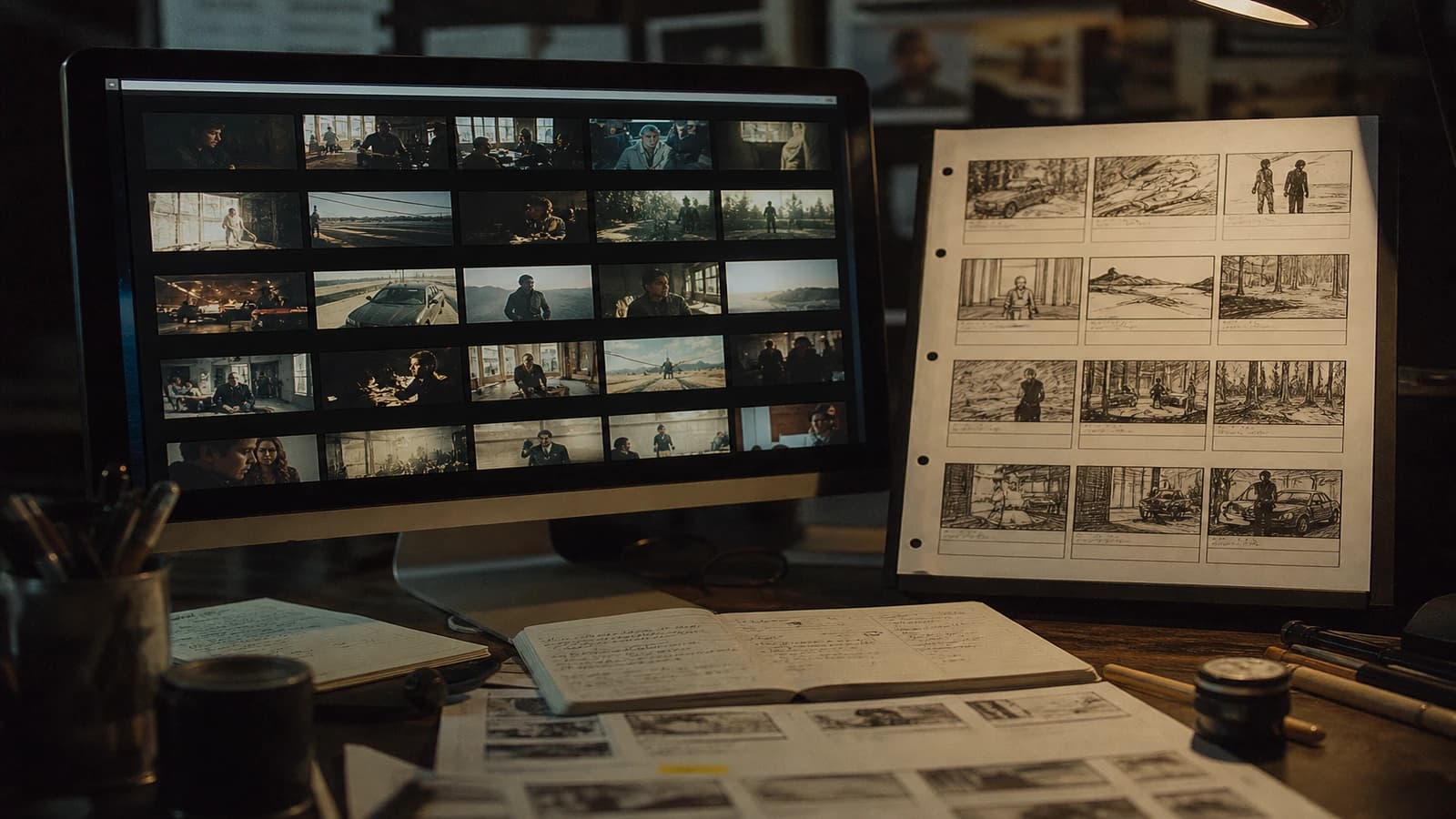
You generated forty shots for a sixty-second video. In the edit, you use twelve. Twenty-eight dead shots. Building an AI video shotlist that avoids useless shots is not paperwork. It is the economics of your production.
A good AI shotlist looks like a shoot shotlist, with one difference: each line costs money and time.
Why AI shotlists go off the rails
On a set, filming one more shot takes twenty minutes. In AI, "just one more try" piles up into an addiction. Without a disciplined shotlist, you generate by feel and the edit becomes a puzzle with the wrong pieces.
A shotlist copied from cinema with no adaptation multiplies shots with no consistency. In AI, fewer better-locked shots beat more approximate shots.
See preparing a technical breakdown before AI video generation and how to structure an AI video like a real film.
💡 Frank's Cut: each line must answer "if I do not generate this shot, where does the edit break?". If the answer is "nowhere", delete the line.
Anatomy of a useful AI shotlist
Each entry contains: ID, edit intention, description, edit duration, generation duration, references, status, dependencies.
| Shot type | Indispensable if... | Often useless if... |
|---|---|---|
| Wide shot | New set | Established set |
| Reaction close-up | Key emotion | Fast action |
| Detail insert | Narrative info | Filler |
| Movement shot | Required dynamic | Same info static |
Field workflow
Step 1: a text animatic
Write the script or voice-over with timecodes. The shotlist dresses this column.
Step 2: minimum viable coverage
2-person dialogue: 4-6 shots. Simple action: 3 shots. Fast ad: 6-8 short shots.
Step 3: a shareable spreadsheet
One line equals one shot. Exportable for the client.
Step 4: a "subtraction" review
Can you tell the same thing with one shot fewer? This pass saves 30-50 percent of generation.
Step 5: order by dependencies
Hero references first, dependent shots next.

Step 6: real-time statuses
Shot B equals planned debt. Shot C equals removed from the list.
Step 7: a hard cut at 70 percent
Identify the real gaps. Regenerate only for the gaps.
The 70 percent rule
Do not generate 100 percent before a first edit. The remaining 30 percent are targeted.
See how to optimize your AI workflow to save time.
Example template, 30s ad
| ID | Intention | Description | Edit duration | Status |
|---|---|---|---|---|
| PL01 | Hook | Hand dropping coffee | 2s | A |
| PL02 | Problem | Messy desk | 3s | A |
| PL03 | Solution | Product on the desk | 3s | to generate |
| PL04 | Proof | Result screen | 2s | to generate |
| PL05 | CTA | Logo plus slogan | 2s | to generate |
Real scenarios
3-min short film. 25-35 shots, not 80. Bonus shots in a separate "optional" list.
Social series. A reusable template: hook, body, CTA.
Vague client brief. Shotlist as validation before generation.
8-min documentary. By chapter, low priority on illustrations.
Common mistakes
Shotlist with no durations. Fix: a target edit duration mandatory.
Bonus shots not marked. Fix: an optional yes/no column.
Forgetting transitions. Fix: one line per set change.
A frozen shotlist. Fix: version after the rough cut.
The AFI planning principles apply: AI does not replace discipline.
Foire aux questions
Réponses rapides aux questions les plus fréquentes sur cet article.
How many shots for a minute?
15-25 for dynamic, 8-12 for contemplative. Beyond 30 for a minute, probably superfluous.
Prompts in the shotlist?
Yes, or a link to the prompt file. The shotlist is the hub.
Alternative shots?
An "alt of PL03" column, max two alts per critical shot.
Shotlist vs storyboard?
Storyboard equals vision. Shotlist equals execution. The two complement each other.
Multi-episode?
EP02-SC03-PL05. Recurring shots reusable.
Missing shot in the edit?
A V2 line with the reason "edit gap".
Image only vs video?
The same intention logic.
Share with a non-technical client?
Hide the prompt and the seed. Show the intention and the status.
Credit budget?
An internal column useful to avoid bonus shots.
Complex action scene?
Break it into beats: start, middle, reaction, consequence.
An AI shotlist is a contract between the edit intention and the generation credits. Apply this template to building an AI video shotlist that avoids useless shots.
Advanced columns and the 70 percent rule
Add: planned engine, locked reference, crop ratio, assigned to, estimated credits. Never generate 100 percent of the shotlist before a first edit. Generate 70 percent of the indispensable shots, edit, identify the gaps. The remaining 30 percent are targeted.
Shotlist as a client contract
With a vague brief, the shotlist becomes the validation tool: the client approves the intentions before generation. Fewer "this is not what I wanted" returns on already-paid shots.
Final export
A PDF with statuses, master links, validated prompts. A base for season 2 or a re-delivery.
The 70 percent rule and advanced columns
Never generate 100 percent of the shotlist before a first edit. Seventy percent of the indispensable shots, edit, identify the gaps. The remaining thirty percent are targeted. This rule halved my dead shots on 30-second ads.
Useful columns: planned engine, locked reference, crop ratio, assigned to, estimated credits, A/B/C status. The shotlist becomes the production hub, not a wish list.
Shotlist as a client contract
With a vague brief, the client approves the intentions before generation. Fewer "this is not what I wanted" returns on already-paid shots. A final PDF export with statuses and master links for season 2.
Complex action
Break it into beats: start, middle, reaction, consequence. Four shots minimum, eight maximum for thirty seconds of action. "Spectacle" shots with no attached beat are the first cut in the edit.
30s ad shotlist template (quantified example)
| ID | Intention | Description | Edit duration | Status |
|---|---|---|---|---|
| PL01 | Hook | Hand drops coffee | 2s | A |
| PL02 | Problem | Messy desk | 3s | A |
| PL03 | Solution | Product on the desk | 3s | to generate |
| PL04 | Proof | Result screen | 2s | to generate |
| PL05 | CTA | Logo plus slogan | 2s | to generate |
Twelve shots max for thirty seconds. Not forty.
A "subtraction" review: for each line, can you tell the same thing with one shot fewer? This pass saves thirty to fifty percent of generation for beginners.
For the overall workflow: how to optimize your AI workflow to save time.
A shotlist with no durations is a wish list. A shotlist with no edit intention is a catalog of framings. Each line must say why the shot exists in the final timeline. If you cannot answer, delete the line before generating. Your credit wallet will thank you.
Classic shotlist mistakes
A shotlist with no durations. Bonus shots not marked optional. Forgetting the transitions between sets. The same shotlist for horizontal and vertical with no planned reframe. A shotlist frozen after the first brief with no V2 version after the rough cut.
8-minute documentary: a shotlist by chapter, 40-50 shots, not 80. Two-person collaboration: an "assigned to" column to avoid generation duplicates.
Preparing a technical breakdown before AI video generation completes this discipline.
Minimum coverage by scene type
2-character dialogue: a two-shot, OTS A, OTS B, reactions. Four to six shots.
Simple action: establishing, action, reaction. Three shots.
Fast ad: six to eight short shots, one idea each.
3-min short film: 25-35 shots, not 80. Bonus shots listed "optional", not generated in pass 1.
Social series: a reusable hook-body-CTA template.
The edit tells you what is missing. Your imagination tells you what would be cool to add. Trust the edit.
Generation order: hero references first, dependent shots next. Real-time A B C status update. A hard cut at 70 percent of the A shots before filling the gaps.
Shotlist phase table
| Phase | Goal | Deliverable |
|---|---|---|
| Brief | Locked intention | text animatic |
| Shotlist V1 | Minimum coverage | shared sheet |
| Gen 70% | Indispensable A shots | raw folder |
| Rough cut | Identified gaps | edit notes |
| Shotlist V2 | Gaps only | added lines |
| Master | QA | final export |
The AFI principles on preparation apply: AI does not replace discipline, it makes it more profitable. An AI shotlist is a contract between your edit intention and your generation credits. Each shotlist line answers: if I do not generate this shot, where does the edit break? Otherwise delete it. That question alone halved my dead shots.
Apply this template to building an AI video shotlist that avoids useless shots, and your edit will no longer lack anything while throwing away less. The shotlist is the best time investment before generation. One hour of shotlist saves ten hours of sorting dead shots.
A shared shotlist avoids duplication in a team. An assigned-to column. A final PDF export for the client archive. Validated prompts attached to each line. The production hub fits in a sheet, not in your head.
See how to structure an AI video like a real film for the narrative backbone the shotlist dresses. Without a script or a timecoded voice-over, the shotlist becomes a list of framings with no function.
Conclusion
The shotlist is not a creative constraint. It is the frame that frees your energy on the shots that matter. When each line has a reason to exist in the timeline, you stop generating out of anxiety. You generate out of intention. On a thirty-second ad, twelve well-thought lines beat forty random tries. On a short film, twenty-five locked shots with references are worth more than eighty pretty but interchangeable shots.
In a team, the shared shotlist avoids duplicates and misunderstandings. The editor knows what is coming. The generator knows what is optional. The client validates the intentions before the credits go up in smoke. Export a final PDF with statuses, links to the masters and validated prompts: it is your base for season 2 or a re-delivery six months later.
The 70 percent rule stays the most profitable reflex: edit before completing. The gaps you discover in the edit are the only legitimate bonus shots. Everything else is visual debt you will pay in sorting and fatigue.
Apply this template to building an AI video shotlist that avoids useless shots. One hour of shotlist upfront saves ten hours of sorting dead shots. Your edit will no longer lack anything, and you will throw away less.
Shotlist and multiple formats
If you deliver horizontal and vertical, duplicate the lines with a format column and reframing notes. A horizontal wide shot does not become a vertical shot without rethinking the subject. Plan both from shotlist V1 to avoid regenerating forty shots because the client added TikTok at the last minute.
Production log
At the end of each project, archive the final shotlist with the real statuses: what was cut, what was regenerated, what was optional and never generated. This file becomes your template for the next similar brief. The shotlist learns with you if you document it honestly.
When a shot is missing in the edit, add a V2 line with the reason "edit gap". Analyze why the initial shotlist missed it. This retrospective avoids repeating the same mistake on the next project. The shotlist is not frozen: it lives until the master export.
On a weekly social series, keep a hook-body-CTA shotlist template with pre-filled columns. You do not start from scratch every Monday. You adapt the intentions, not the structure. This habit reduces the friction between the idea and the generation.
The shotlist is the best time investment before generation. Each line justifies its existence or disappears. Generate less, edit better, deliver faster. It is the discipline that separates a professional AI production from a catalog of isolated, disposable clips.
A shotlist usable in generation
Each line must say: shot size, subject, action in one sentence, target duration, light note, A/B/C priority. No poetry: "she is sad" becomes "close-up, lowered gaze, 3s, window key, B". Handles: note +12 frames if you plan a dissolve. Dependencies: mark the shots that require the same locked set. A pro AI shotlist reads like a shooting order, not like a script treatment.
💡 Frank's Cut: a vague shotlist produces beautiful, unusable shots. Be dry, the edit will thank you.
Document the validated version with the date: the memory of the project is worth more than the latest winning prompt.
Related articles
 Tutoriels
Mastering Transitions Between AI Video Shots Without the Fake Effect
How to choose the cut, the match and the rhythm to link AI shots without breaking the scene's believability.
 Tutoriels
How to Use Photoshop's Generative AI (Firefly) to Extend Your Shots
A practical masterclass to extend shots with Photoshop Firefly without breaking perspective, light and visual continuity.
 Tutoriels
IP-Adapter and References: Locking a Face Across Several Shots
References method, weights, safe angles and matches to keep the same face from one shot to another with no mannequin effect.