Kling vs Seedance: which model for a fiction scene?
Kling 4.0 or Seedance 2.5 for a fiction scene? Acting, motion, character continuity, sound and the cost of a minute, all checked on October 30, 2026.
Contents · 9 sections
For a fiction scene, pick Kling 4.0 when the shot lives on movement: a fight, a chase, a long handheld take you want to hold for 30 seconds with ten keyframes. Pick Seedance 2.5 when the scene lives on performance and on the material you feed it: up to 50 references (images, video, audio), a draft mode to check the blocking before you pay for the final render, and grey-model control to place your actors. Kling is cheaper per second. Seedance asks for more prep, and it won't take real faces as references.
I co-founded ScreenWeaver, which runs both model families (Seedance 2.5 by default, Kling 3.0 next to it). My animated series Lost Garden relies on Seedance. So I'm not neutral, and I didn't run a single Kling generation for this piece. Everything comes from the official pages, checked on October 30, 2026 without an account, from the Runway price list that sells both, and from math on the published prices. When it's my opinion, I'll say so.
Kling 4.0 and Seedance 2.5 side by side
The two models came out eleven weeks apart. Seedance 2.5 on July 31, 2026 according to Wikipedia, Kling 4.0 on October 15, 2026 according to Kling's release notes. They aren't sold the same way either. Kling has its own app and subscriptions. Seedance goes through the BytePlus API, ByteDance's apps (Dreamina, CapCut) or third-party tools.
| Criterion | Kling 4.0 | Seedance 2.5 |
|---|---|---|
| Maker | Kuaishou | ByteDance (Seed team) |
| Length of one generation | 3 to 30 s, in 1-second steps | 4 to 30 s, can be extended twice |
| References per generation | 15 (10 images, 5 videos, 7 elements, voice) | 50 (30 images, 10 videos, 10 audio) |
| Keyframes | Up to 10 | First and last frame |
| Resolution | 720p, 1080p, 4K | 480p, 720p, 1080p in 10-bit |
| Sound | Two-channel stereo, lip sync | Picture and sound generated together |
| Real faces as references | No published restriction | Refused, except authorized portraits |
| Draft before final render | No | Yes (480p, then final in 1080p) |
| Published cost | Not yet for 4.0 (Video 3.0: 6 to 12 credits/s) | API: $0.103 to $0.569/s by resolution |
Seedance 2.5 specs taken from the BytePlus ModelArk docs the same day.
Playing a dialogue scene: acting and faces
Most fiction comes down to two people talking. An audience forgives a soft background. It's far less forgiving with a mouth that drifts off the line or eyes that look at nothing.
Kling 4.0 promises "more accurate" lip sync and two-channel stereo. Supported languages now include French, German and Hindi, all tagged "New" in the guide's table. Video 3.0 could already make several characters talk in one shot, each with their own voice.
Seedance 2.5 comes at it from the other side. Sound and picture come out of the same generation, and you can give it up to 10 audio tracks as references. The BytePlus docs add one detail that matters for dialogue: 2.5 accepts an audio-only reference, no image or video required. Record the line, and the model builds the shot around it.
The catch is spelled out plainly. Seedance 2.5 doesn't accept references that contain real human faces. If your scene starts from photos of real actors, you'll have to go through the platform's library of digital characters or its authorized-portrait process.
On an animated series like Lost Garden, that rule has never bothered me: my characters don't exist. On a live-action project with real actors, Kling has the edge, simply because its public pages don't put up that wall.
Holding an action beat: motion, camera and length
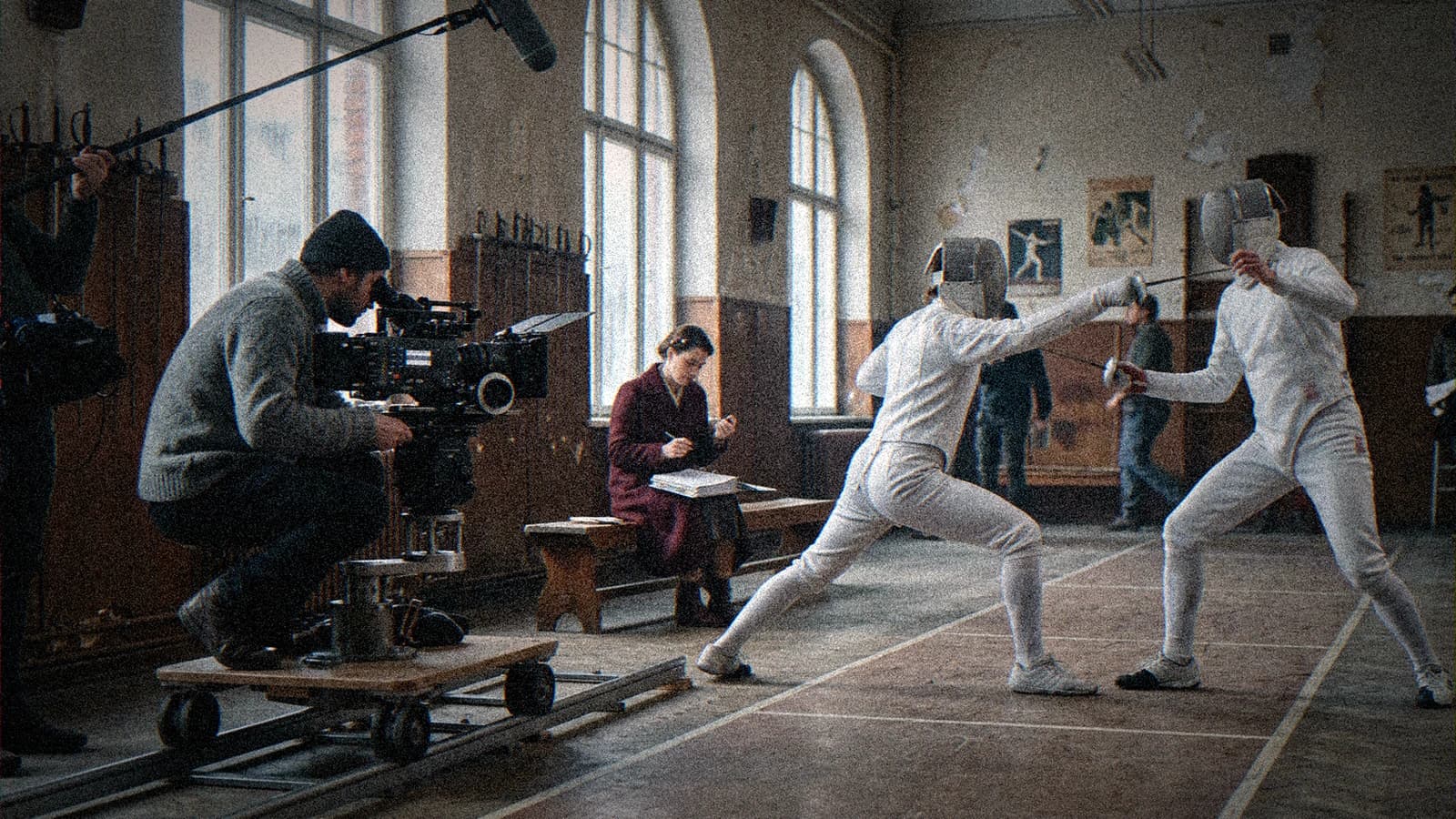
This is where Kling built its name, and 4.0 pushes further the same way. The guide talks about push-ins, pull-outs, pans, tracking and orbit shots that are "more natural and stable." More to the point, it adds two director's tools.
The first is length: 30 seconds in one go, set second by second, with 10 seconds as the default. The second is keyframes. You can set up to ten to lock a character's state at exact moments. On a choreographed fight, that means you can force the opening guard, the hit, the fall and the final position, instead of hoping the model invents the right order.
Seedance 2.5 also reaches 30 seconds and can extend twice. Its strength sits somewhere else. The official page leans on how it reads reference videos, "the intention, framing, and cinematic language," and on actor blocking. Show it a camera move you filmed on your phone and it takes the idea rather than copying the gesture.
One of the comparisons ranking for this search backs that up. DomoAI, a video generation tool, asked both models for a chase in a single shot: the camera tracks beside a car with a truck on its tail, then rises overhead. Kling snaps back to a front view and misses the overhead finish. Seedance follows the sequence more closely. It's one company's test on a handful of shots, so take it with a grain of salt. It does match what both makers claim: Kling for body movement, Seedance for following a staging plan.
💡 Frank's cut: for an action scene, write the choreography on paper first, in five or six beats. Each beat becomes a Kling keyframe. Without that breakdown, 30 seconds just gives you a longer miss.
Keeping the same character from shot to shot
A fiction scene runs ten to twenty shots. If your lead's face changes between the shot and the reverse, nothing else matters.
Kling's answer is its element library. You build a character from photos at several angles, or from a short video, and you can bind a voice to it. The guide lists up to 7 reference characters for video. In Kling 4.0, one generation takes 7 elements, 3 of them video elements, inside the overall cap of 15 references.
Seedance bets on volume. With 50 references per generation, you can load your character's full turnaround, the set, the costumes, a voice and a motion clip into the same request. Version 2.0 topped out at 15.
Both approaches work. They just ask for different work. Kling makes you build a library once, then you call your characters by name. Seedance makes you pack a reference folder for every generation. For a series, Kling's library is more comfortable. For a single packed scene (five characters, a specific set, a sound bed), Seedance's 50 slots save you from deciding what to drop. I go through the prep side in my guide to keeping the same character in AI video.
What a minute of fiction costs with each
They aren't paid for in the same currency, so you have to convert. Kling sells credits through subscriptions. Seedance is billed per token on the BytePlus API, or in credits through resellers.
On Kling's side, the October 30 price grid moved since I checked it on the 28th for my Kling AI review. Standard and Pro haven't changed. Premier goes from $135 to $144.99 for the first month, Ultra+ from $402 to $432.99. Prices from month two stay the same.
Kling 4.0's credit cost still isn't on the public pages. Video 3.0's is: 12 credits per second at 1080p with sound, 9 at 720p, 8 and 6 without sound.
On Seedance's side, the BytePlus API publishes examples for a 5-second 16:9 clip: $0.514 at 480p, $1.156 at 720p, $2.843 at 1080p.
There's one place where you can compare both in the same currency: Runway, which sells both models for its own credits. Its price list puts Kling 4.0 at 1080p at 118 credits for 5 seconds (89 with the discount running until November 30) and Seedance 2.0 Pro at 1080p at 160 credits for 4 seconds. Seedance 2.5 shows up in the Pro plan's model list, with no price in that table.
| Where and how | Kling | Seedance |
|---|---|---|
| From the maker, 720p | Video 3.0 with sound, Pro: $5.86 | 2.5 API: $13.86 |
| From the maker, 1080p | Video 3.0 with sound, Pro: $7.81 | 2.5 API: $34.14 |
| From the maker, 480p | Not offered | 2.5 API: $6.18 |
| Runway Pro ($35/month), 1080p | Kling 4.0: $22.03 ($16.61 discounted) | Seedance 2.0 Pro: $37.33 |
| Kling 4.0 inside Kling | Cost not published | n/a |
Math: Kling Pro at the month-two price ($32.56 for 3,000 credits, so $1.09 per 100 credits), Runway Pro billed monthly ($35 for 2,250 credits, so $1.56 per 100 credits), BytePlus API at the published per-second price, no video input.
Nobody keeps the first take. Say you have a 90-second dialogue scene and four generations per kept shot (that's my working assumption, and it swings a lot from project to project). With Kling Video 3.0 at 1080p with sound on Pro, that's about $47. With Seedance 2.5 on the API, four 1080p renders would run about $205. With draft mode, three tries at 480p and one final 1080p render come to about $79, assuming the final is billed like a normal 1080p generation (the price list doesn't mention a discount).
On raw price, Kling wins, clearly. Seedance gets back in the game if you really work in two passes, draft then final, and you've prepped your references beforehand. Without that discipline it costs three to four times more for the same minute. I lay out a full budget, line by line, in my breakdown of what an AI short film costs.
Sound, language and finishing
For fiction in a language other than English, sound carries a lot of weight. Kling 4.0 adds French to its list, along with stereo and reworked lip sync. Seedance 2.5 generates picture and sound together, and its audio references let you start from a voice you've already recorded.
On the picture side, the gap is clear on paper. Kling goes up to 4K and announces 10-bit HDR, listed as new in the guide's table and still "coming soon" in its text. Seedance 2.5 stops at 1080p in 10-bit on the API. 4K sits in the Seedance 2.0 column, not the 2.5 one, and the price list marks it "Not supported" for 2.5.
For a film headed to YouTube or social, 1080p in 10-bit is plenty and grades well. For a theatrical screening or a festival that wants a 4K DCP, Kling has a card Seedance doesn't hold today, as long as you pay for 4K and do the grading afterwards.
Reliability and billing
Kling carries a bad Trustpilot score: 1.2 out of 5 on October 30, from 429 reviews, on an unclaimed profile. Trustpilot's summary mentions distorted videos, unexpected charges, vanished credits and support that doesn't answer.
Seedance has no Trustpilot page of its own: it's a model, not an app. Complaints land on the tools that sell it, Dreamina first, which I covered in my Seedance 2.5 review. On the BytePlus API you pay for what you use, with no subscription renewing behind your back. That's healthier for a one-off project, but you need to be able to call an API or use a tool that does it for you.
Kling or Seedance: which one for your scene
| Your scene | My pick | Why |
|---|---|---|
| Fight, chase, stunt | Kling 4.0 | Keyframes to force the choreography, 30 s in one go |
| Two-hander dialogue, invented characters | Seedance 2.5 | Sound and picture together, audio-only reference possible |
| Dialogue with real actors | Kling | Seedance refuses real faces without a dedicated process |
| Packed scene (specific set, several characters) | Seedance 2.5 | 50 references per generation |
| Series with a recurring lead | Kling, or both | Reusable element library with voice |
| Japanese-style anime | Seedance 2.5 | Reads framing and acting, face rule doesn't apply |
| 4K delivery | Kling 4.0 | Seedance 2.5 caps at 1080p |
| Small budget, lots of tries | Kling Video 3.0 | $5.86 a minute at 720p with sound |
Go with Kling if your film moves through action, if you shoot with real faces, or if you have to deliver in 4K. Start with one month of Pro and keep an eye on the renewal.
Go with Seedance 2.5 if your film moves through performance, if you have time to prep references, and if you work in drafts before the final render. It's the engine I use on Lost Garden, whose episode 2 took 75 hours of work and $1,852 in generation, all models combined.
And in real life you don't have to pick one for the whole film. A fight scene in Kling, the dialogue scene after it in Seedance: that's a shot-by-shot call. The hard part is keeping the same characters and the same light when you switch engines. For other head-to-heads, see my Runway review and my ranking of the best AI tools for making anime.
Sources checked on October 30, 2026 from France, without an account: the official Kling 4.0 guide, the Kling Video 3.0 guide (price list), the element library guide, the release notes and the subscription page on kling.ai; ByteDance Seed's Seedance 2.5 page; the BytePlus ModelArk documentation (Seedance 2.5 tutorial, capabilities, usage limits, pricing and billing examples); Dreamina's Seedance 2.5 page; Runway's pricing page; the Klingai Trustpilot page; the ScreenWeaver homepage. The Google.fr results for "kling vs seedance" were read the same day.
- Calculated: price per 100 credits, cost per minute by mode, and the budget for a 90-second scene; the four-generations-per-kept-shot assumption is mine.
- Not tested: no generation run in Kling or on the Seedance API for this piece.
- Lived: Lost Garden relies on Seedance, alongside other models; the episode 2 figures are the ones Frank published.
- Not checked: Kling 4.0's credit cost inside the app, annual and Business plans, Seedance 2.5 pricing at Runway, Dreamina's monthly prices.
- ScreenWeaver: facts from the repository and site prices as of October 30, 2026.
Frequently asked questions
Quick answers to the questions readers ask most about this article.
Kling or Seedance, which one is better?
Neither wins everywhere. Kling 4.0 is stronger on motion: 30 seconds in one go, up to 10 keyframes to force a choreography, output up to 4K. Seedance 2.5 is stronger on staging and on how much material it accepts: 50 references per generation, picture and sound generated together, a draft mode. For a fight or a chase, I'd take Kling. For a dialogue scene with invented characters, I'd take Seedance. The right habit is to choose per shot rather than for the whole film.
Which one is cheaper?
Kling, clearly, on raw price. On October 30, 2026, a minute of Kling Video 3.0 at 1080p with sound comes to about $7.81 on the Pro plan at the month-two price. The same minute of Seedance 2.5 on the BytePlus API costs $34.14 at 1080p and $13.86 at 720p. Seedance's draft mode narrows the gap: you check your take at 480p, at $6.18 a minute, before running the final render. Kling 4.0's cost inside the Kling app isn't published on the public pages yet.
Can you use real faces with Seedance 2.5?
Not directly. The BytePlus documentation says Seedance 2.5 doesn't accept reference images or videos that contain real human faces. The platform offers two workarounds: a library of free, compliant digital characters for scenes that need a realistic face without a specific person, and the use of authorized portraits. For animation or invented characters, the rule changes nothing. For fiction with real actors, sort it out before you start, or use Kling, which doesn't publish that limit.
How long can a Kling 4.0 or Seedance 2.5 video be?
Both reach 30 seconds in one generation. Kling 4.0 runs from 3 to 30 seconds, set second by second, with 10 seconds as the default, and announces an extension up to 2 minutes marked "coming soon." Seedance 2.5 runs from 4 to 30 seconds on the API, and the official page says you can extend twice. Dreamina also announces a long-video mode in beta up to 180 seconds. For a fiction shot, 30 seconds is nearly always enough: past that, an editor would cut anyway.
Which one keeps the same character better?
Both have an answer, just not the same one. Kling has an element library: you build your character once from photos or a short video, bind a voice to it, and call it in every shot, with up to 7 reference characters for video. Seedance 2.5 takes 50 references per generation, so you can load the whole character sheet, the costumes and the set in one request. For a series with a recurring lead, Kling's library is handier. For a single packed scene, Seedance has more room.
Kling 4.0 or Seedance 2.5 for anime?
For Japanese-style anime, I'd lean toward Seedance 2.5, and it's what I use on Lost Garden. Its rule on real faces doesn't get in the way when the characters are drawn, and the way it reads framing and acting references helps keep the staging consistent. Kling is still very good for animated action thanks to its keyframes. I ranked the models and tools for animation in a separate piece on the best AI for making anime, with prices checked.
Where can you use Kling and Seedance in one place?
Several tools sell both. Runway offers Kling 4.0 and Seedance in its plans, for its own credits, which is where you can compare cost per second in one currency. ScreenWeaver, which I co-founded, runs Seedance 2.5, Seedance 2.0 and Kling 3.0 (not Kling 4.0 yet) and starts from a script broken into shots. Aggregators like Higgsfield or Dreamina carry some of them too. Always check which version is on offer: many tools show "Seedance" or "Kling" without saying 2.0 or 2.5, 3.0 or 4.0.
Related articles
 Analyses
Kling AI Review 2026: Is Kling 4.0 Worth It for Fiction?
A director's Kling AI review: Kling 4.0 and Video 3.0 for fiction, prices checked on October 28, the cost of a minute, credit rules and a 1.2 Trustpilot.
 Actualité
Seedance 2.0 Mini: ByteDance launches a video model twice as fast and half the price
Dreamina Seedance 2.0 Mini came out on June 17, 2026. Twice as fast as Seedance 2.0 Fast, at half the price. What it changes for creators who produce in volume.
 Actualité
WAN 2.7 is out, and it is disappointing: a real gap versus Kling 3 and Seedance 2
Field feedback after testing: slowness, uneven quality, visible artifacts. Here is how to diagnose, what to do in workflow, and when to pivot without devaluing yourself.