Audiovisual Jobs Threatened or Transformed by AI: My Take
An honest reading of the jobs that resist, those that recompose, and the skills that become rare when everyone generates 'correct' images.
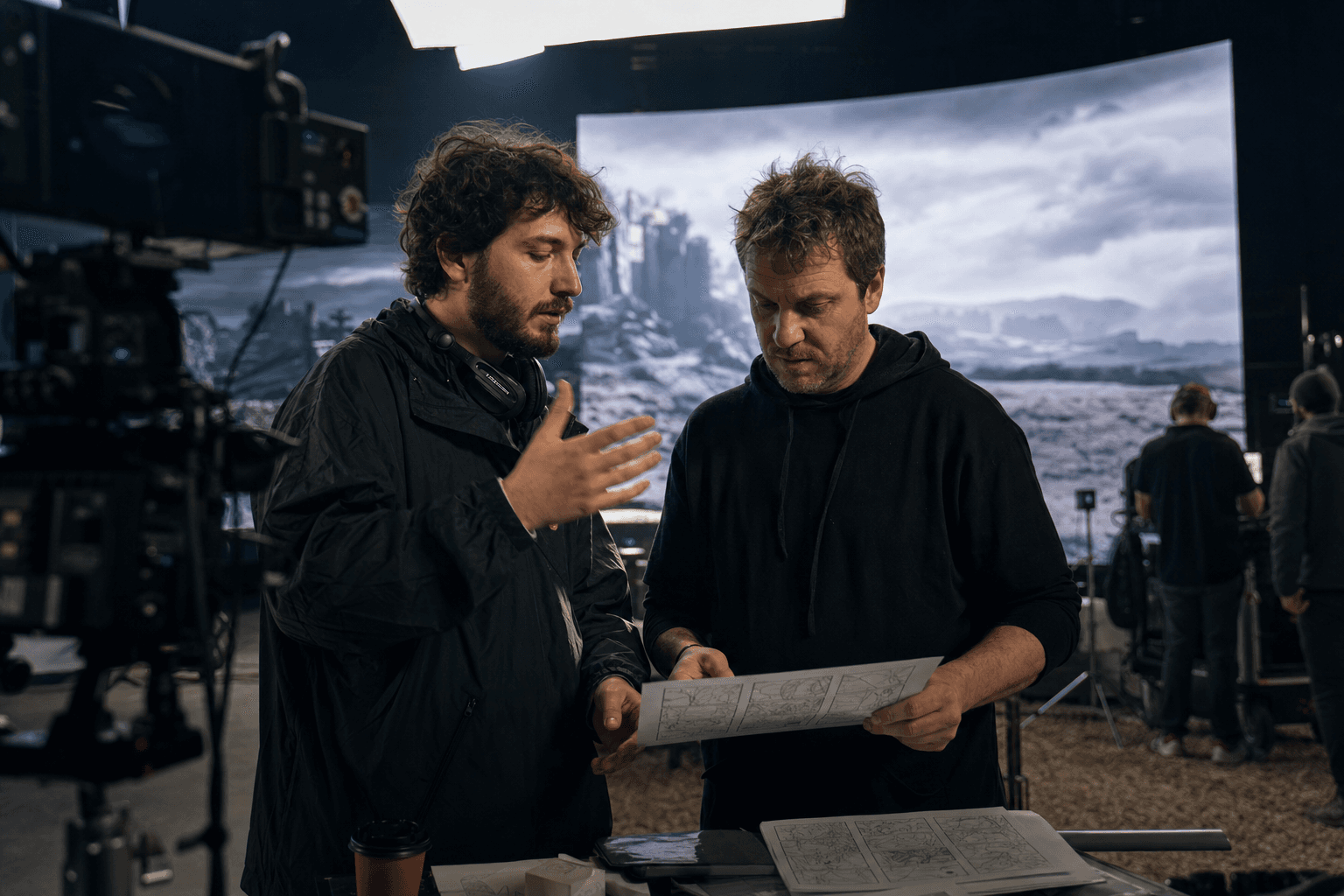
You want the Twitter list: "dead / not dead". The reality of a set or an agency does not work like that.
What is happening in 2026 is not a single tidal wave that replaces humans with sliders. It is a recomposition of tasks: some become trivial, others explode in complexity, and a handful of roles become rarer because they require judgment under pressure, diplomacy, and a legal responsibility that the model will never carry.
I speak as someone who has delivered ads, trained teams, and seen AI projects go up in smoke for a silly reason: no one had decided who was accountable when the shot lies.
Threatened does not mean "deleted": three misunderstandings to kill
The public frameworks evolve fast: read at least a stable synthesis on the European approach (European Commission AI strategy) and keep an eye on the cross-cutting culture / education questions (UNESCO AI). It is not actionable law for your contract, but it saves you from confusing "forbidden" and "frowned upon" when you pitch.
The myth of the 1:1 replacement
A job is not a LinkedIn box. It is a stack of micro-tasks. AI can swallow certain micro-tasks without deleting the whole job. Conversely, it can make a job more demanding because the expected volume climbs.
Concrete example: the classic storyboard. You can generate frames fast. But someone still has to settle the dramatic reading, the rhythm, the costume consistency, the budget feasibility, and the direction of the actors. If you confuse "aligned images" and "accurate narration", you produce a beautiful empty slide.
In the field, I have seen teams entrust an AI animatic to a junior with no frame. Result: impossible transitions, camera axes inconsistent with the real set, and a false client confidence about what is "already validated". It is not a tool problem. It is a narrative governance problem.
The myth of the fully automatic
AI pipelines stay sensitive to the brief, the law, the data, the calendar, and the humans who change their mind on Friday at six PM. The friction has not disappeared. It has moved toward orchestration.
Full automation assumes a stability of the need. Yet commercial audiovisual often lives in instability: legal feedback, late CEO validation, tone whim, fear of the competitor. The tools speed up the matter. They do not remove the politics.
The myth of the unique talent
If your advantage was "I know how to produce a correct render fast", AI raises the floor of the "correct". Your advantage must migrate toward judgment: choosing the right mistake, refusing a pretty but lying shot, arbitrating cost and credibility.
The talent becomes more contextual: same palette, same tool, two creators produce two different levels of credibility because one knows where the viewer looks first, and the other pushes the sharpness everywhere like a religion.
The jobs that transform the most (and how)
Editing and post-production
Editing becomes more hybridized: assisted pre-edit, earlier rough cuts, variations for audience tests, faster audio cleaning. What stays human: the dramaturgy of the rhythm, the listening of the silences, the management of the egos in the edit room, the ability to defend a cut in front of a panicked client.
If you edit, learn to speak the language of the generators without becoming a slave to the presets. You must know when a video interpolation is going to break a facial expression, and propose a solution (light reshoot, backup shot, reframing).
For the direction of voices and dubbing in a world of vocal tools, also read our guide on dubbing, voiceover, cloning and direction.
Writing and design
The writers do not disappear. They split: some become architects of narrative arcs, others become operators of a very fast creative echo chamber to iterate, others still become legal and tone guardrails. The danger is not the AI, it is the normalized mediocrity: flat scripts that sound "acceptable".
Here, the useful training looks like a classic writers' room, with a coach who brutalizes you on the scene that does not work. AI can speed up the iteration, not the decision about what must hurt the viewer.
Art direction and design
Art direction becomes more curator than producer of hundreds of anonymous mockups. You must steer systems: charter, consistency, prohibitions, palettes, textures, typographies, and sometimes internal pipelines. Taste becomes a governance skill.
The trap: becoming a "prompt DJ" with no guiding line. The counter-move: an art direction that knows how to write clear rules and visually prove why a shot is out of universe.
Production and line producing
Production loves anything that reduces uncertainty… as long as the responsibility stays clear. AI helps to estimate, simulate, preview. It does not replace the human hazards: weather, illness, ego, payment delays.
This job gains value if the person knows how to integrate AI workflows without promising the moon to the client. It is a rare skill: translating the technical limits into a realistic calendar.
Actors, talents, casting
The most sensitive threat is the deepfake and the vocal cloning with no frame. The actor's job does not die, but certain commercial uses become zones of intense contractual negotiation. The actors who understand their image as an asset and know how to negotiate clear rights stay indispensable.
Set, image, sound technician
Real capture stays a deep skill. AI mainly changes what happens before and after the shoot: previz, animatic storyboard, clean-up. The technicians who know how to dialogue with a virtual team and a real team win.
A DP who understands how an "almost perfect" AI shot is going to behave in the edit avoids days of retouching. A sound engineer who knows how to detect a badly aligned synthetic voice avoids a catastrophic broadcast release. These are hybrid skills, not replacements.
Marketing and "social" creative
Here the pressure is double: volume and speed. The teams that survive impose truth standards: no fake testimonials, no fake UGC, no generated "documentary" presented as real. The reputational risk often exceeds the click gain.
Concrete cases: three profiles that win or lose over eighteen months
The generalist with no line
He posts fifty demos. He cannot explain his process. He gets overtaken by a tool + a motivated junior. His curve does not die. It stagnates.
The hybrid specialist "image + truth"
He knows how to produce, but above all he knows how to prove: before-after, limits, alternatives. He becomes the person you call when the campaign is sensitive. His value rises even if his daily rate seems high.
The senior who refuses to tool up
He can stay artistically brilliant, but he loses tenders where the budget assumes a fast iteration. It is not a moral sentence. It is a market. The escape route: becoming a pure "author director" with a premium positioning, but this niche is narrow.
Synthesis with no complacency: three cautious predictions
- The price of generic assets keeps dropping. If you sell generic, you fight against machines.
- The price of judgment rises, but only if you know how to show it in a deck and in a final export.
- The scandals linked to visual disinformation are going to force internal guardrails, which recreates compliance and human-validation jobs.
Table: AI pressure by function (my field barometer)
| Function | Pressure on volume | Pressure on price | Pressure on judgment | Net effect on qualified employment |
|---|---|---|---|---|
| Rough edit / variations | Very strong | Strong | Medium | Recomposition toward finishing and advice |
| Generic illustration | Very strong | Very strong | Low | Reduction if you stay at "stock" |
| System / charter AD | Medium | Medium | Very strong | Rise if you steer pipelines |
| Artisanal sound design | Medium | Medium | Strong | Stable to niche rise |
| Executive production | Low | Medium | Very strong | Stable, rarely "replaceable" |
What becomes rare (therefore precious)
Taste under constraint
Knowing how to make pretty on an infinite demo does not always pay. Knowing how to make accurate with a budget, a brand guide, and a deadline, that pays.
Technical diplomacy
Explaining why an AI shot is not validatable without humiliating the client who "saw better on TikTok". It is a job.
Responsibility
Signing a master, validating a face, validating a voice, owning a campaign. The models do not sign.
💡 Frank's Cut: in the reviews, impose the two questions rule: "what do we promise the public?" and "what can we prove if a journalist challenges us?". If you have no answer, you are not ready to deliver.

Personal strategy: how to navigate with no bullshit
If you are a beginner
Choose a hybrid specialty: image + editing, or sound + dialogue, or writing + storyboard. Avoid the "I do a bit of everything on Midjourney" dispersion. Build ten finished deliverables rather than a hundred demos.
To stand out in a market saturated with generalists, our article how to stand out in the AI creation market stays a simple frame.
If you are a senior
Your advantage is not raw speed. It is arbitration. Learn just enough to command a pipeline, not to compete with a junior on the sliders. Your role often becomes "conductor" between humans, tools, and risks.
If you are a teacher or trainer
Your content must include the failure line: where the tool lies, where the law blocks, where the client changes their brief. Otherwise you train fragile operators.
Distribution, visibility and new value chains
AI lowers the marginal cost of certain forms of content. That does not mean the attention is free. Distribution stays a war. Understanding how a work finds its audience, even modestly, protects your job.
For a strategic reading on publishing and visibility, see our guide on the distribution of AI films and visibility strategies.
On the evolution of the tools and the directors' expectations, link our analysis of the new AI video tools and what they change in the field.
What studios will keep paying dearly for
They pay for the risk reduction: someone who avoids a scandal, a useless retake, a brand inconsistency, an illegal voice line, an "almost similar-looking" image that lingers on social media. They also pay for the mastered speed, not the draft speed.
They do not always pay for "even more variants" if these variants do not change the marketing decision.
Foire aux questions
Réponses rapides aux questions les plus fréquentes sur cet article.
Are editors going to disappear?
No in the sense that the narration stays human and political. Yes in the sense that the "editor who only chains shots with no intention" undergoes a price pressure, because tools can propose a credible first assembly for short formats or internal tests. The value rises on the listening, the rhythm, the consistency with the music, the version management, and the ability to integrate hybrid captured and generated shots. If you edit, your future looks like an artisan director who also understands how AI degrades or improves an emotion, not an executor of mechanical instructions. In practice, I see the good editors become directing partners: they anticipate the artifacts, propose recrops that save a face, and know how to explain why a "cheap" interpolation will cost more in credibility than in machine time.
Are illustrators "finished"?
Finished if you sell interchangeable generic. Not finished if you sell a signature, a direction, an identity, an ability to hold a series over twenty covers with no drifting. AI raises the floor of the average visual, which makes the style more discriminating, not less. The danger is economic: many clients are going to try to replace the commission with cheap packs. Your work then becomes the definition of the need, the curation, and the surgical correction of the subtle errors. The market also rewards those who know how to translate a charter into repeatable technical constraints, because it is there that the generators behave best.
Is AI going to kill traditional shooting?
It is going to complement it. For content where the real is central (documentary, performance, non-simulable human texture), capture stays queen. For content where the marginal cost must be low, you will see more hybrid pipelines. Shooting does not disappear, but some productions will reduce set days in favor of generative plates, with ethical and qualitative tradeoffs owned or not. The signal to watch is not the declaration of love for AI in a press release, it is the line-by-line budget on the next tenders: you will see where the money talks.
Which jobs are the most exposed over twelve to twenty-four months?
The tasks where the "sufficient" quality is defined low and where the volume is king: generic thumbnails, simple asset packs, ultra-standard advertising variations, certain throwaway storyboards for internal pitch. Conversely, the roles where you have to sign, negotiate, and explain choices stay more stable, because the responsibility does not virtualize. The exposure is not only economic: it is psychological. The jobs where people feel "replaceable" lose talents to other verticals, which creates local shortages even if the global market is noisy.
How to negotiate your salary or your fees in this context?
You no longer sell only a day. You sell a result and a risk reduction. Document your impact: time saved, iterations avoided, legal errors avoided, brand consistency. Clients understand a number better than a feeling. In parallel, avoid the races to the bottom on deliverables where AI has already broken the price: reposition yourself on packages where the judgment is visible. If you are compared to a tool, recenter the conversation on the final review: who signs, who owns it, who explains to marketing why this shot is false even if it is beautiful.
Does school still have a role?
Yes if the school teaches critique, history of formats, law, ethics, and set practice. No if the school only teaches buttons. The programs that integrate "demo vs deliverable" workshops produce more employable profiles, because they recreate the real pressure of a review. The school can also become the place where you learn to read regulatory frameworks without panicking, which is a direct professional skill for any distributed creation.
Which "non-sexy" skill becomes essential?
Documentation. The one who knows how to explain a pipeline, trace the sources, archive the prompts, and make a decision reproducible becomes central in the teams that grow. It is the hidden job behind the job. In internal audits, it is often the person who has traces who wins the trust, not the one who has the most beautiful Twitter thread.
Should you unionize or group together?
It is not my role to tell you what to do politically, but collectively, the standards of image and voice rights are negotiated better when the practices are not fragmented. If you are isolated, at minimum, document your contracts and talk to peers: the ignorance of the clauses costs you more than a software subscription. For the international frame of intellectual-property questions, the orientation page of the WIPO on AI and intellectual property is worth a look, without replacing a lawyer.
Do "solo" art directions survive?
Yes, but in a more demanding form: you must embody a line, not an encyclopedia of styles. The solo AD who knows how to industrialize an aesthetic with rules and proofs becomes very in demand. The solo AD who produces variations with no system finds themselves in direct competition with tools that never sleep. Choose your camp early.
Related articles
 Analyses
How Generative AI Transforms Creative Writing in Audiovisual
How generative AI changes the development of ideas, scenes, characters, pitches and audiovisual writing workflows.
 Guides
Becoming an Audiovisual Prompt Engineer: Skills, Outlets and Method (2026)
Beyond the magic-word lists: how to structure prompts like cinema briefs, deliver as a team, and build a career around AI video and image without getting replaced by the next model.
 Analyses
Artificial Intelligence and the Creative Industry: Opportunities or Dangers?
A reading grid for brands, studios and independents: where AI creates value, where it weakens trust, and how to decide without getting trapped by the marketing.