How to Turn an AI Video Into a Premium Ad
A complete method to turn an AI video into a premium ad: conversion-oriented creative frame, disciplined visual consistency, serious post-production and media quality control like an agency. The keyword turn AI video premium ad becomes here an executable checklist.
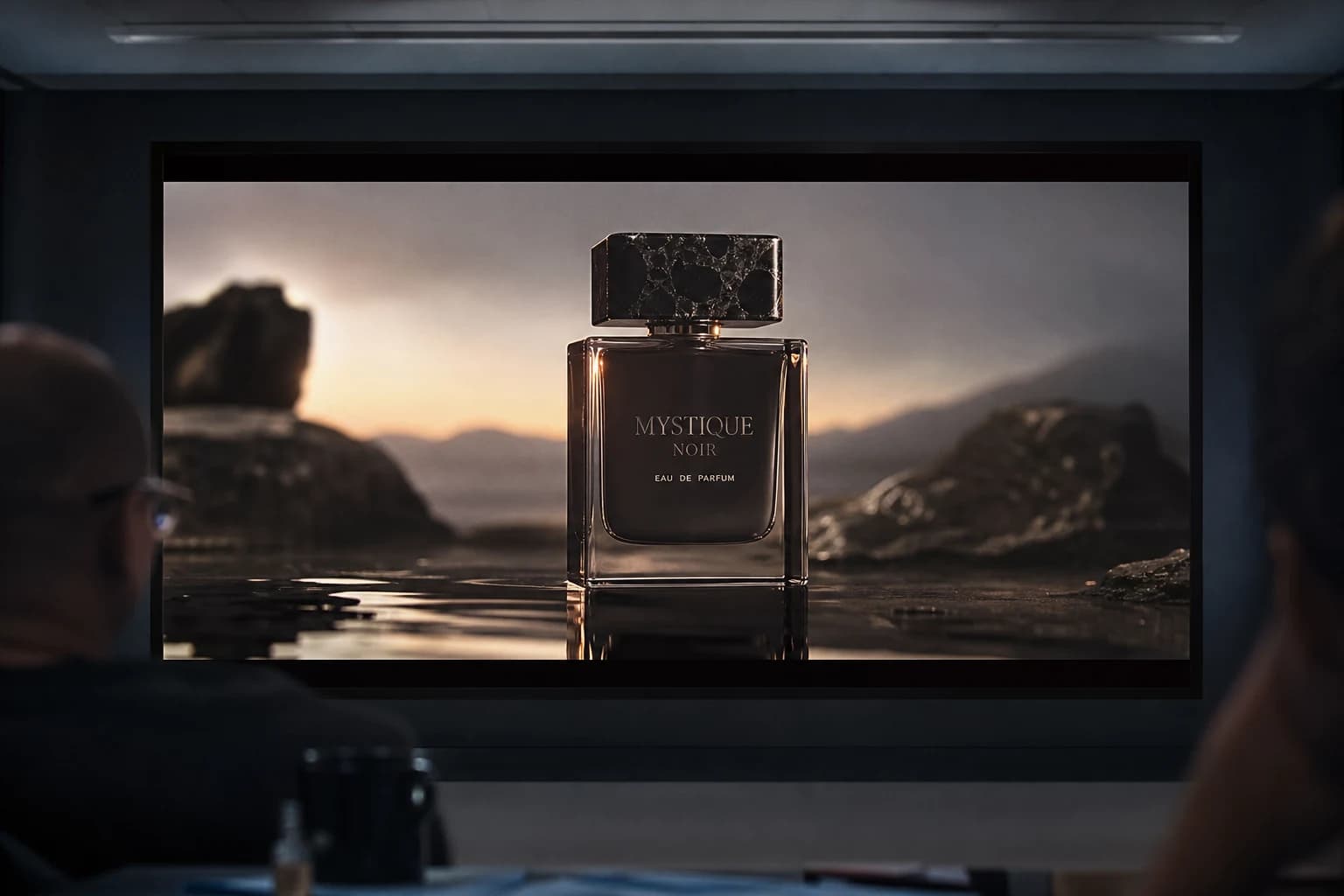
You just generated an AI sequence that impresses on a loop on your screen. You drop it into a real advertising environment and the verdict falls fast: noise too clean, micro details that "move" once compressed, rhythm that picks up secondary elements instead of carrying a promise, music that masks the buying argument. You do not need vague encouragement. You need a process that turns raw material into a premium creative, meaning an ad able to hold a serious media budget without decomposing on contact with the platforms.
In this article, the word premium does not designate a "luxury Instagram" style applied mechanically. It designates an ad where the viewer understands the intention in a fraction of a second, where the shots survive mobile reading after encoding, where the sound supports the message as much as the image, where the brand recovers a finish level comparable to a well-led agency production, with the current technical constraints of the generative models.
If you want to turn an AI video into a premium ad without settling for a fast "for social" edit, here is a complete grid that links strategy, visual pipeline, post-production and deliverables.
The meaning of premium in advertising, not that of the generative showreel
The mediatized premium begins with three simple conditions, and they are harder than they seem because they conflict with the creator's ego.
First condition: promise clarity. One must understand the offer or the solved problem before being impressed by a transition or a "cine" tracking shot. If the promise arrives too late, you produced a tool demo disguised as an ad.
Second condition: reading stability. At real speed, at the display size actually used in the campaign, the shot must not crack. The small flaws you tolerate on a calibrated screen become uncertainty signals on a phone outdoors.
Third condition: brand consistency. Colors, tone, typographic hierarchy and sound level must follow a plausible charter, even if part of the shots comes from synthesis. A premium ad is not a collection of "technical" shots. It is a communication object that looks like a single intention.
A tool demonstration video can live with its glitches because the user watches as a curious person. A bought ad must survive enemy scrolls, competitors who attack the same user problem with more surgical scripts, and media buyers who judge fast whether the creative deserves iteration or rejection. Turning an AI video without retouching this triangle stays cosmetic: you can gain in atmosphere, you do not gain in sustainable performance.
To anchor the strategic part and avoid the "pretty void" trap, pick up the foundations in creating a striking video ad with artificial intelligence. Even when your raw material is very cinematic, the brief must stay the pilot that imposes the cut of the too-decorative shots.
The compressed brief that avoids two weeks of creative drift
Before correcting pixels, impose a short and prescriptive internal document. It serves as a decision filter when the technical enthusiasm pushes you to add peripheral ideas.
Include at minimum:
- Voice and register: who speaks, formal or informal, a warm but expert tone rather than a fuzzy adjective like "nice".
- A single buyer problem and visible transformation: a single main narrative tension.
- Limited proofs: three elements maximum, for example a concrete use, a light quantified benefit, a short guarantee.
- Three-second hook: an opening that creates useful tension, not only a "wow" image.
- Distribution constraints: 16:9, 9:16, 1:1 ratios if necessary, planned destinations, language, possible legal mentions.
- Non-negotiable exclusions: hands in extreme close-up if your pipeline is unstable on the joints, text readable directly in the image if you prefer clean motion design, long complex shots if your deadline is short.
- Face continuity rule: acceptable level of micro movements if you animate from a still image.
- Light direction: calm morning, dark premium studio, soft backlight. Choose a family, avoid three different families with no owned transition.
- Approximate sound targets: an indicative LUFS range for your main networks avoids surprises in mastering.
- Narrative variants: two or three acceptable angles for creative tests, but not seven stories in parallel.
At each late idea, you ask a simple question: does it make the buyer problem more obvious in under five seconds? If the answer is no, you file the idea for an out-of-campaign exploration.
When you must close fast, the same decisional discipline exists in sprint form in how to produce an AI video in 24h. A premium ad is not necessarily "slow" to produce on the calendar, but it is dense in its creative trade-offs from the first written lines.
Pipeline consistency when several models coexist
A frequent cause of "premium failure" after generation comes from the collage of aesthetics: one hyper-sharp clip, another very pictorial, a third that recalls a revisited TV spot with no shared narrative intention. In a personal playlist, it can pass. In a continuous medium, it looks like an internal test and it lowers the product credibility for a skeptical viewer.
Install three creative guardrails.
A frozen color reference. Choose four semantic colors and a technical black value for your backgrounds or contrasts. You use it to realign shots that come from different engines. You thus avoid the feeling of chromatic collage.
A stable light behavior. You can do a soft backlight or a simplified classic key, but you do not mix four contradictory languages with no strong creative reason.
A grain and sharpness scale. If everything is surgical and textureless, add a light even grain and a slight treatment to bring the whole closer to a realistic medium. Conversely, if you aim for a natural DSLR, avoid an aggressive sharpening that creates very visible halos after compression.
To transfer a serious "pilot image then movement" logic, the step-by-step structure is detailed in the complete Seedance 2 workflow for a cinema render. Even if you use another model, the essential stays the same: locking the master image, controlled movement amplitude on the fragile zones, feedback based on phone reading before laptop.
An industrial tip: reuse environments instead of reinventing a giant set every four seconds when you are still consolidating a small brand. A common visual denominator reduces the cognitive load and increases the memorization of the color codes, even when your narrative variants change.
Editing as a prescriber, not as a prompt compiler
An AI video can be "premium" at the shot level and weak at the advertising-object level if the edit just chains impressive sequences. Often start with a radio edit even an approximate one: you first check the economy of attention, then the final color.
Useful work:
- cut the micro silences where the generator hesitates and creates a weird breathing;
- tighten the narration around the buyer problem more than the set;
- install text placeholders for a precise call to action, even if the final version will go in a separate motion file;
- test at least three openings: direct question, short contradiction statement, simple product movement readable immediately.
If your first three seconds are "successful atmosphere" with no "precise problem", you can spend ten hours in grading, you will keep a soft medium. To take the media-buyer logic seriously and avoid social ads narration clichés, read how to create a video ad with AI like a pro agency. At this stage, your work also consists of resisting the models that push you by default toward the spectacle.
Color post-production that unifies and masks without lying
Grading for real distribution, not for the pleasure of the screen
Grading must serve four missions:
- adjust the global exposure anticipating compression and lift on mobile;
- align a brand atmosphere, even when two shots have different sources;
- attenuate skin zones where the generator oscillates too much between shades;
- avoid a gadget HDR look if your market must stay sober.
Start with the general balance then treat locally only where necessary, for example around the hair if you see a typical light halo.
Grain and texture, measured
Grain is not a magic wand, it is a medium signature. Too strong, it becomes mud after aggressive encoding. Too absent, you stay on a plastic feeling when you had to sell tactile or human.
A reasonable approach: add a light texture on the mids, protect the readability of the eyes when the face carries a promise, and treat a product packshot differently where sharpness is a merchant quality signal.
Re-timing and stabilization without destroying the details
A near-perfect shot can suffer from a micro camera jitter. Correct moderately when necessary, but avoid a strong stabilization that gelatinizes the packaging on a critical product insert. For the rhythm, a clean cut is better than a pushed interpolation everywhere when you risk the weird face fluidity.
Mixing where the ad wins the sound battle after a silent scroll
Many "almost premium" pieces break when the user turns the sound back on. The music dominates like a trailer, the voice whispers, yet the message demands seriousness. Fix by thinking sound hierarchy and breathing.
Voice, even synthetic
Lower the instrumental bridges where critical syllables fall. A modest vocal EQ that frees the mids helps the comprehension. If you have several synthesis takes, slightly unify the timbre to avoid the patchwork impression.
Marketing-oriented sound design
You do not need a thousand cinema layers. A credible interface click sells the onboarding. A hood-closing sound reinforces the tactile trust. A discreet whoosh can mark the cut on a key figure, for example a deadline promise, provided it serves the message and not the editor's ego.
Mastering and dynamics
Make sure to avoid transients that clip once the platform applies its processing. Keep a wide master internally if the client wants to decline on several destinations without starting from scratch.
Moving text and logos with no typographic hallucination
An AI video that displays text directly in the image often produces unstable letters, especially in movement. For legal, figures and claims, you gain credibility with vector layers in post. For dynamic supertitles, strong contrast and a simple hierarchy. For the logo, respect the charter margins even on short formats.
A premium ad reads fast: strong typography, short sentences, internal jargon avoided as long as you have not validated that your audience understands it without effort.
Multi-screen quality control before validation
A short but honest checklist:
- watch the entire creative on a phone, medium brightness, not only on a perfect monitor;
- watch the lip sync if you promise a credible naturalness;
- observe the perspective jumps between shots, some become glaring after a double encoding;
- check the skin consistency if you reuse the same character;
- confirm the readability of the legal mentions on compressed stories;
- clarify the music rights if you aim at TV or specific territories;
- watch out for black bars or brutal automatic reframes on certain placements.
A useful philosophy: reject early, reject fast. The emotional attachment to a prompt-expensive shot must not block a more solid edit overall.
Deliverable packaging and nomenclature that ease the media exploitation
Even internally, treat the render as a pro handoff:
- a clean master, ideally with no embedded legal text if you must decline;
- variants named by ratio and use, for example
META_9x16,META_1x1; - a synchronized SRT file for accessibility and localization;
- a one-page rationale sheet: tested angle, KPI hypothesis, what you refuse to promise.
Classic mistakes that block the premium transformation
Overestimating the beauty of the shot against the clarity of the offer. A hundred sunsets do not save a fuzzy promise.
Multi-model chain with no color unification pass. Each tool has a signature, with no common correction the collage stays visible.
Neglecting hands, interface text and microscopic details. Often, reframing costs less than hours of approximate masking.
Free "trailer" music too present. Useful silence and breathing often carry a sober premium argument better.
Ratios forgotten until the last moment. The platform's automatic reframe can destroy a framing you refined on 16:9.
Hook tests with no isolated variable. If you change the image, the music and the text simultaneously, you learn nothing about the real performance.
Iteration driven by hypotheses, not by creative anxiety
The mediatized premium is also distinguished by the way you modify a creative after the first data. If you change the visual hook, the music, the embedded text and the duration at the same time, you will not know what moved a metric. The most solid teams ship tight versions: one variable per iteration, a hypothesis written before export, a minimal success criterion.
Examples of useful hypotheses: "if I open on the problem in one sentence rather than on the product, the three-second retention increases", "if I lower the music by two perceptual decibels on the figures passage, the subjective comprehension in internal testing improves", "if I replace a face shot with an off-frame hands shot, I reduce the artifact risk without losing the promise".
Keep a light trace of the versions: v01_hook_product, v02_hook_problem, rather than a sea of final_final files. It is not bureaucracy for pleasure. It is the condition to learn fast when the media pressure rises.
Rights, mentions and trust when the material is synthetic
Even when the pipeline is legal in your context, the premium ad lives in an ecosystem where trust counts as much as the render. Anticipate three points: consistency between what the video shows and what the landing page promises, visibility of the mandatory mentions depending on your sector, and internal clarity about what is real footage, stock, or generated.
If you use synthetic faces, think about the acceptable level of realism for your audience and the consistency with the rules of the platforms you target. Premium is not "deceiving more elegantly". It is clarifying faster without breaking the promise. In doubt, you reduce the ambition of the risky shot and you replace it with a simpler but verifiable proof: real interface, sourced figure, sober demonstration.
For the music assets, treat the rights as seriously as on a classic production. A serious media chain can stop for an incomplete file when your pixels were beautiful.
Five-day roadmap to industrialize without mythologizing speed
Day 1: prescriptive brief, validation of the single message, unified color and light moodboard.
Day 2: limited pilot generation, ruthless selection, no out-of-scope variant that arrives by panic.
Day 3: structure edit, compliant text placeholders, radio edit if narrative.
Day 4: unifying grading, reasoned grain, audio mastering aligned with the main destinations.
Day 5: multi-screen QA, named exports, test sheet, small micro fixes if the campaign is iterative.
A five-day timeline is not a law. It mostly confronts the fantasy of "instant premium" with reality: the generators accelerate the capture, not the judgment.
Conclusion: transforming without cheating the buyer's perception
Turning an AI video into a premium ad is not applying a fashionable LUT. It is producing consistency after real compression, a promise supported by discreet but credible proofs, a reproducible process to reduce last-day improvisation, and humility before a quality rejection when the favorite shot does not hold up.
To navigate the site according to your immediate need:
- conversion foundations: creating a striking video ad with artificial intelligence;
- short sprint: how to produce an AI video in 24h;
- image-to-movement pipeline: the complete Seedance 2 workflow for a cinema render;
- agency posture: how to create a video ad with AI like a pro agency.
Your durable goal is not to dazzle other AI creators. It is that a busy human stops their scroll because the clarification of the promise arrives immediately, since the aesthetic supports that conviction without becoming an empty set.
When these layers come together, turning an AI video into a premium ad leaves the status of a vague marketing slogan to become a reproducible skill: a decided brief, a disciplined edit, a responsible audio and image finish, an honest QA, a packaging respectful of real media operations.
Related articles
 Tutoriels
How to Turn an AI Image Into a Fluid, Credible Video
A precise process to animate an AI image without breaking the realism, from keyframe to final render.
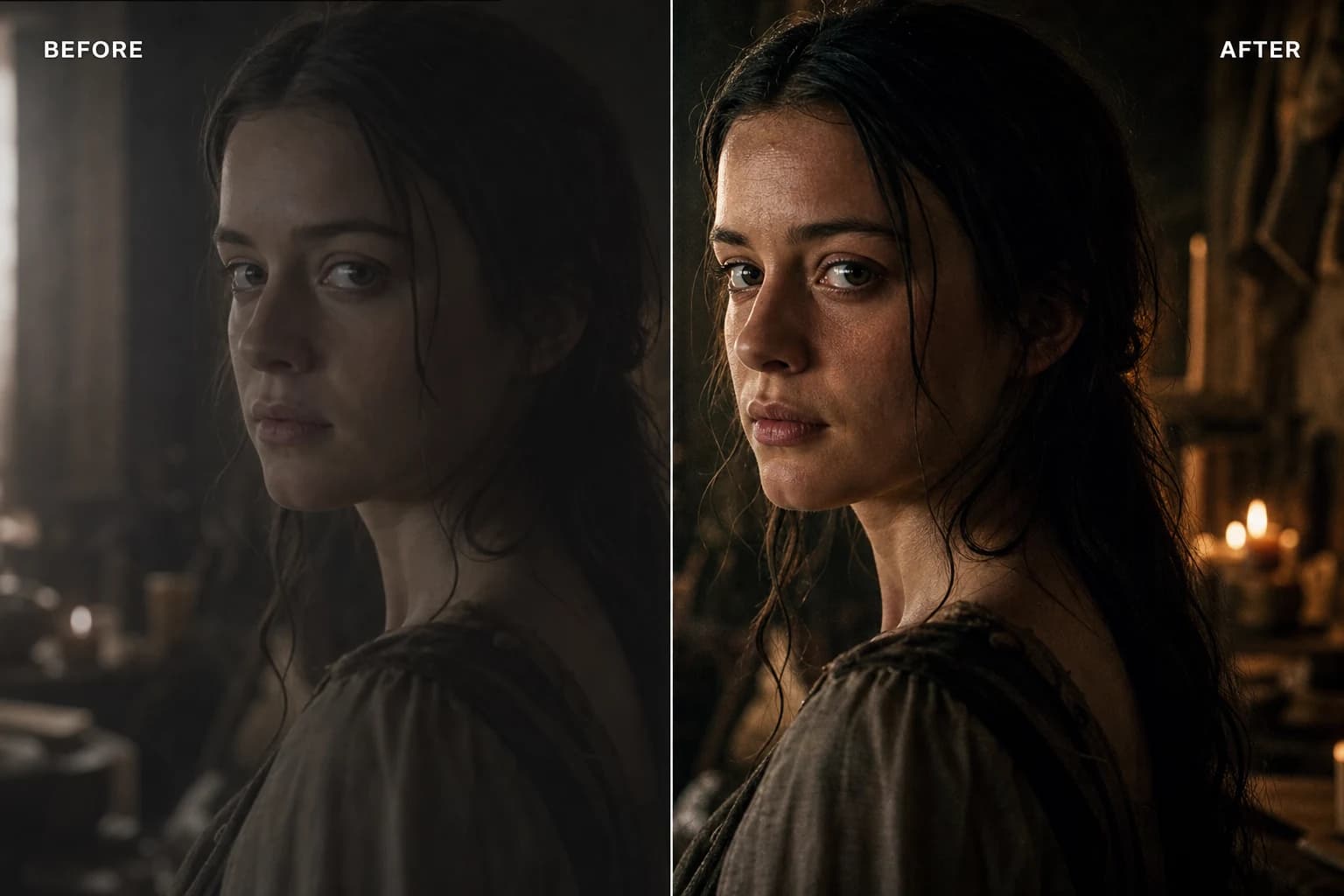 Tutoriels
How to Improve an Average Render into a Pro Render
A decent AI video shot is not enough on a serious screen: layer-by-layer diagnosis, a solid post chain, controlled upscaling and rejection discipline to go from an average render to a pro render with no magic or misleading promises.
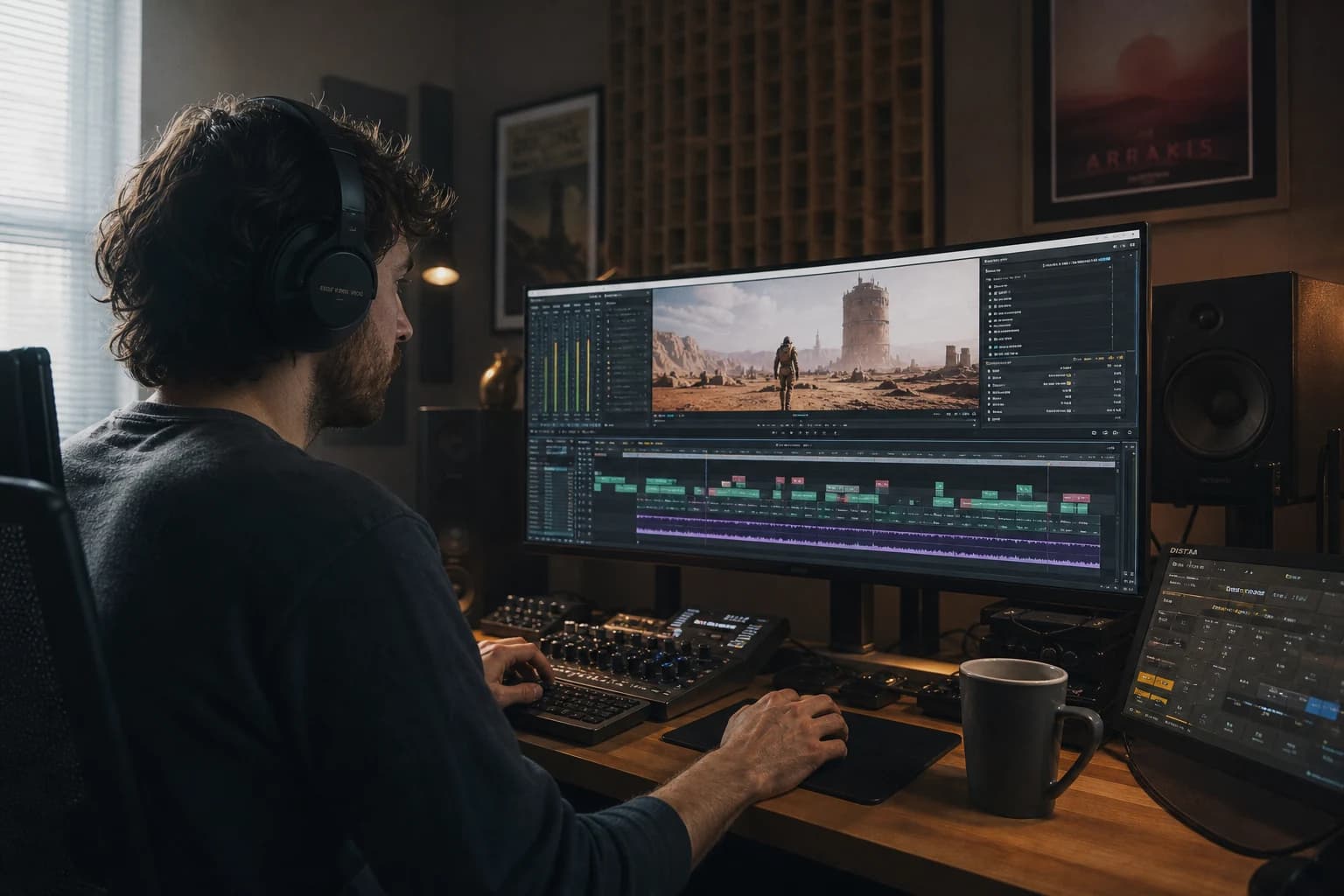 Tutoriels
How to Integrate Sound Design into an AI Video
A practical method to integrate sound design into an AI video: audio layers, synchronization, synthetic voices, ambiences and a mix for a credible render with no noise or amateur collage. The keyword AI video sound design becomes a delivery protocol here, not a catalog of effects.