Ozzy Fox on Disney+: what Animaj's AI actually does
Ozzy Fox, animated with tools from French startup Animaj, comes to Disney+ in December. Where AI enters the pipeline, and what it does not do.
Contents · 6 sections
Disney sued Midjourney and MiniMax over images of its characters. In December, the same Disney puts a children's series animated with AI tools on Disney+: Ozzy Fox. And those tools come from a French startup, Animaj.
Bloomberg reported it on November 13, 2026, in a story about Disney's turn to AI under its new CEO, Josh D'Amaro. I read the syndicated story on Yahoo Finance, the summary by The Next Web, and above all Animaj's own article on how the series is made, on November 16.
What Bloomberg reports
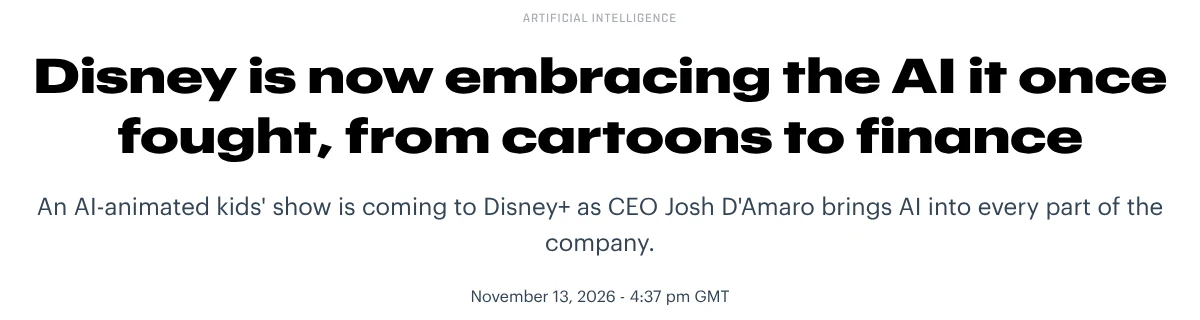
Source: The Next Web, captured on November 16, 2026.
According to Bloomberg:
- Ozzy Fox comes to Disney+ in December. It is a music-driven preschool series about an orange fox who keeps bursting into song.
- It is the result of a year-long collaboration with Animaj, whose tools turn artists' drawings and text instructions into 3D animation.
- Disney uses AI elsewhere too: an internal tool to automate budget reports, AI viewing suggestions tested with some US Disney+ subscribers, and a demo, from startups in its accelerator, of a hybrid shoot that places an actor's performance in a generated environment.
- The OpenAI partnership fell through when Sora shut down, one week into D'Amaro's tenure. It planned a $1 billion investment and a license on more than 200 characters.
The show is not new to everyone. Its first episodes came out on YouTube in July, where some viewers called it "AI slop". What changes is that it now enters Disney's flagship platform.
What AI actually does on Ozzy Fox
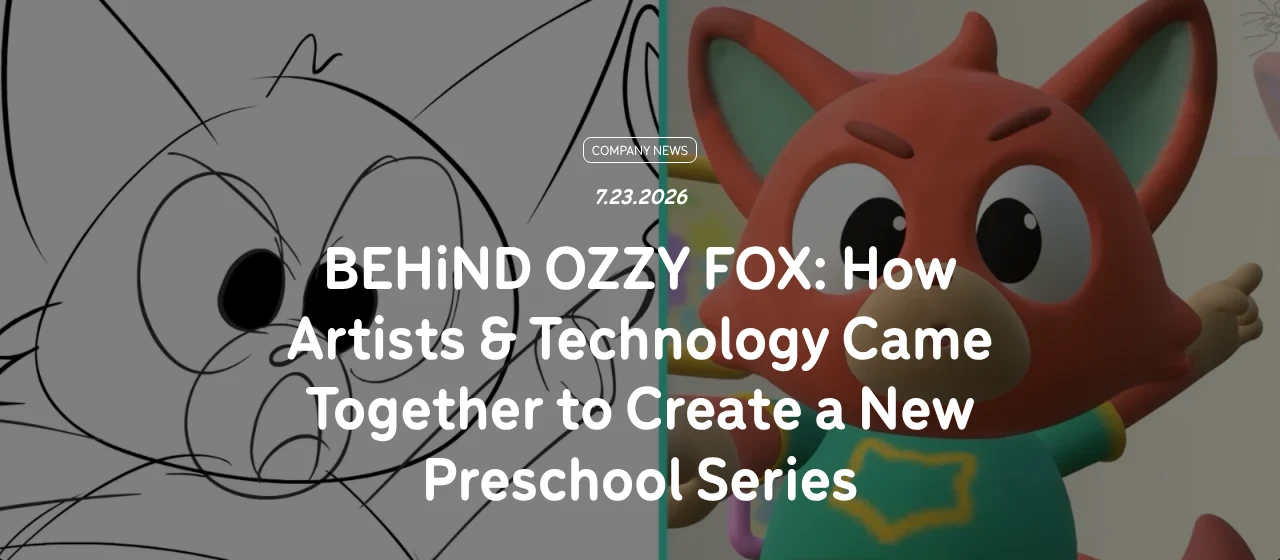
Source: Animaj's website, captured on November 16, 2026.
This is the part I care about, because it is precise. Animaj published the details of its pipeline in July, and AI does not do what people imagine.
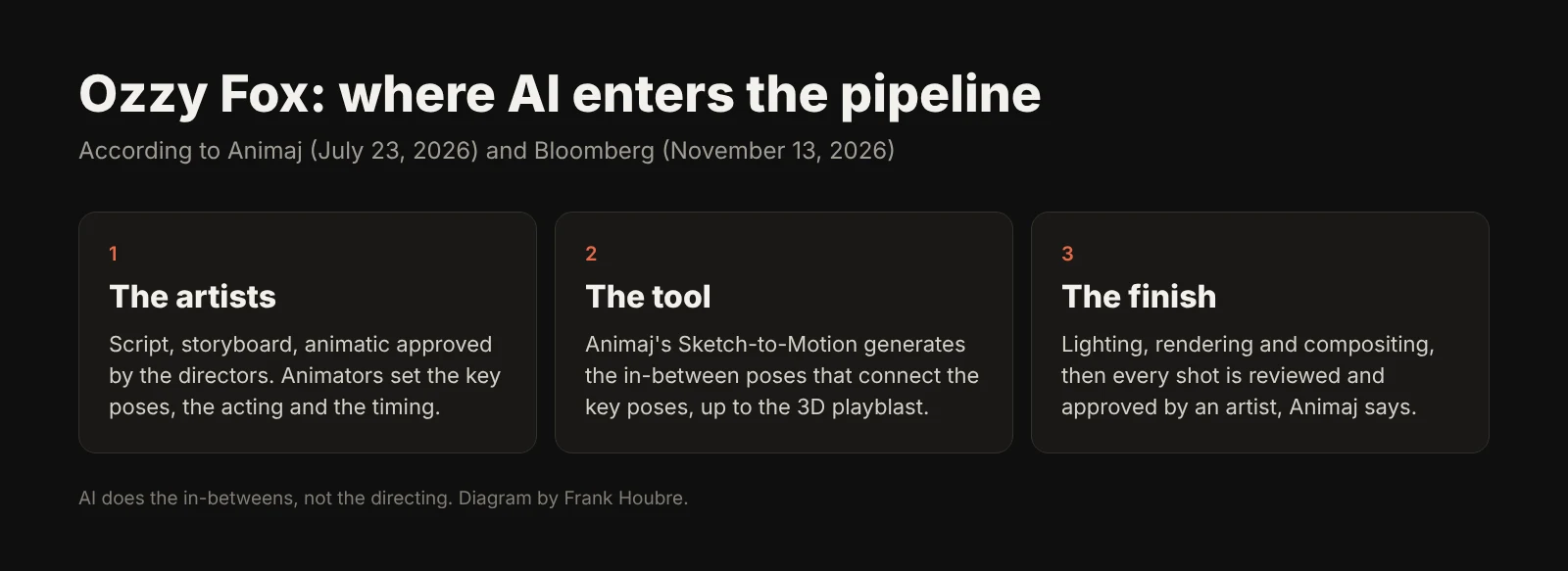
Every episode follows a classic pipeline: writers, storyboard artists, directors, animators. Artists produce the animatic, the animated version of the storyboard, which the directors approve. Then Animaj's in-house tool, Sketch-to-Motion, helps turn the animatic into a playblast, a first low-resolution 3D version. Its job: generate the in-between poses that connect the key poses an animator has set.
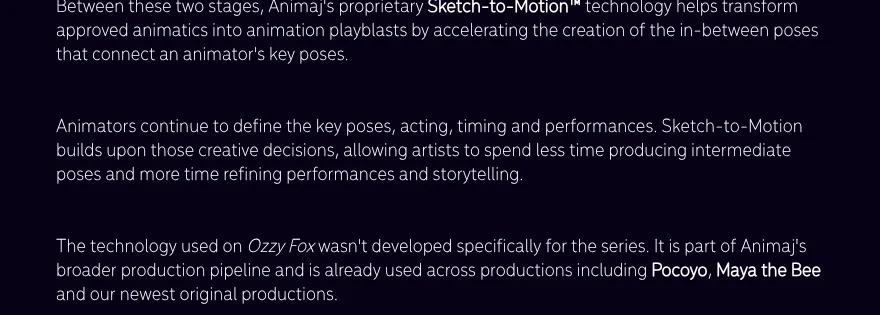
Source: Animaj's website, captured on November 16, 2026.
Animators keep the key poses, the acting and the timing. Animaj says it plainly: "So no, we did not type a prompt and get a fox." The company says every frame is reviewed and approved by an artist, and that the same tool already runs on Pocoyo and Maya the Bee.
Bloomberg describes it a little differently, with drawings and text instructions turned into 3D animation. Both accounts agree on one point: the drawing comes from the artists first.
Interpolation, again
This may ring a bell. A week ago, Sylvain Chomet denied any generative AI in his short film for Dior, while admitting automated interpolation for some in-betweens. Same technique, two opposite stories: one denies it, the other makes it a selling point.
So the real question is not "AI or no AI". It is where it sits in the pipeline, and who stays in charge. Computing in-betweens between two poses drawn by a person is not generating an episode from a sentence.
💡 Frank's take: I find this case more useful than every "AI slop" debate. Animaj shows exactly where AI sits in its pipeline, and it is the place I recommend to the people I train: behind the decisions, not in front of them. The day you pitch a project to a broadcaster, this is the diagram they will ask for, not the model's name. Disclosure on my side: I build ScreenWeaver, a pre-production tool, and Animaj now sells its own AI pipeline, FlipMove. We don't play on the same field, but you should know.
What I would do this week
- Draw your pipeline on one page. Script, storyboard, animatic, animation, render: for each step, write who decides and which tool helps.
- Keep the key poses human. If you animate with AI, start with the frames that carry the emotion of the shot, and let the tool do the rest. To pick a tool, my roundup of the best AI tools for animation in 2026 saves you time.
- Prepare your answer to "is this AI?". One clear sentence on what AI did, and what it didn't. Ozzy Fox's audience asked for it, and the show was first judged without it.
What we don't know
- The exact Disney+ release date. Bloomberg says December, without a day.
- How much AI each episode uses. Neither Disney nor Animaj gives a figure, and trade outlets such as Cartoon Brew noted the lack of detail at the YouTube launch.
- Which countries get it. The story does not say whether the series lands on Disney+ in France at the same time.
Frequently asked questions
Quick answers to the questions readers ask most about this article.
What is Ozzy Fox?
A music-driven preschool series developed by Disney Jr. and the startup Animaj, created by Jennifer Oxley and developed by Guillermo García-Carsí, the creator of Pocoyo. It came out on YouTube in July 2026 and comes to Disney+ in December, according to Bloomberg.
Who is Animaj?
A French animation startup, led by Sixte de Vauplane, that produces children's series such as Pocoyo and Maya the Bee and builds its own AI tools for animation.
Did AI make all of Ozzy Fox's animation?
No, according to Animaj. Animators set the key poses, the acting and the timing. The Sketch-to-Motion tool generates the in-between poses, and an artist reviews every frame.
Why is Disney turning to AI after suing AI companies?
According to Bloomberg, Disney wants to keep control of its characters rather than hand them to AI companies. It uses AI internally, with chosen partners such as Animaj or Adobe.
What is interpolation in animation?
It means computing the frames between two key poses. Studios already did it by hand or with software. AI speeds up that step without deciding the staging.
Can I do the same on my projects?
The principle, yes: keep the human decisions (storyboard, key poses, acting) and let the tool fill the in-betweens. Animaj's tools are in-house, but other software offers interpolation between frames.
Related articles
 Actualité
Film schools teach AI to screenwriters: 90% craft first
The Los Angeles Times shows how LMU, USC and Chapman teach AI to young screenwriters: 80 to 90% craft, 10% tools. What it changes for you.
 Actualité
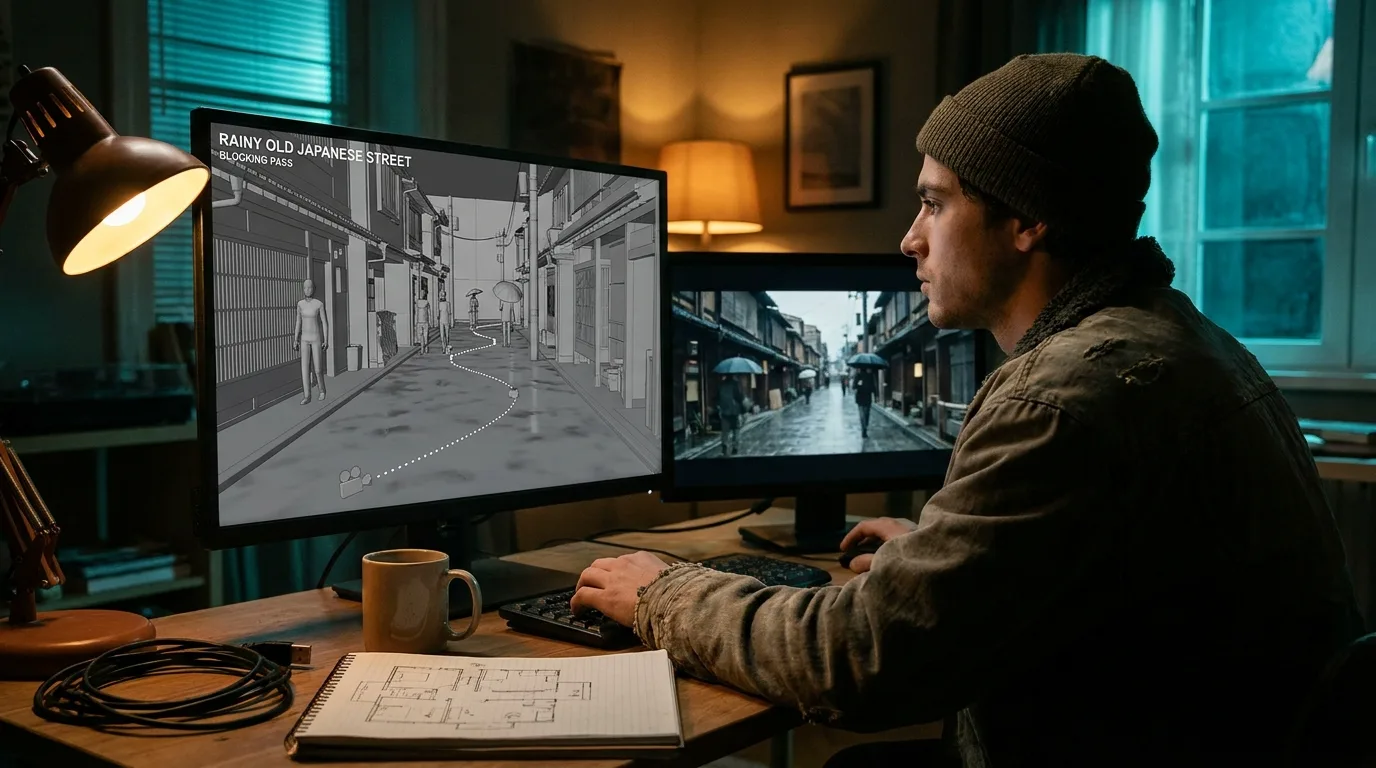
3D previz: direct your AI scene instead of prompting it
Intangible 2.0 and Bloomway launch the same week with one idea: set the scene and the camera in 3D before you generate. What it changes for you.
 Actualité
Writing with AI: a study says keep the idea for yourself
A study in PNAS Nexus compares three ways of writing with AI. Letting AI do everything gives the weakest stories. What it means for your screenplay.