Grimes stars in Gods Don't Give Gifts, an AI film for theaters
Grimes lends her voice and likeness to the AI film Gods Don't Give Gifts, in US theaters on December 4. What is human, what is AI, and what it means for you.
Contents · 6 sections
On November 5, 2026, the studio Fable announced that Grimes has joined the cast of Gods Don't Give Gifts, a science-fiction feature whose images are all generated by AI. The singer gives her real voice and her AI-recreated likeness to a character written for her. The film opens in US theaters on December 4.
It's the first time an artist this well known has taken a role in an AI film headed for theaters. I couldn't find Fable's press release online, so what follows comes from the articles published on November 5 by PEOPLE, Forbes, Billboard, Consequence and The Verge, which quote that release and the filmmakers. I read them on November 6.
What was announced on November 5
Gods Don't Give Gifts is an anthology of four connected stories, set in a future where consciousness moves between bodies, memories are bought and sold, and death is no longer final. It is directed by Zack London, known online as Gossip Goblin, and produced by Edward Saatchi, CEO of Fable. The Verge writes "Jack London"; PEOPLE, Forbes, Billboard and Consequence all write Zack.
Grimes plays Zayinth Alda, a disaffected aristocrat of the NiiroCore clan and niece of the inventor of the "Substrate Migration Protocol." In the clip released with the announcement, she visits a dealer of dreamspools in the slums of East Cinder.
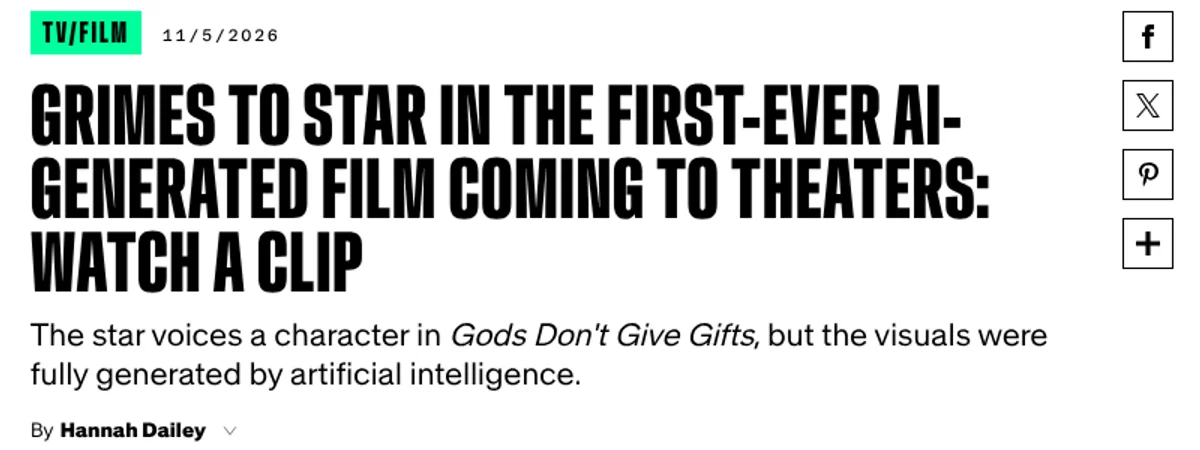
Source: Billboard, article by Hannah Dailey, captured on November 6, 2026.
The numbers and dates going around all come from the studio, not from an independent source:
| Point | What Fable and Zack London announce |
|---|---|
| Release | December 4, 2026, US theaters |
| Format | Anthology of four connected stories |
| Trailer | Released October 6, 16 million views per the studio |
| Promotion | Times Square billboards since November 2 |
| Awards | Submitted for the Oscars (Best Animated Feature), BAFTA and Golden Globes |
| Contest | $15,000 for a fan short film, winner named on December 4 |
The terms of Grimes' deal have not been disclosed.
What is human, what is AI
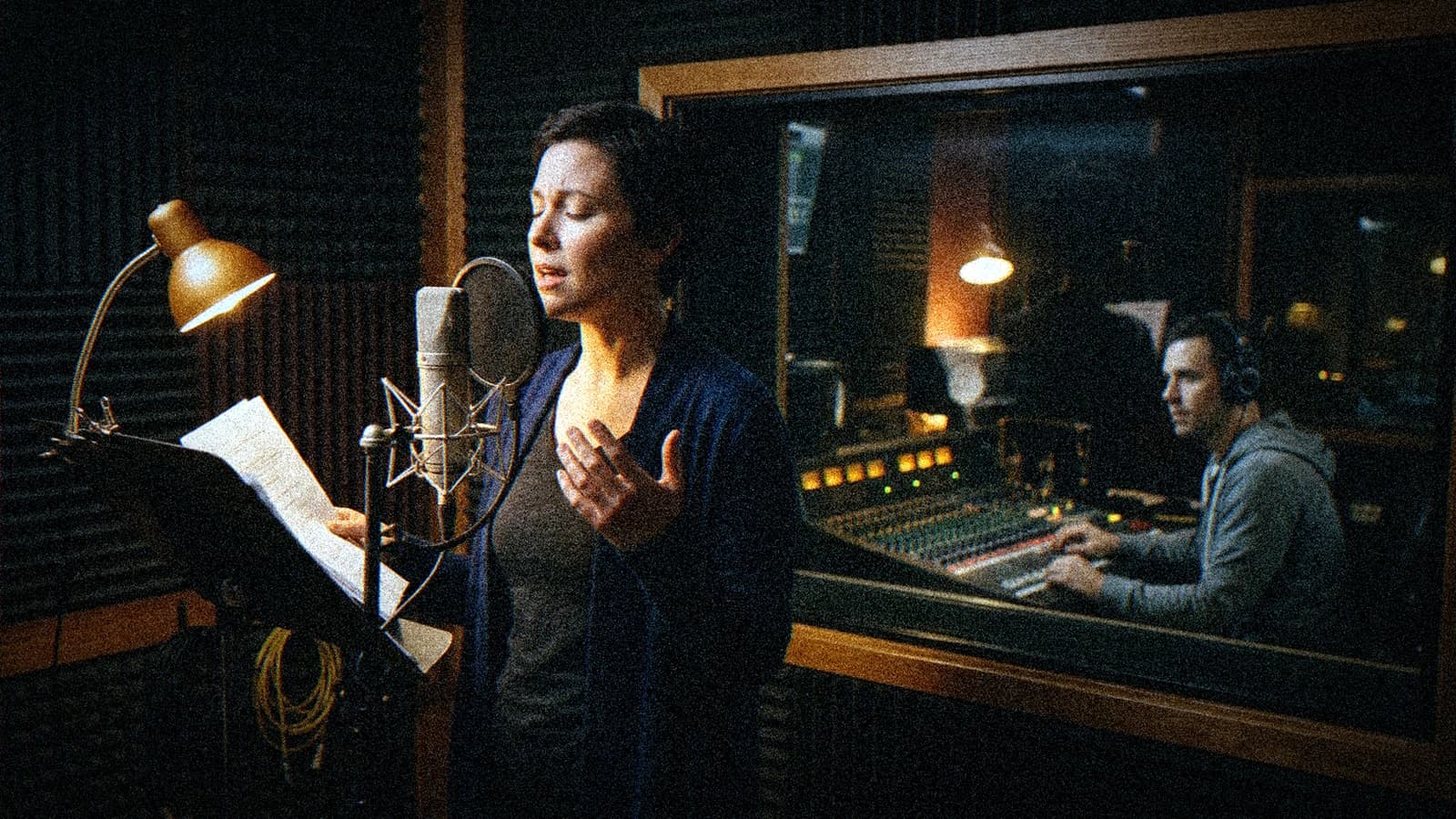
This is the most interesting part, and it needs a careful read. Grimes' voice is not generated. She recorded her lines, and according to Zack London, quoted by Forbes, the character's acting "is all driven by Grimes' vocal performance." Her on-screen likeness is made with AI, like every other image in the film.
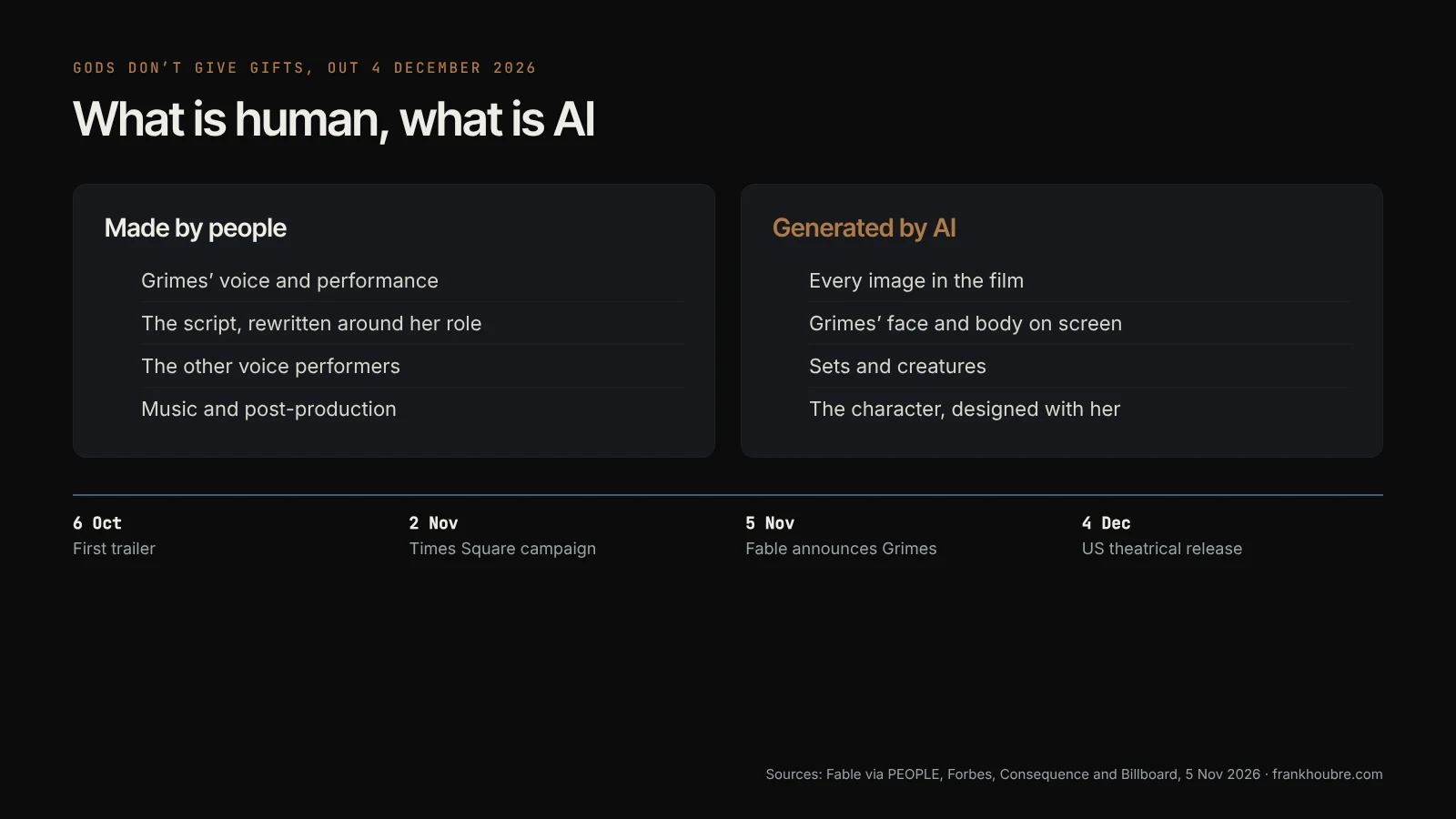
Consequence adds that London worked with real writers, voice performers, musicians and post-production staff. The role was rewritten around Grimes after he reached her through mutual friends, and the character was designed with her, drawing on her stage outfits.
Edward Saatchi sums up the bet in Forbes: likenesses of real people, driven by their own voices, "are going to be in a lot of movies." Fable's release, quoted by The Verge and Billboard, says the same thing: actors, athletes and musicians will give vocal performances with their likeness in AI-animated films.
💡 Frank's cut: this setup (real voice, generated image) is the one I find most honest today. The acting stays human, and AI does what it does best: the image. It's also the only setup where the performer's consent is clear, because she is in the booth.
What we don't know yet
- How many screens. No article gives a screen count or names a distributor.
- How big the role is. PEOPLE notes it's unclear how many of the four stories feature her character. She appeared only briefly in the October 6 trailer.
- The real audience. In Forbes, London claims about 40 million monthly viewers on Instagram, 25 million on X, 25 million on YouTube and 20 million on Reddit. Those are his own figures, unverified, and he admits he doesn't know how many will buy a ticket.
- The Oscars. A submission is not a nomination. Nothing yet says the Academy will accept a fully generated film in the animation category.
What it changes for you as a creator
First, proof that a solo creator can reach theaters. Gossip Goblin has posted three short videos a week for four years, according to Forbes. The film didn't come out of a Hollywood studio, it came out of an audience. If you're building a story world on YouTube or Instagram, that's the path to study. My guide to distributing an AI film covers the more modest options.
Second, casting changes. A performer can now be hired for their voice and likeness, with no shoot. That raises very concrete contract questions: what you're allowed to generate, for how long, and what happens after the film. I cover it in my piece on AI actors and rights. The rule to keep: a written, signed agreement that spells out how the likeness and the voice are used.
Third, the voice becomes the heart of the performance. When the image is generated, the vocal performance carries the emotion. The methods for directing voice-over matter more than ever, with a real person at the mic.
What I'd do this week
- Watch the Grimes clip and note what works and what doesn't: lip sync, eyelines, hands. It's a good benchmark of where the tech is.
- Record a real voice for your next short, even a friend or yourself, rather than a synthetic one. Compare.
- Draft an agreement template for anyone whose likeness you use. One page is enough to start.
- Watch December 4. The first box office numbers will show whether audiences pay for an AI film. That's the real story to follow.
Frequently asked questions
Quick answers to the questions readers ask most about this article.
What is Gods Don't Give Gifts?
It's a science-fiction feature billed as the first fully AI-generated film released in theaters. It brings together four connected stories in a future where consciousness changes bodies, memory is for sale and death is no longer final. It's directed by Zack London, aka Gossip Goblin, a creator followed on YouTube, Instagram, X and Reddit, and produced by Edward Saatchi for the studio Fable. It is set to open in US theaters on December 4, 2026, according to every article published on November 5.
What role does Grimes play?
Grimes plays Zayinth Alda, a disaffected aristocrat of the NiiroCore clan and niece of the inventor of the "Substrate Migration Protocol." The character was written for her: Zack London rewrote the role after reaching her through mutual friends, and the design was worked out with her, based on her stage outfits. It's not yet known how many of the four stories feature her. In the clip released on November 5, she visits a dealer of dreamspools in the slums of East Cinder. The terms of her deal have not been disclosed.
Is Grimes' voice generated by AI?
No. According to the filmmakers, quoted by Billboard, Consequence and Forbes, Grimes recorded her real voice and her real lines. What's generated by AI is her on-screen likeness, like every other image in the film. Zack London told Forbes the character's acting is entirely driven by her vocal performance. That's a key difference from a voice clone: the performer is in the booth, and her consent covers one specific role, not open-ended use of her voice.
When and where does the film come out?
The film opens on December 4, 2026 in US theaters, according to Consequence, Forbes and PEOPLE. None of the articles published on November 5 gives a screen count, a distributor's name or a release date outside the US. The trailer, released October 6, has reportedly passed 16 million views according to the studio, a figure nobody has checked independently. A Times Square billboard campaign has been running since November 2 and is due to switch to Grimes after the announcement.
Can the film really compete at the Oscars?
Fable has announced a submission for Best Animated Feature, and Consequence also mentions the BAFTA and Golden Globes. But submitting a film doesn't mean it gets nominated. The Academy first has to find the film eligible, then voters have to pick it. As of November 6, no source says how the Academy will treat a film whose images are all generated. I'd read this campaign mainly as a promotion tool until there's an official decision.
What does it change for an AI video creator?
Three things. A solo creator with an audience built over years can aim for theaters. Casting can cover a person's voice and likeness without a shoot, which calls for clear contracts on how their image is used. And the vocal performance takes center stage in a film where the image is generated. If you're preparing a short film, record real voices, write an agreement for every likeness you use, and follow the December 4 box office numbers to gauge audience appetite.
Related articles
 Actualité
iQIYI opens an AI film studio in Shanghai
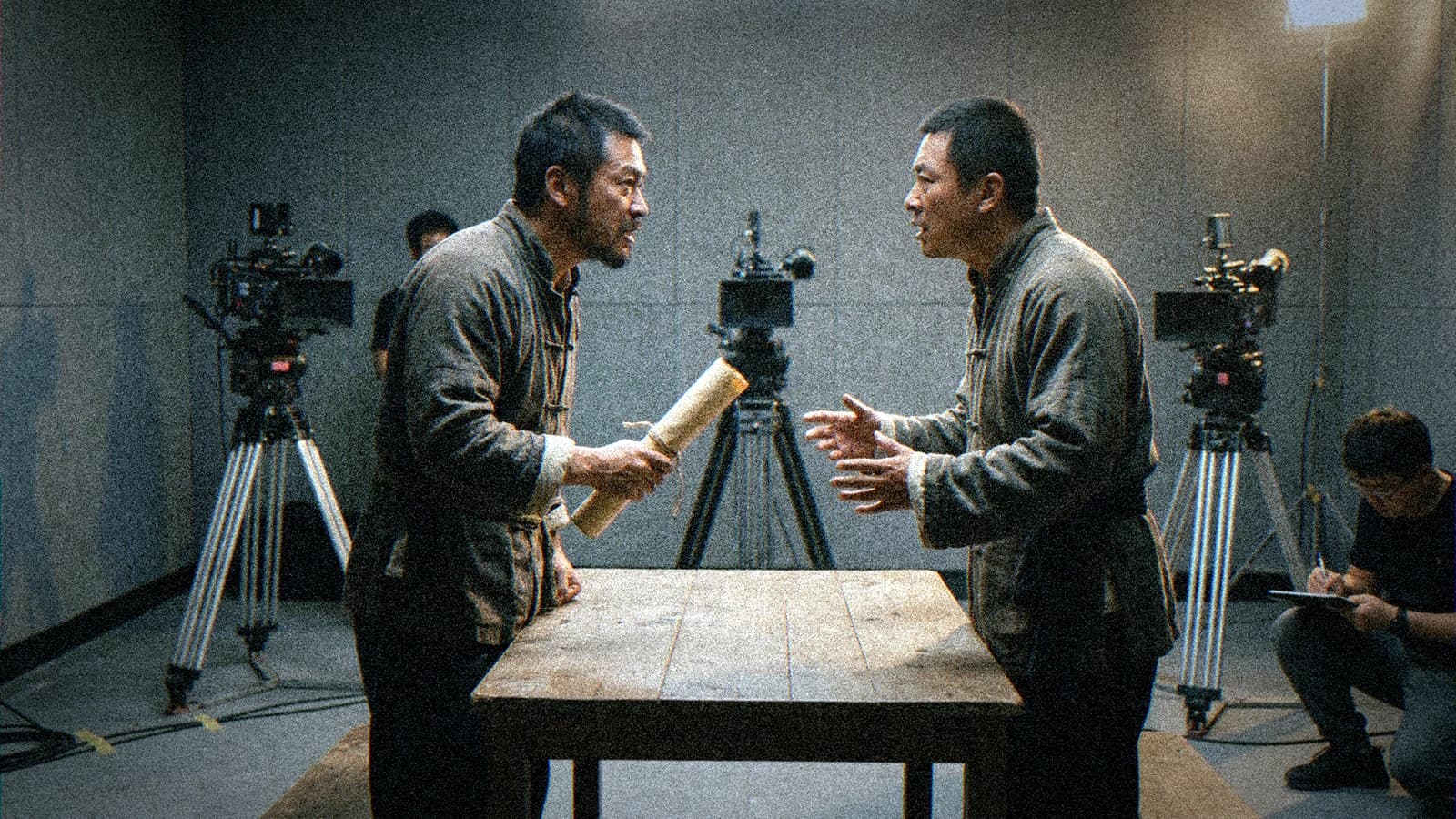
iQIYI films real actors on a 110 m² stage in Shanghai, then AI rebuilds sets and light around their performance. What the November 1 release says.
 Analyses
Google Flow Review 2026: A Short Film with Veo 3.1?
A filmmaker's Google Flow review: credits per shot, prices checked October 27, Scenebuilder, Omni editing, the EU limits, and what a short really costs.
 Comparatifs
Higgsfield Alternatives for Making a Film in 2026
Six Higgsfield alternatives picked by the film you're making: series, written short, ad, music video or no budget. Prices checked October 18.