iQIYI opens an AI film studio in Shanghai
iQIYI films real actors on a 110 m² stage in Shanghai, then AI rebuilds sets and light around their performance. What the November 1 release says.
Contents · 7 sections
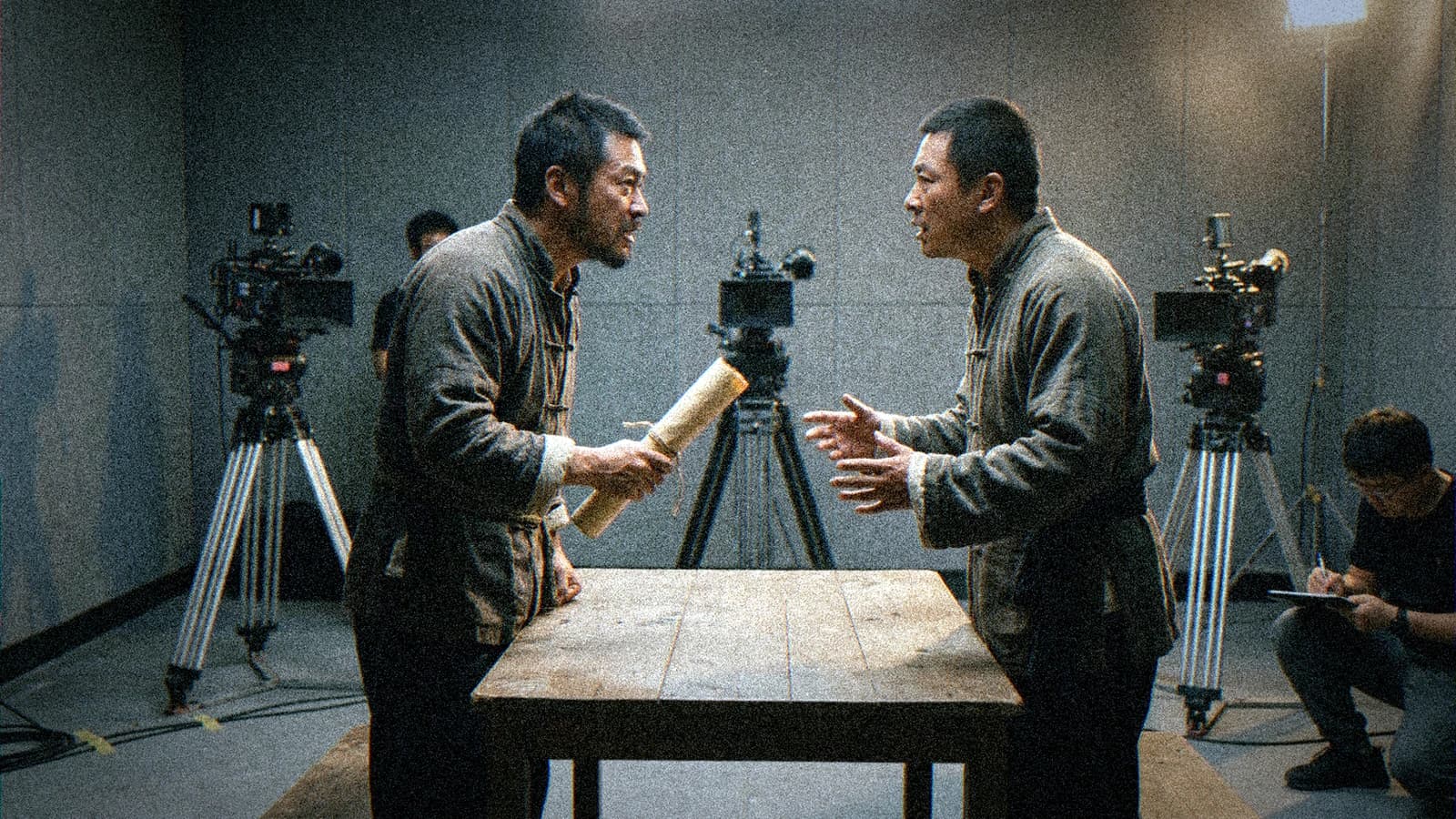
iQIYI, one of China's biggest streaming platforms, announced on November 1, 2026 that it has opened an AI film studio inside its Creative Center in Shanghai. The first shoot started on October 28: an internet feature called Cop in Trouble. Real actors perform on a small stage, and AI rebuilds the sets, lighting, costumes and makeup around what they did on camera.
If you make AI films, give this release five minutes. A studio with money and a catalog just picked a side: the performance stays human and gets filmed, and everything around it can be changed later.
What iQIYI announced
The announcement is a PR Newswire release datelined Beijing, November 1, and picked up by Yahoo Finance overnight on November 2. Here is what's in it:
- The space: a studio of about 110 square meters inside the iQIYI Creative Center Shanghai.
- The gear: multi-camera shooting, synchronized high-resolution video and sound, digital continuity logging and real-time playback of the takes.
- The software: footage syncs automatically from the set to NadouPro, iQIYI's AI production platform, which gives access to nearly 30 models, including Seedance 2.5 and Kling 4.0, plus "hundreds" of production agents and skills.
- The first film: Cop in Trouble, the story of Jian Zhang, a low-ranking constable whose fame starts to crack as the web of lies he spun to catch a notorious outlaw comes apart. The shoot covers quiet dialogue scenes and action.
The release calls the place "China's first AI film studio." That's iQIYI's wording. Back in May 2026, the Shanghai International Film Festival launched its own AI production studio, the AI Backlot, with four teams and 22 creators, according to Yicai. The two projects work differently, but I'd take the word "first" with a pinch of salt.
 The iQIYI release on Yahoo Finance, labeled as a paid press release. Source: finance.yahoo.com, captured November 2, 2026.
The filmed performance becomes the reference
One sentence in the release caught my eye. The real takes serve as input and reference for the AI generation, covering character appearance, performance, composition, lighting and spatial relationships. So the camera delivers a reference the AI has to respect, and the final image gets made afterwards.
Liang Zhu, iQIYI's vice president and head of intelligent production, puts it in one line: "An actor's performance is the core of any film or series." In his words, the studio lets directors keep that performance while changing sets, lighting, costumes, makeup and props.
What gives a fully generated scene away fastest is the acting. Eyes that look at nothing, a line delivered without a breath, a body with no weight. Sets are something the models already hold together well. iQIYI leaves the part models get wrong to the actors, and hands sets and lighting, the expensive bits of a shoot, to the AI.
💡 Frank's cut: you don't need 110 square meters to test this. Shoot two actors on a phone against a plain wall, with steady light, and use the take as your reference for movement and eyelines. If the acting is off in the take, no model will save it later.
 The part of the release on the studio's gear and NadouPro. Source: finance.yahoo.com, captured November 2, 2026.
A year of AI projects at iQIYI
This studio caps a busy year. Line the projects up and the direction gets pretty clear.
| Date | Project | What was announced | Source |
|---|---|---|---|
| March 30, 2026 | NadouPro | Film and TV production agent, from script to final output, using Seedance, Kling, Vidu, Hailuo and WAN, in "pre-commercial release" | Release of April 3 |
| April 20, 2026 | Actor platform for AI content | More than 100 celebrities signed up according to an executive, backlash on Weibo | AFP via New Straits Times |
| July 23, 2026 | Mystic Tales | AI feature running over 60 minutes, team of more than 20 people | Release |
| September 24, 2026 | Immortals Over Mortal Love | Trailer for a hybrid live-action and AI series, 16 episodes of about 20 minutes in season one, due in Q4 | Senal News |
| October 28, 2026 | Shanghai AI studio, Cop in Trouble | Live-action studio shoot, AI post-production through NadouPro | Release of November 1 |
In July the headline project was an almost fully generated feature. Three months later it's a stage with real actors. I don't think that's an accident.
Why the swing back to real actors
On April 20, at its annual conference in Beijing, iQIYI presented a platform linking celebrities with AI content creators. According to AFP, several actors posted right away that they hadn't signed anything. Then CEO Gong Yu suggested that fully human-made work could one day become "intangible cultural heritage," and that set things on fire. Senior vice president Liu Wenfeng had to clarify that the company was "not currently licensing the likeness of actors."
Six months on, the line has flipped: the actor's performance is "the core" of the film. You can read that as an artistic conviction, as an answer to the backlash, or both. The release doesn't say, and I won't guess for them.
For creators, consent is still the real red line. If your film uses someone's face or voice, read our piece on AI actors, clones and their rights before you shoot anything.
What we still don't know
The release is a promotional document and it leaves a lot of holes:
- no director or cast named for Cop in Trouble;
- no release date, no runtime, no budget;
- no figure on time or money saved in this specific studio;
- no footage from the film.
The only efficiency number is about a different site: iQIYI says its virtual production studio in Hengdian delivered "over 30%" in efficiency gains, with no published method. I'm noting it, not treating it as an independent measurement.
The question I care about most is missing too. When AI relights a filmed face, does the performance really survive? A micro-expression lives in a few pixels of shadow. We'll know when we see the film.
What it means for an independent creator
Nobody's asking you to copy iQIYI. But the setup scales down to a short-film budget, and that's where it gets useful:
- Write and break down first. The stage films what your shot list planned, and the AI only swaps the environment. Without a shot list, you're generating at random.
- Shoot the acting, not the set. Plain background, simple and steady light, clean sound. Keep one take per acting intention.
- Log your continuity. Props, eyelines, screen direction. That's what iQIYI calls digital continuity logging, and a spreadsheet does the job.
- Generate around the take. Feed the take to the model as a reference, and throw out any generation that damages the timing or the eyelines.
For directing performance in the generated part, the methods in directing an AI character like an actor still apply. If you want the longer view on where studios are heading, I laid it out in my room-by-room forecast of the film studio in 2030.
On the model side, Seedance 2.5 is one of the tools named inside NadouPro. Our Seedance 2.5 review covers what it does well and where it breaks.
Frequently asked questions
Quick answers to the questions readers ask most about this article.
What is iQIYI's AI film studio?
It's a stage of about 110 square meters inside the iQIYI Creative Center in Shanghai, announced on November 1, 2026. Real actors are filmed there with several cameras, synchronized sound and digital continuity tracking. The footage then syncs automatically to NadouPro, iQIYI's AI production platform, which is used to rebuild sets, lighting, costumes, makeup and props around the filmed performance. So the studio mixes a real shoot with AI post-production instead of generating everything from text. The first film shot there is called Cop in Trouble, and production began on October 28.
What is Cop in Trouble?
Cop in Trouble is an internet feature film and the studio's first project, which started shooting on October 28, 2026. It follows Jian Zhang, a low-ranking constable whose fame, wealth and reputation start to crack as the web of lies he built to bring down a notorious outlaw unravels. The shoot includes intimate dialogue scenes and action sequences. The release names no director, no cast, no runtime and no release date. So for now there's no footage to judge, only a description of how it's being made, which is why the real test of the method is still ahead.
Which AI models does NadouPro use?
According to the November 1 release, NadouPro gives access to nearly 30 AI models, with Seedance 2.5 and Kling 4.0 named as examples, plus hundreds of production agents and skills. When it launched on March 30, 2026, iQIYI already described a mix of its own QiZhi multimodal models and third-party models such as Seedance, Kling, Vidu, Hailuo and WAN. The platform covers screenwriting, art direction, storyboarding and visual effects. It was described as being in pre-commercial release in the spring, and nothing so far suggests it's open to creators outside China.
Is it really China's first AI film studio?
That's what iQIYI claims in the headline of its release, and you should read it as the company's own wording. In May 2026, the Shanghai International Film Festival launched the AI Backlot, an AI production studio hosting four teams and 22 creators who had to make short films for the June festival, according to the business outlet Yicai. The two spaces don't work the same way: the AI Backlot supports teams of creators, while iQIYI pairs a live-action stage with its own software platform. Depending on how you define a studio, the word "first" is open to debate.
Why keep real actors if AI can already generate scenes?
Because acting is still the most visible weak spot in fully generated video. Eyes that aim at nothing, a missing breath or a weightless body get noticed straight away. By filming the performance, iQIYI gives actors the part models handle badly, then generates sets, lighting and costumes, which take a big share of a classic shoot's budget. There's also context: in April 2026, the actor platform iQIYI presented for AI content caused a strong backlash in China. Putting the actor back at the center may also be a response to that criticism.
Can I do the same thing on a small budget?
Yes, at your own scale. The idea doesn't need a 110 square meter stage. You need a precise shot list, actors filmed against a plain background with steady light and clean sound, and continuity notes for eyelines, props and movement. Then you use your takes as references in a video model that accepts a video or an image as input. The limit is consistency from one shot to the next: without a shot list and continuity notes, you end up with good shots that don't cut together. Start with a short two-character scene before you aim for a whole film.
Related articles
 Analyses
The film studio in 2030: my room-by-room forecast
What will a film studio look like in 2030? The dates already locked in, the rooms that change, the new jobs, and what I'm building right now to be ready.
 Analyses
LTX Studio Review 2026: Does Script to Film Hold Up?
A filmmaker's LTX Studio review: prices checked October 17, credits, storyboards from a script, refunds, and what's still missing to carry a whole film.
 Business
Creative career change with AI: from business to film
Why I left online business content for AI filmmaking, what came with me, what I had to drop, and a method to plan your own creative career change.