Why and How to Train in Artificial Intelligence in 2026
A realistic training plan for creators: basics, image and video tools, ethics, portfolio and continuous updating without drowning in the hype cycles.
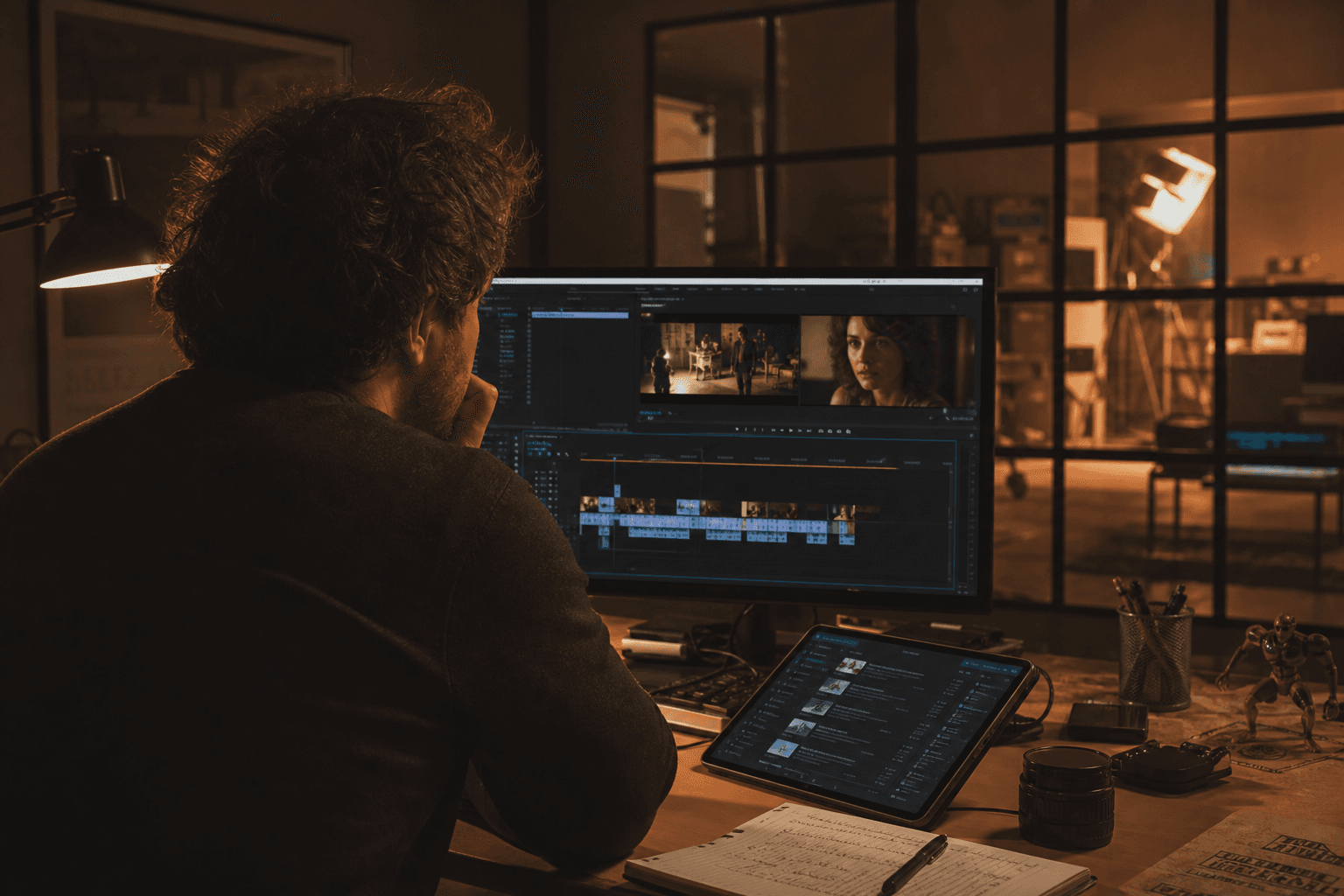
You open five tabs. You install two programs. You watch a tutorial sped up to 1.75x. Then you find yourself with a smooth render, a character who changes face between two shots, and a vague impression of having missed the train.
It is not a motivation problem. It is a map problem.
In 2026, training in artificial intelligence for audiovisual no longer consists of "testing ChatGPT on a Sunday". It is about learning a production language: brief, consistency, continuity, sound, rights, render throughput, and above all taste. The tools change every six weeks. The principles stay.
Why 2026 changes the game (with no scaring you)
The pressure is not "AI stealing jobs". The pressure is the speed at which an image or video brief becomes executable by someone who knows how to structure an intention. A junior who masters a clean pipeline can deliver an animatic storyboard in one day. A senior who refuses to tool up can stay brilliant on paper and slow on the file.
What matured in 2026 is not only the quality of the models. It is the stacking: capture, generators, writing assistants, lip-sync tools, restoration, upscalers, and node-based or template studio type workflows. You do not need to know everything. You need a landing strip: image, video, sound, text, and an evaluation loop.
The classic trap, I have seen it dozens of times on express trainings: you learn the buttons, not the decision. You recite magic prompts, not a grammar of light and framing. Result: immediately recognizable "AI" images, therefore not credible for a brand or a series.
What I propose here is not a list of tools to copy-paste. It is a layered training, calibrated for a creator who wants to work, not collect subscriptions.
The difference between "curious" and "employable", I see it at the moment a rush arrives with a ridiculous budget. The curious one looks for the perfect one shot on Discord. The employable one knows how to produce a series of reproducible decisions: when to lower the resolution, when to accept a visible grain, when to send a shot to the upscale, when to refuse a scene because the brief asks for hands in close-up.
In 2026, the independent studios also recruit on the file hygiene: naming, versions, rights, prompt archiving. It is not sexy. It is what avoids redoing a whole campaign because no one knows which seed produced the shot validated by the client.
If you want a simple metaphor: AI is a very fast operator assistant, but it does not know your client, your validation chain, or the pressure of the broadcaster. Your training must therefore couple taste and procedure. Taste is worked at the contact of real images (cinema, advertising, documentary). The procedure is built at the contact of real deadlines (even self-imposed).
The concepts you must lock before any software
Language, intention, proof
Before even a model, you must be able to write a sentence of the type: "At the end of this scene, the viewer must believe X, because Y is visible on screen." If you cannot formulate that, the AI will only propose structured noise.
The central skill is not "Instagram prompt engineer". It is the reducible brief. You reduce the intention to verifiable constraints: light, angle, material, action, temporality, edit style. Only then do you translate into tokens or nodes.
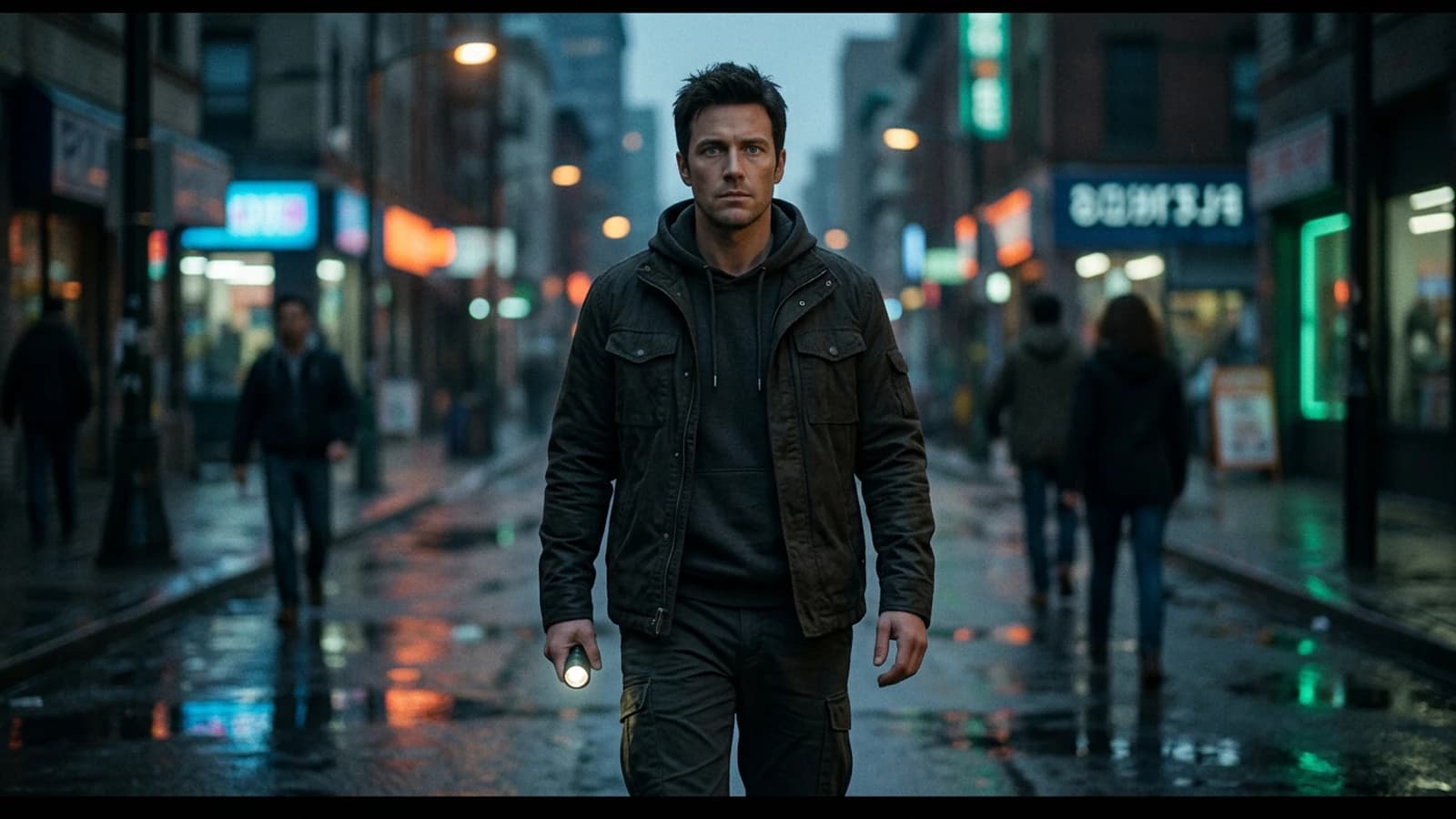
A weak brief looks like "Blade Runner atmosphere". A solid brief says: fine rain, green neons in the background, character three meters from the camera, 35 mm feel, skin with visible pores, light halos on the sources, no caricatural HDR. You see the difference: one is a Spotify label, the other is a checklist for the model and for your eye.
When you teach someone, I recommend the mute exercise: look at a generated image without reading the prompt, write what you see, compare with the initial prompt. The gap between the two is your training program for the following week.
The proof is not only aesthetic. It is also legal and relational. If you promise a "photorealistic" result without defining what your client means by that, you build a misunderstanding. The training must include a shared vocabulary: clean, gritty, documentary, advertising beauty, etc.
Finally, learn to separate the idea and the execution. AI speeds up the execution. It does not replace the idea if you cannot defend it in two sentences in front of a room.
Consistency and continuity
The tools know how to make a beautiful isolated image. They still struggle as soon as you demand the same jacket, the same nose, the same voice, the same setting between ten shots. Your training must include an anti-continuity-break module: references, segmentation, character locking, rephotography, sometimes minimal shooting to anchor the real.
Continuity is a production designer skill, not only a prompter one. You must know which details are going to move first when you change an angle: hair, reflections, logos, hands. These are the zones where the models cheat.
A tactic I still use: the backup plan. If the series of three images fails on the jacket, you freeze the jacket with a flat photo or a manual patch, then you ask again only for the face or the light. It is not "cheating". It is production realism.
For the faces, the training must include a "consent and likeness" module: you avoid the gray areas that make you lose a client or a network. Better an owned stylized character than a fuzzy quasi-clone.
On the settings, think mental layers: floor, walls, mobile objects, characters. If you change everything at the same time, the model will improvise impossible transitions.
Realism measurement
You do not evaluate "I like / I do not like" alone. You go through a grid: grain, depth of field, micro-contrasts, shadow color, skin texture, reflection consistency. If you cannot name why it is false, you cannot correct it.
Realism is not the sharpness. Some ads ask for an almost porcelain skin, but with a credible light. Others ask for a grimy documentary. Your eye must change criteria according to the genre, otherwise you are going to "correct" an image already compliant with the brief.
I often note three false positives in beginners: eye overexposure, too-aggressive global micro-contrast, too-saturated shadow color. These are classic settings in classic grading, and the AI reproduces them if you push the "perceived sharpness".
To train, take a real photo image you like, recrop it, and ask the tool to generate a close neighbor without copying. Compare the light curves in the shadows, not only the texture.
Also document the machine time: how many minutes for an acceptable shot, how many for an excellent shot. Productivity is a skill. It is negotiated with a producer.
💡 Frank's Cut: keep a "failures" folder with three captures per failure: raw version, over-corrected version, version you would have accepted on a real shoot. This folder becomes your mental dataset faster than any course.
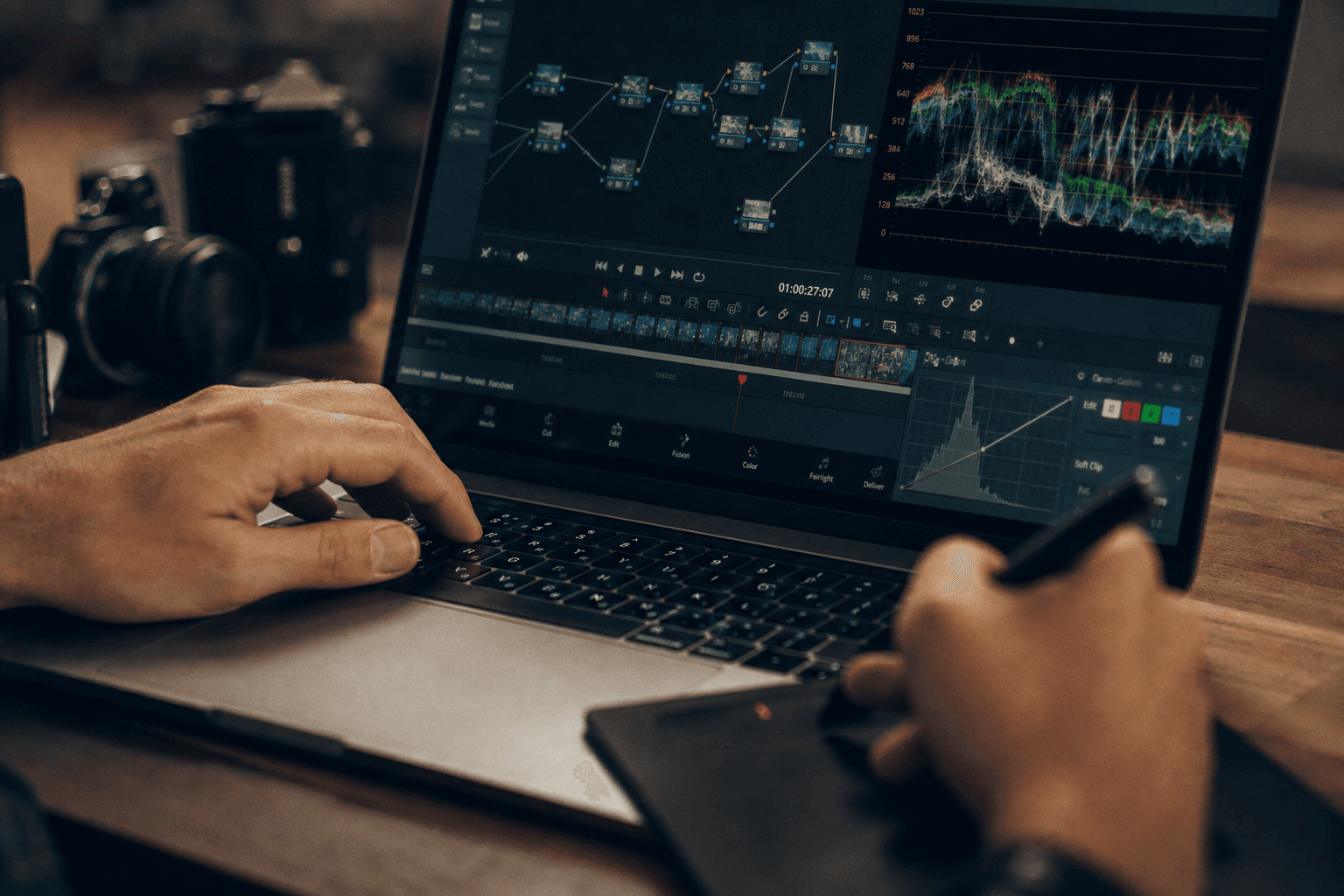
The trench workflow: a plan over twelve weeks (compatible with a real schedule)
Weeks 1 to 2: foundations with no render farm
Goal: finish with a reusable brief sheet and three scored exercises.
- Write ten one-line briefs for fixed shots (portrait, night interior, rainy exterior, etc.). No software. Just language.
- For each brief, add a "proof of truth" line: a detail that would betray a fake (reflection, dust in a ray, seam of a garment).
- Then move to the translation: a paragraph of structured prompt (subject, light, lens, material, action, acceptable defects).
You can lean on our guide to structure an AI video like a real film to align your editor brain with your briefer brain.
Weeks 3 to 5: image, material, light
Choose one main image engine for three weeks, not five. Goal: thirty images, including ten series of three strict variations (same subject, different light).
Parameters to explore methodically:
- Guidance / CFG: go up by steps and look where the texture "cooks" too much.
- Native resolution vs upscale: learn where your model lies and where it invents plastic pores.
- Seed and noise: document three seeds that save a session.
Document your pipeline in a notebook: hypothesis, setting, screenshot, verdict. Handwriting retains better than Chrome bookmarks.
Weeks 6 to 8: short video, movement, temporality
Goal: six ten-second loops readable with no hand or teeth artifacts.
Minimal pipeline:
- Strong keyframe.
- Conservative animation (less global movement, more micro-movement).
- Pass in post: light grain, recrop, sometimes reverse of a too-"AI" shot.
For the tooling part and the limits of the recent models, read our overview of the new video tools and what they change for directors.
Weeks 9 to 10: sound, voice, music (with no cheating the ear)
Goal: understand where the voice synthesis becomes credible or not, and how generated music handles the emotional rhythm.
You train to spot:
- the artificial breath,
- the too-dry consonants,
- the emotional offset between image and voice line.
Weeks 11 to 12: portfolio and honest social proof
Goal: six public pieces maximum, but agency level. Better six strong shots than forty bland ones.
Each piece must have:
- an intention sentence,
- a mention of the tools (with no making it a novel),
- a short making-of (even in three photos).
Hardware budget, cognitive load and quality of practice
You can train on a mid-range laptop if you accept waiting times and modest resolutions. What costs dearly is not always the GPU: it is the approximately calibrated screen, the chair, the sleep. A tired creator pushes "AI" settings that pierce the plastic because their eye no longer discriminates.
I advise a dual screen or a large vertical monitor for the before-after comparison. Not for the flex. To see at the same time the brief, the render, and the list of parameters. The cognitive load explodes as soon as you juggle between ten windows.
Storage: plan from the start an external disk or a modest NAS. The image versions and the video exports eat the space fast. An automatic backup avoids the existential crisis when a disk gives out the day before a client review.
Network: a stable connection is worth hours of retry on heavy uploads. If you are in a poorly served zone, learn to work offline on the possible parts (editing, grading, brief preparation).
Finally, negotiate with your family or your roommate a non-fragmented two-hour block. Thirty minutes here and there serve maintenance, not skill-building.
Skills journal: the format I have signed in mentoring
Each week, one page, not forty. Four fixed sections.
- Single goal: one measurable sentence ("I want three credible portraits in hard side light").
- Hypothesis: what you really test ("CFG at 5.5 instead of 7").
- Proof: three images maximum, annotated with text arrows (not novels).
- Next decision: you continue, you pivot, you abandon this path.
This journal becomes your living CV. When a client asks "how do you work", you show the method, not only the result.
💡 Frank's Cut: if you are not ashamed to show your journal to a senior peer, it is too clean. A useful journal contains red lines: what you promised and missed, and why.
In the long term, you will see patterns: you always overestimate the consistency of the hands, you underestimate the color of the skin under neon, you forget the audio background noise. These patterns are worth gold: they are your personalized training modules.
Table: three training paths compared
| Path | Weekly time | Strengths | Risks | When to choose it |
|---|---|---|---|---|
| Targeted self-teaching | 4 to 6 h | Low cost, flexibility | Dispersion, false progress | You are disciplined and you document |
| Intensive bootcamp | 15 to 25 h | Error compression | Fatigue, marketing overlay | You have to pivot fast |
| Mentoring / workshop | 2 to 4 h | Feedback on your taste | Availability, price | You already have a technical base |
What beginners break (and how to repair with no bullshit)
Mistake 1: changing tool before finishing a cycle
You move from A to B because a thread promises "the new realism". You lose the muscle memory of the settings.
Fix: a paper notebook or Notion with three fields per session: tool, single hypothesis tested, numbered result (time, cost, credibility score out of 5).
Mistake 2: confusing demo and deliverable
The demo shines with a simple subject. Your client wants a brand, an actor, a precise setting.
Fix: impose a "no easy" test: profile face, glass, fine hair, black textile.
Mistake 3: neglecting the law and the brand image
You generate a face "close to" a celebrity for an internal test, it leaks.
Fix: read at least an official synthesis on the European frame, for example the European Commission on AI page (European Commission AI strategy), a cross-cutting reading on the culture and education side (UNESCO AI), and complement with a technical reading on the limits of the models (arXiv to stay anchored in what is published and verifiable).
Mistake 4: skipping the director thinking
You produce images without understanding the framing.
Fix: alternate a "purely photo" week with no AI, then a "same subject with AI" week. You will see where the tool cheats.
For the implicit acting direction in a prompt, our article how to think like a director with AI stays a simple compass.
Foire aux questions
Réponses rapides aux questions les plus fréquentes sur cet article.
Do you need to know how to code to train in audiovisual AI in 2026?
No to start a serious practice, yes if you want to industrialize or integrate AI into a homemade software chain. In practice, a creator can go very far with graphic interfaces, presets and a brief discipline, because the value lies first in the decision: what to generate, at what resolution, with which rights constraints, and how to validate. The code becomes useful when you want to automate batches, version prompts, plug in APIs, replay seeds, or debug a pipeline that breaks in production. My field advice: learn to read a Python script or a JSON config before writing a complete factory. It is often enough to dialogue with a TD or a developer, and to avoid the "black box" solutions you cannot fix at three in the morning on a delivery. If you do not have the time, stay on documented workflows, but keep a text trace of every critical parameter, otherwise you reproduce results without understanding why they go haywire.
How much time per week for a real "working" level in six months?
Aim for between six and ten hours of really productive weekly time, not the time spent watching lives or installing plugins. Half must be making: images, shots, sounds, small edits. The other half: cold analysis, before-after comparisons, targeted reading, re-reading of version notes. If you are below four hours, you progress, but you stay exposed to the fads and the marketing shortcuts of the tools, because you do not accumulate enough cycles to internalize the errors. If you exceed fifteen hours with no deliverables, you often drown in the search for software perfection. The metric that lies the least is the number of finished pieces you would accept to send to a client with no excuse in the email, even if this fictional client is you in three months with a harder eye.
Which first tool to choose if I am an ultra beginner?
The good first tool is the one that lets you finish a loop: idea, image, small video, export. Whatever the marketing badge. What counts is that you can repeat the cycle twenty times with no administrative friction, without fighting with obscure licenses or unpredictable queues that break your training slot. Only then, optimize for the maximum quality or the marginal cost. If you hesitate between two ecosystems, do the forty-minute test: same brief, two tools, same calendar time, same level of effort. Keep the one where you understand why the result is good or bad, because this understanding will serve you when the model changes version next week.
Does AI replace the photo and edit fundamentals?
It does not replace image reading or the sense of rhythm. It speeds up certain tasks and creates new ones, often thankless (cleanup, variations, tests). An editor who knows how to pace a scene keeps a huge advantage over someone who only knows how to generate isolated clips, because the narration lives in the cut decisions, not only in the beauty of a shot. Think of AI as a making assistant, not as a silent author who knows your audience. The fundamentals save you when the model hallucinates a reflection, a hand, a face symmetry, or when the client changes the brief in the middle of a series.
How to stay up to date with no professional anxiety?
You frame a twenty-minute watch, twice a week, on primary sources: version notes, papers, artist feedback, official documentation. The rest is often rumors compressed into screenshots. Document only what changes your real stack over the next three months. If a tool does not serve your quarter's deliverables, you can note it in a "later" list and move on with no guilt. The infinite watch is a form of noble procrastination: it gives you the illusion of advancing while you consume. Replace part of this watch with a repetition: redo the same exercise with a new model, measure the real gain in minutes and in credibility.
Do you need a diploma to be credible?
Useful in certain circuits, not mandatory for many creative markets. The market mostly reads proofs: before-after, method, deadlines, contractual hygiene, attitude in review. A diploma can open certain institutional doors or certain public grants, but an honest portfolio with process opens the creative doors faster than you think, especially if you know how to explain your choices with no useless jargon. Combine the two if you can, but do not sacrifice the guided practice on the altar of a decorative certificate that does not reflect your real render level.
What place for ethics in a short training?
A non-negotiable but operational place: consent on voice cloning, client transparency, prohibition of fake testimonials, caution on anonymous realistic faces, clarity on what is generated versus captured. Ethics is not a moral paragraph stuck at the bottom of the page. It is a checklist that avoids a lawsuit, a campaign cancellation, or an internal crisis when a legal frame changes. In short training, I prefer three rules understood and applied over ten theoretical slides.
Freelance or employment: which frame learns the fastest in 2026?
Both can work if you impose a delivery discipline. In stable employment, you often gain exposure to real constraints (brand guides, pipelines), but you can find yourself specialized on an internal tool. In freelance, you quickly learn to estimate, but you risk isolation with no peers to challenge you on taste. My frequent compromise: an employed contract or long mission to secure the learning of the processes, then a controlled freelance practice on projects where you can experiment without endangering a big brand. In all cases, document your learnings as if you had to transfer them to a replacement: it is the best accelerator of skill-building.
To go further on the serious installation of an open engine, our Stable Diffusion installation guide for beginners complements this plan without throwing you into the void.
Related articles
 Tutoriels
Why Do My AI Videos Look Fake, and How to Make Them Realistic
The signals that betray AI, from plastic to geometry, and concrete corrections for a credible render.
 Tutoriels
Why Your AI Images Lack Contrast, and How to Fix It
Histogram, curves, selective saturation, and shadow-highlight ratio cinema style.
 Tutoriels
Creating a Striking Video Ad With Artificial Intelligence
A complete guide to creating a striking video ad with artificial intelligence, from the idea to the conversion-oriented final edit.