How to Create Natural Light in an AI Image
Window, time of day, weather, interior bounce, and what distinguishes a gray day from golden hour.
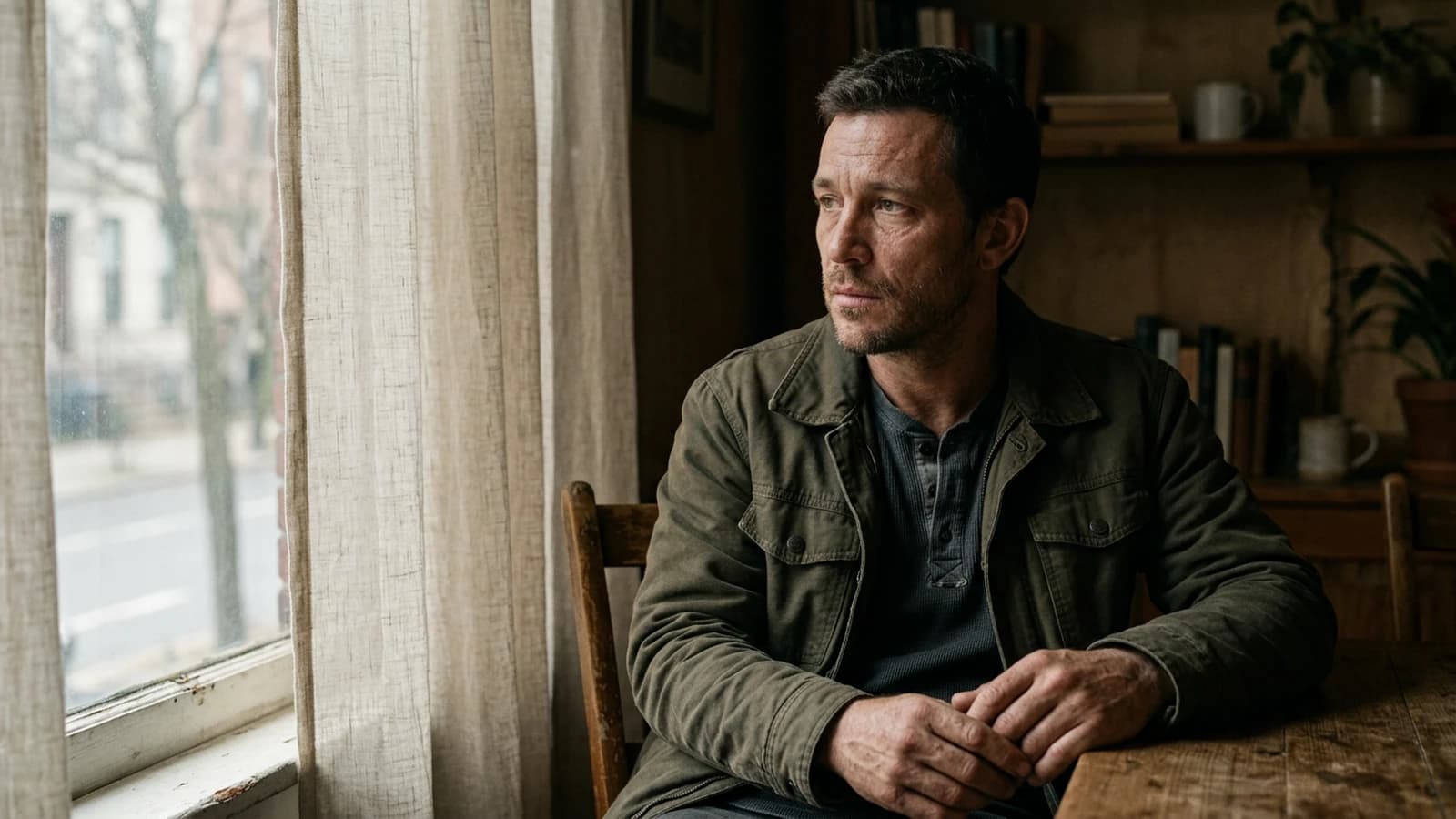
You are here for: How to create natural light in an AI image. Good. We are going to avoid two traps right away.
The first trap is believing that a single magic setting fixes everything. The second is accumulating tutorials without ever finishing a mini project. Choose a short duration, eight to fifteen seconds or a single image, and go all the way with a method.
What I propose here is a field reading. Not a promise. You are going to understand why some images "pass" and others instantly trigger the "AI" reflex in the viewer. Often it is not the resolution. It is the lying light, the skin too smooth, the inconsistent bokeh, or a movement that defies physics.
Three mini scenarios. A creator wants beautiful with no constraint: he gets generic. Another wants detail everywhere: he gets plastic. A third wants cinema with no sound: he gets a showroom.
For How to create natural light in an AI image, keep a simple rule. One strong decision is worth three compromises. One clear light source is worth ten adjectives. One export with a clean file history is worth a night of chaos.
Let us go down into the concrete. Note with a pen what you did before, apply a single modification today, compare tomorrow. If you do not see the difference, it is fine, you will at least have one more criterion. The eye trains like a muscle, with honest repetitions.
Key concepts (what you must remember before clicking everywhere)
Framings that are too centered give a poster, not a scene. Shift the subject, leave space in the direction of the gaze. The rule of thirds is not a law, it is a tool to avoid the default symmetric postcard.
Fabric textures betray the plastic before the skin. A wool sweater must have micro variation, not a mannequin smoothing. If your sweater looks like resin, lower the local clarity on the clothing, raise the grain a bit, take a reference photo of real knit.
Character consistency is not copy-pasting the same prompt twenty times. It is a short sheet: approximate age, anchored clothing, mark of time, a discreet scar, a real haircut. Then a fixed reference image you re-inject. If you change a major detail between two shots, the human brain detects it before it even knows why.
Contrast is not saturation. Pushing the colors to hide a flat image gives a 90s TV ad. First work the curve: blacks that do not fall into mud, highlights that do not burn the skin. When the curve holds, saturation needs much less.
Skin colors under neon must stay in a credible family. The neon tints, yes, but leave a part of blood in the cheeks. If everything goes magenta, lower the selective saturation on the skin reds, raise the luminance slightly.
Subtle camera noise, a micro tremor, can save a shot that is too clean. But a pixel dancing on a cheek is an alert. If the tremor modifies the skin, reduce the amplitude or freeze the face and move only the environment. Separate face and set in your motion strategy.
Set notes, details that change everything
The "porcelain" skin render often comes from a too-high mix of detail plus a hard frontal light. Tilt the light, add a soft shadow under the nose, lower the clarity on the high frequencies of the skin in post. Skin has pores, not a grid.
The voice-over needs a spoken text, not a written text pasted in. Shorten the sentences. Add breaths. Read aloud before generating. If you run out of breath, so does the viewer. Mark the pauses with periods, not with commas everywhere.
Shadows under the eyes that are too clean give 3D makeup. Add a micro color variation, a bit of red under the blue, a less sharp transition. Humans have layers, not flat layers.
Cast shadows that are too black with no transition give a collage look. Add a very light fill or a credible indirect reflection. AI loves easy contrast. You have to bring back the ambient light that exists in a real room.
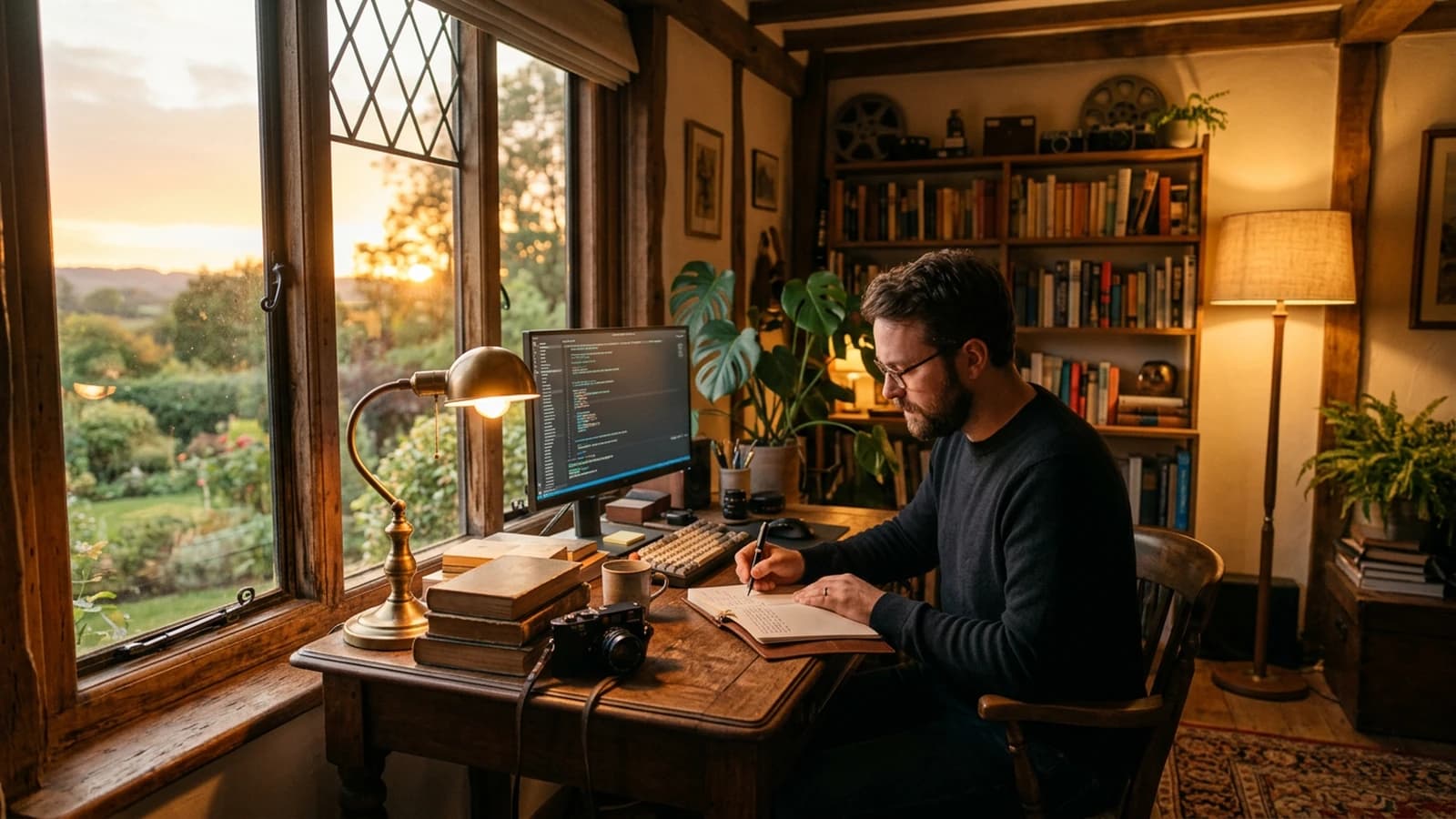
The weather in an exterior scene changes everything. Same street, same actor, fog or low sun, it is not the same emotion. Set the time of day and the weather in the brief, otherwise the model mixes dramatic clouds with midday light.
Global sharpening is the enemy. If you want sharpness, mask the face and sharpen very little on the fabrics or the distant details. Never on the foreground skin, unless you are deliberately after a 2000s ad look.
Shots that are too wide in AI reveal the geometry. If you do not need the ceiling and five windows, tighten. Fewer things in the frame, fewer chances that a wall breathes. Framing is a director's decision, not a sensor defect.
Practical workflow, like on a real shoot (but with AI)
Step 1: choose the right engine for the task
Flux often shines on soft transitions, material, complex scenes with many objects. SDXL stays a Swiss army knife with an enormous ecosystem of LoRA and ComfyUI workflows.
Simple rule: if you want a skin-and-eyes portrait with fine control, test both on the same short prompt. Keep the one that lies the least on the hands and the teeth.
Step 2: resolution and reframing before beauty
Work in 16:9 or 2:3 depending on the output, not in square if your film is horizontal. Raise the resolution only when the composition is frozen. Otherwise you optimize errors in high definition.
Step 3: steps, CFG, scheduler, with no religion
Raise the steps to the point where the texture appears, then stop before over-definition. CFG too high = plastic. CFG too low = mud. Look for a window, note it, reuse it.
Step 4: skin in two steps
Step 1: generation with plausible light and a shadow under the nose. Step 2: light local retouching or inpainting on the eyes-mouth zone if necessary. Avoid regenerating the whole scene for a micro zone.
Step 5: cinema grain in post often better than in the prompt alone
A controlled grain overlay, adapted to the density of the shadows, reacts better than "add grain" thrown into the prompt with no measure. Combine the two only if you know what each layer brings.
Step 6: contrast and color
Curve first, saturation next. Isolate the skin if you push a teal-orange look. Keep blood in the reds of the cheeks, otherwise you go into 3D mannequin.
Step 7: credible depth of field
Describe the distance and the focal length. Check the sharp-to-blur transitions: too abrupt = collage. A slight Gaussian blur on the background in post can save an almost-good scene.
Step 8: export for what follows in video
Export a clean PNG or TIFF for the pilot image, keep a variant with grain if you chain directly to a video tool. Document the focal length and the light in a text file next to it, the video will thank you.
Micro settings before freezing a sequence
Sound is half of the realism. A visually clean AI clip with absolute silence looks like a showroom. Add a room, a distant street, a fridge, a light wind. Then compress slightly to fit the social media. Lay the ambience before freezing the video master, otherwise you tell yourself stories about the quality.
The "teal and orange" grade works when the skin stays human. If everything goes orange, the faces burn. Isolate the skin with a soft mask, bring a real blood tone back into the reds. Even in AI, you will often finish in post. Accept the round trip.
Dialogue sequences in AI need reaction shots. Even if you have no real actor, think cut, reverse cut, silence. The edit carries the dialogue, not a single shot that talks for thirty seconds.
Hard light is not a mistake in itself. The mistake is hard light with no direction. Say where the source comes from, its size, its color. North window, green neon as a backlight, tungsten desk lamp. Even if the model simplifies, your viewer brain looks for a lighting hierarchy. With no hierarchy, you get that flat gray that screams AI.
The vertical format imposes a different reading. A horizontal wide shot tells the environment. A vertical demands a clear subject, a strong line, few parasitic elements on the edges. If you reframe a horizontal into a vertical without rethinking the composition, you get cut-off heads and hands that enter by surprise.
Seeds are there to reproduce, not to magically improve. If an image is bad, changing the seed at random is playing roulette. Change the prompt, change the light, then lock a seed when you get close to the goal. Note the seed in your session file, like an operator notes a focal length.
Reflective objects, glasses, windows, screens, are traps. If you do not need them, remove them. If you need them, plan a camera angle where the reflection does not show an impossible set. Simplify the reflection before complicating the set.
The rhythm of an AI clip is built in the edit. If you wait for the generation to give you the rhythm, you will be dependent on chance. Generate shots longer than necessary, then cut hard. The hard cut gives the intention. The dissolve gives the parenthesis. Too many dissolves, and you fall back on the demo clip.
The fear of black pushes beginners to lift the shadows up to gray. Keep real black, especially in cinema. Black gives volume. Gray gives the demo.
Grain is not an Instagram filter laid on at the end. It is a glue that harmonizes too-clean zones with too-dirty zones. Start light, a fine virtual 8mm, then go up if your screen is calibrated cold. On a consumer laptop, the grain disappears, so you add too much, then on a good screen it becomes muddy. Test on two screens before validating.
Subtle camera noise, a micro tremor, can save a shot that is too clean. But a pixel dancing on a cheek is an alert. If the tremor modifies the skin, reduce the amplitude or freeze the face and move only the environment. Separate face and set in your motion strategy.
"Ultra detailed" prompts often contradict themselves. Adding five different styles in the same paragraph is asking the model to cheat. One dominant style, one concession, one prohibition. Three layers, not fifteen.
Quick decision table
| Choice | Criterion | Flux | SDXL |
|---|---|---|---|
| Portrait | skin and eyes | test in priority | huge LoRA, very flexible |
| Scene | multiple objects | often very strong | depends on the checkpoint |
| Local speed | VRAM | depending on quant | DIY optimized |
| Post grain | fine control | combine prompt + overlay | same |
| Video next | clean pilot image | PNG + meta export | PNG + meta export |
Cinema begins when you stop explaining and you show an intention. AI does not replace that, it accelerates the raw material.
Trench warfare: what beginners miss, and how to fix it
When you talk about cinema to a model, think physical camera. A 35mm indoors is not the same thing as an 18mm in the same spot. The 35mm brings the face closer without distorting the shoulders. The 18mm stretches the hands toward the camera and turns a simple gesture into a geometric catastrophe. If your character has hands in the foreground, choose a longer focal length or pull the virtual camera back.
Generic "epic" music kills an intimate scene. Choose music that leaves air for the silences. Cut the music under an important line. Cinema is also what you remove.
Depth of field in the prompt: describe the lens and the distance. Anamorphic gives oval bokeh and a soft falloff. Spherical sharp at 50mm gives a rounder, more neutral bokeh. If you specify nothing, the model gives you a "generic" bokeh, often too sharp and too clean.
"Ultra detailed" prompts often contradict themselves. Adding five different styles in the same paragraph is asking the model to cheat. One dominant style, one concession, one prohibition. Three layers, not fifteen.
The mental timecode matters. If your clip is a fifteen-second ad, every second has a function. Note what happens at 0, 3, 7, 12. Otherwise you go in circles on a shot that adds nothing to the structure.
Sound is half of the realism. A visually clean AI clip with absolute silence looks like a showroom. Add a room, a distant street, a fridge, a light wind. Then compress slightly to fit the social media. Lay the ambience before freezing the video master, otherwise you tell yourself stories about the quality.
Fabric textures betray the plastic before the skin. A wool sweater must have micro variation, not a mannequin smoothing. If your sweater looks like resin, lower the local clarity on the clothing, raise the grain a bit, take a reference photo of real knit.
A clean project folder is worth all the viral workflow promises. Name your files, keep a screenshot of the settings, copy the prompt into a txt. In two weeks, you will thank yourself when a client says "let us go back to version 2".
Useful links in the AI Studio series
- How to generate a realistic scene with depth of field
- How to simulate an anamorphic lens in AI generation
- How to create a cinematic video with AI, step by step
- Creating a 100% AI short film with no camera or actors
Foire aux questions
Réponses rapides aux questions les plus fréquentes sur cet article.
Does anamorphic in the prompt work?
Yes, but only if you describe concrete elements (oval bokeh, softer falloff, a slight optical character). If you just write "anamorphic", many models return a cosmetic imitation with no consistency of light or depth. Always validate at zoom and in overall reading to avoid the "filter" effect.
Flux or SDXL for {topic}?
Test both on exactly the same short brief, same ratio and same light intention. Then compare the zones that betray fast: skin, hands, sharp/blur transitions, and the hold of the shadows. The right choice is the one that requires the least repair for your subject, not the one with the best general reputation.
Inpainting or total regeneration?
Use inpainting when the problem is local (eyes, mouth, hand, small fabric artifact) and the scene light is already correct. Regenerate everything when the lighting hierarchy or the shot geometry is wrong, because a local retouch will not correct an inconsistent light. This decision saves you hours of useless cycles.
Grain only in the prompt?
Often insufficient for a truly clean render. The prompt can prime a less smooth texture, but the fine control by zone (shadows, face, background) is better done in post. In practice, a light starting point in generation then a controlled overlay gives the best consistency.
I want a dark mood?
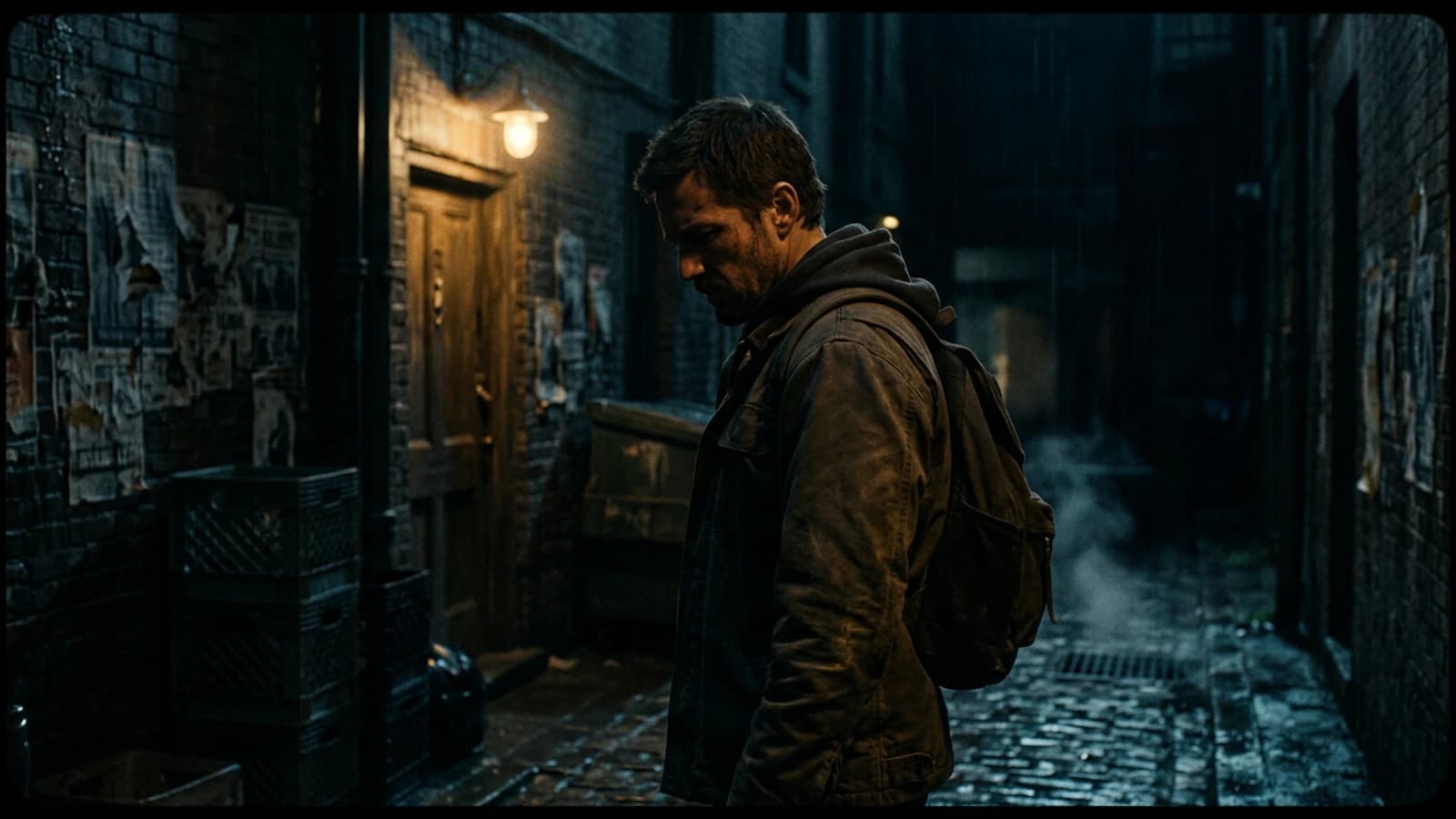
Always keep a readable light anchor: eye reflection, a practical in the frame, a window, a sign or a directional halo. Without this anchor, the dark quickly becomes gray-muddy and the scene loses its narrative relief. The secret of a good dark mood is steered contrast, not the absence of light.
My blacks are gray?
First correct the curve and the black point, not the saturation. Gray blacks often come from shadows lifted too much or a grade too cautious on the low lights. Reinstall real black while keeping a minimum of useful detail near the subject to avoid crushing.
I am preparing an image for video?
Yes, prepare it like a pilot shooting image: clean export (PNG/TIFF), note the implicit focal length, the light direction, the color mood and the constraints. Keep a neutral version with no aggressive sharpen, because the video quickly amplifies the sharpness artifacts. A good base still strongly reduces the drift when you move to animation.
Editorial compliance section
Useful internal links:
Related articles
 Tutoriels
How to Create a Film-Worthy AI Portrait
Focal length, catchlights, depth, imperfection and gaze direction for a believable shot.
 Tutoriels
How to Create a Dark, Cinematic Mood with AI
Real black, practicals, faces in shadow, grain and export with no mud or cheap HDR.
 Tutoriels
How to Create a Cinematic Video with AI Step by Step
A complete method to go from a vague idea to a credible AI video, shot by shot, with no plastic render.