Setting the Editing Rhythm for 15s and 30s AI Ads
Shot cadence, breathing room and hooks to turn AI clips into real, high-performing ads.
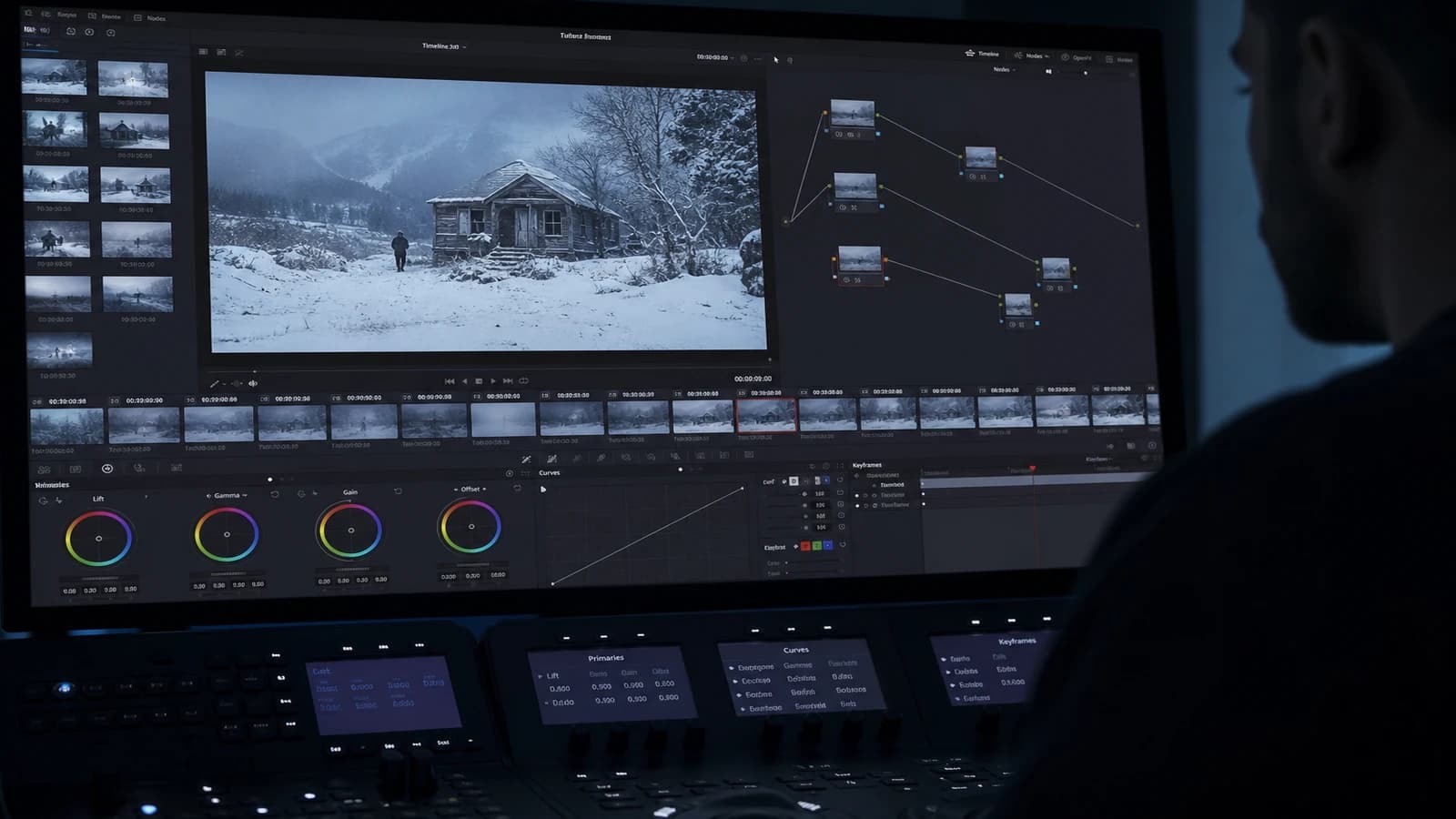
Fifteen seconds. Twelve shots. Hammering music. Product invisible until second 11. The client says "it goes too fast". You slow everything down. 3-second retention: 41 percent. You confused energy and rhythm. A high-performing AI ad does not pack the maximum of cuts into the minimum of time: it places the right information on the right beats.
Setting the editing rhythm for 15s and 30s AI ads turns generated clips into an advertising structure: hook, development, proof, CTA. This guide gives per-shot duration grids, 15 and 30 second patterns, and the method to align the edit and the music with no demo effect.
Why AI ads tire the viewer in three seconds
Beginners chain spectacular shots with no hierarchy. The viewer does not know where to look, the single message drowns, the algorithm measures an immediate scroll. In parallel, some AI shots hold 4 seconds too long: a drifting face, a weird hand, the rhythm dies before the hook.
Ad rhythm equals tension/breathing alternation plus informational progression. Not equal to cut speed alone.
For the initial hook, cross-reference designing AI video intros and hooks in the first 3 seconds. For the overall ad structure, see how to create an AI video ad like a pro agency. For the duration of each generated shot, choosing the right shot length for your intention.
💡 Frank's Cut: drop beat markers on the timeline before you cut. Cut on the downbeat, not in the middle of a musical build unless intentional. A badly aligned AI ad sounds amateur even with beautiful shots.
Anatomy of a 15-second ad
A typical high-performing structure:
0-2s: visual hook plus promise (product, problem, or strong emotion). 2-6s: development, benefit 1. 6-10s: proof (product detail, use, light social proof). 10-13s: benefit 2 or final emotion. 13-15s: CTA plus logo.
Typical number of shots: 6 to 10 for 15s, not 18. Average shot duration: 1.2 to 2.5s. A hero shot can hold 3s if stable.
15s rhythm grid
| Zone | Time | Role | Typical shot duration |
|---|---|---|---|
| Hook | 0-2s | Grab | 0.8-1.5s (can be 1 strong shot) |
| Body A | 2-6s | Problem / desire | 1-2s per shot |
| Body B | 6-10s | Solution / product | 1.5-2.5s |
| Climax | 10-13s | Emotion / hero detail | 2-3s stable shot |
| CTA | 13-15s | Logo, offer, URL | 1.5-2s |
Anatomy of a 30-second ad
0-3s: hook. 3-12s: context plus tension. 12-22s: product demo / story. 22-27s: emotional resolution. 27-30s: CTA.
Shots: 12 to 18. A mid-roll breath around 15s: a slightly longer shot (2.5-3.5s) to let it breathe after the opening burst.
15s vs 30s table
| Element | 15s | 30s |
|---|---|---|
| Single message | 1 idea, 1 benefit | 1 idea plus 1 proof |
| Approximate shots | 6-10 | 12-18 |
| VO lines | 2-4 short | 6-10 |
| Music | 1 compact arc | Intro plus build plus resolve |
| On-screen CTA | >= 1.5s | >= 2s |
| Text safe zone | From s2 if VO is late | Visual hook priority |
A six-step AI ad editing workflow
Step 1: a beat-sheet script
Write the script with target timestamps before generation. Columns: second, visual, on-screen text, VO, SFX. If you cannot fill it in, you generate too many useless shots.
Step 2: generation of shots tailored to duration
Generate clips 2s longer than the final cut for margin. Hero product shots: stability over movement. Hook shots: impact over anatomical perfection.
Step 3: music or a rhythmic bed first
Import the music, mark the strong beats. Cut your shots on those points. The audio J-cut (music or SFX before the image) helps AI transitions.
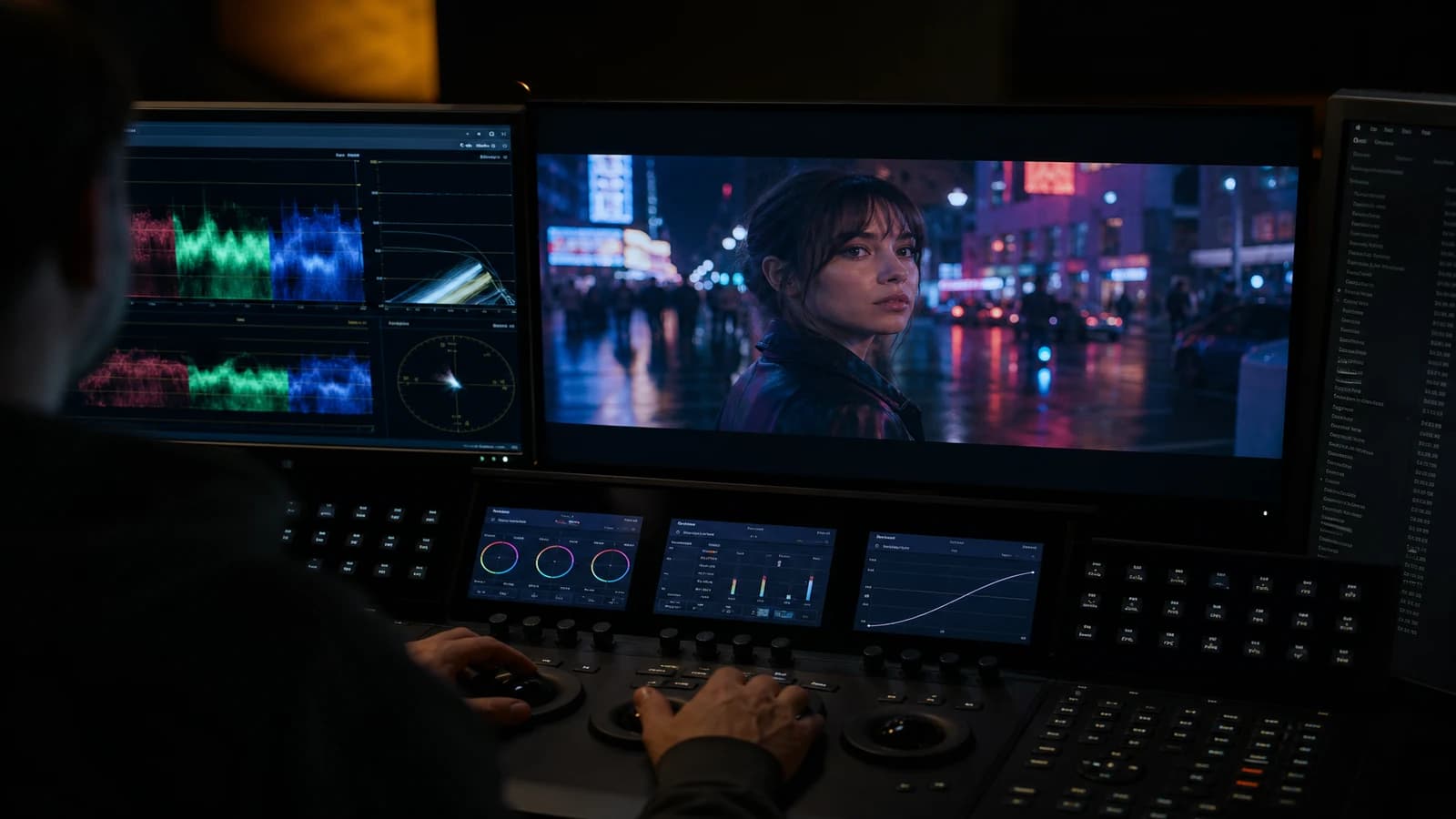
Step 4: a rough cut with no effects
Hard cuts only. Time each section. If the hook exceeds 2.5s in a 15s, trim it. If body A has a gap over 1s with no information, add a shot or text.
Step 5: on-screen text and CTA
Mobile-readable typeface, strong contrast. CTA readable 1.5s minimum in a 15s. Simple animation: a 6-frame fade, no AI zoom on the logo.
Step 6: loudness mix and derivative exports
-14 LUFS integrated typical for Meta/YouTube ads. Export 16:9 plus 9:16 if the brief calls for it. See optimizing export and codecs for AI video delivery.
Real scenarios
Beauty e-commerce 15s. Hook: a close-up of the product texture at second 0. Body: a light before/after (two 1.5s shots). Hero packshot 2.5s stable. CTA promo code. Six shots total. House music at 120 BPM, cut on the kick.
B2B SaaS 30s. Hook: an office problem (a stylized pro AI shot). VO from s1. Real UI demo composited on an AI background. UI shots 3s each. A slower rhythm than beauty. Credibility over hype.
Food delivery 15s vertical. Hunger hook: a dish shot 0.9s. A burst of 4 shots at 1s of the delivery app. Logo plus promo 2s. Text in the upper-third safe zone.
Retargeting 6s cutdown. One message, a hero shot 2s plus CTA 2s plus logo 2s. No complex transition. Extracting from a poorly paced 30s master does not work: edit it dedicated.
Syncing VO and visual rhythm
In a VO ad, each sentence must have a visual anchor: a shot that changes on the strong verb, not on the "and". Map the VO script onto the timeline with markers. If a sentence lasts 2.8s and your hero shot lasts 1.2s, you have a gap or a rush.
Practical rule: one idea equals one shot minimum. Two ideas in a sentence equal a mid-sentence cut (audio J-cut) or a longer shot.
For ads with no VO (music only), the rhythm follows the downbeats and the section changes of the music (4-bar intro, drop, outro). Import stems if possible to cut without cutting the melody at the wrong place.
Editing patterns that convert (tested structures)
Pattern A "problem solution": 0-2s visual problem, 2-8s fast agitation, 8-12s stable hero product, 12-15s CTA. Works for SaaS and services.
Pattern B "pure desire": 0-1s sensory texture (food, beauty), lifestyle burst 1s/shot, hero product 3s, CTA. Little VO.
Pattern C "social proof": a shocking stat hook, 3 UGC-style shots 1.5s, client logos or stars, CTA. The AI must stay believable UGC: grain, natural light, not perfect cinema.
Test one pattern per campaign, document it on a performance sheet. Do not mix three patterns in a 15s ad.
Cutdowns: 30s to 15s and 6s without breaking the message
Do not cut the first 15 seconds of a poorly paced 30s: you often keep the slow setup and lose the CTA. Start from the beat sheet: identify the hook, the single proof, the CTA. Edit a fresh 15s with the same assets, not a linear trim.
For the 6s retargeting: a hero shot 2s, an offer text 2s, a logo 2s. Zero long VO. Complex AI transitions disappear; mobile readability comes first.
Keep three timelines in the same project: MASTER_30, CUT_15, CUT_06. Same loudness, same safe zones. Export the three on the day if the brief lists them, not "we will see in post".
When the client asks for "a more dynamic version", speed up the body (1-1.5s shots) before touching the hook or the CTA. Cutting the CTA to 0.8s to save time kills the conversion.
On a retargeting campaign, the 6s can outperform the 30s on CPA if the viewer already knows the brand: a single message, a large logo, a readable offer. Measure separately; do not delete the long format on a single number.
Rhythm and platform safe zones
Meta and TikTok: important text and faces in the central third, not under the UI overlays (like, caption, native CTA). In a fast edit, check frame 0 and the CTA frame on a phone mockup.
YouTube in-stream 15s skippable: an even more aggressive hook (1.5s). The skip button arrives fast; your message must be heard or seen before.
Beats-per-BPM table (indicative)
| Music BPM | Beat interval | Fast cuts possible / 15s | Use |
|---|---|---|---|
| 90 | ~0.67s | 8-12 if strict sync | Composed corporate |
| 120 | 0.5s | 12-18 | Lifestyle, food |
| 140+ | ~0.43s | 15-22 | Hype, sport, fashion |
Do not cut mechanically on every beat if the message needs a stable hero shot. Advertising rhythm alternates burst and hold.
Iterating the rhythm without regenerating everything
Version 1: edit on temporary music. Version 2: final music, realign the cuts by +/-3 frames. Version 3: adjust only the hook and CTA if organic metrics are weak. The expensive AI shots stay; you tweak the tempo. It is the same logic as preparing client feedback versioning: isolate the variables.
Common mistakes and fixes
Too many shots, blurry message. Fix: remove half, keep hook plus hero plus CTA.
Hook at 4s. Fix: ruthless cut, info from frame 1.
Same duration on all shots. Fix: a long-short-short-long pattern.
Music after the edit. Fix: music first, cuts aligned.
VO that narrates what we see. Fix: VO equals angle or benefit, image equals proof.
No breath before the CTA. Fix: 0.3s of silence or a stable shot before the logo.
References: Meta video ad specs, YouTube ad formats, Google ABCD framework.
Foire aux questions
Réponses rapides aux questions les plus fréquentes sur cet article.
How many shots for a 15-second AI ad?
Aim for six to ten useful shots, no more. Each shot must carry information: emotion, product, context, proof. Beyond twelve cuts in 15s, the message dilutes and the AI artifacts pile up. A stable hero product shot of 2.5 seconds is often worth four generic shots of 0.7 seconds. Count the CTA and the logo as full shots with sufficient duration.
Where do I place the hook in a 30-second ad?
In the first three seconds: a strong visual, a clear problem or an iconic product. In 30s you have more room to develop, not to drag the hook. Many AI ads fail by keeping a 2s company logo at the open. The logo goes at the end. Test a 1.5s hook version on ads: compare 3s retention. The data often rules in favor of immediate impact.
Should I align to the music or to the VO?
Both, with a hierarchy by format. VO-driven (SaaS, explainer): the VO dictates, the ducked music follows. Music-driven (beauty, lifestyle): the beats dictate the cuts, minimal or absent VO. In AI, the music masks average cuts. Never let music and VO fight on the consonants: volume automation on the music.
What minimum duration for the on-screen CTA?
At least 1.5 seconds in a 15s, 2 seconds in a 30s, with text readable on mobile without pinch. Include logo plus offer plus action if possible. A 0.5s flash CTA is invisible in a scrolled feed. The viewer does not pause your ad. If you lack time, cut a mid-body shot, not the CTA.
How do I slow down without being boring?
Lengthen the high-information shots (product, emotional face, detail) rather than the set shots. Add a mid-roll breath: a 2.5-3s shot after a burst. Vary the long-short rhythm instead of uniformizing everything at 2s. Boredom equals repetition with no progression, not absolute duration. A 30s ad with a clear structure can hold 3s shots.
Is the TikTok rhythm the same as Meta?
More aggressive on average on TikTok: shorter hooks, native text from the start, sometimes face cam or UGC even if the B-roll is AI. The Meta feed sometimes accepts a slightly more composed rhythm depending on the age target. Export two timelines if the budget allows: same assets, different cuts. Measure separately: see the post-publishing performance article.
Should I generate shorter shots for fast ads?
Generate slightly longer and cut short rather than native 0.5s clips impossible to stabilize in AI. Exception: very simple shots (texture, 3D logo, abstract). For faces and hands, 2-4s of source give you a clean cutting margin. The rhythm is made in the edit, not by hoping for a frame-perfect generation.
How do I know if the rhythm is good before launching the ads?
Internal test: show it to three people with no context, sound ON, phone in hand. Ask them to reformulate the message in one sentence after one viewing. If nobody recites the same message, the rhythm or the script is floating. Check organic retention if you post organically first. Then scale ads on the winning version, not on your favorite.
Related articles
 Tutoriels
The Complete Guide to AI-Assisted Video Editing
A field guide to edit AI-assisted videos without losing the narration, with a pro method from the organization to the final render.
 Tutoriels
Loudness Mastering for AI Ads on Social Media
Target LUFS, dynamics and music for masters that pass TikTok, Reels and YouTube without crushing the voice.
 Tutoriels
Creating Realistic Rain and Snow Scenes With AI
A layer-by-layer approach to make weather, materials and motion more believable without overloading the prompt.