Multilingual Voiceover Localization: AI Workflow and Lip-Sync
Adapted scripts, voices, rhythm and QA for FR / EN / ES versions without losing the intention of the edit.
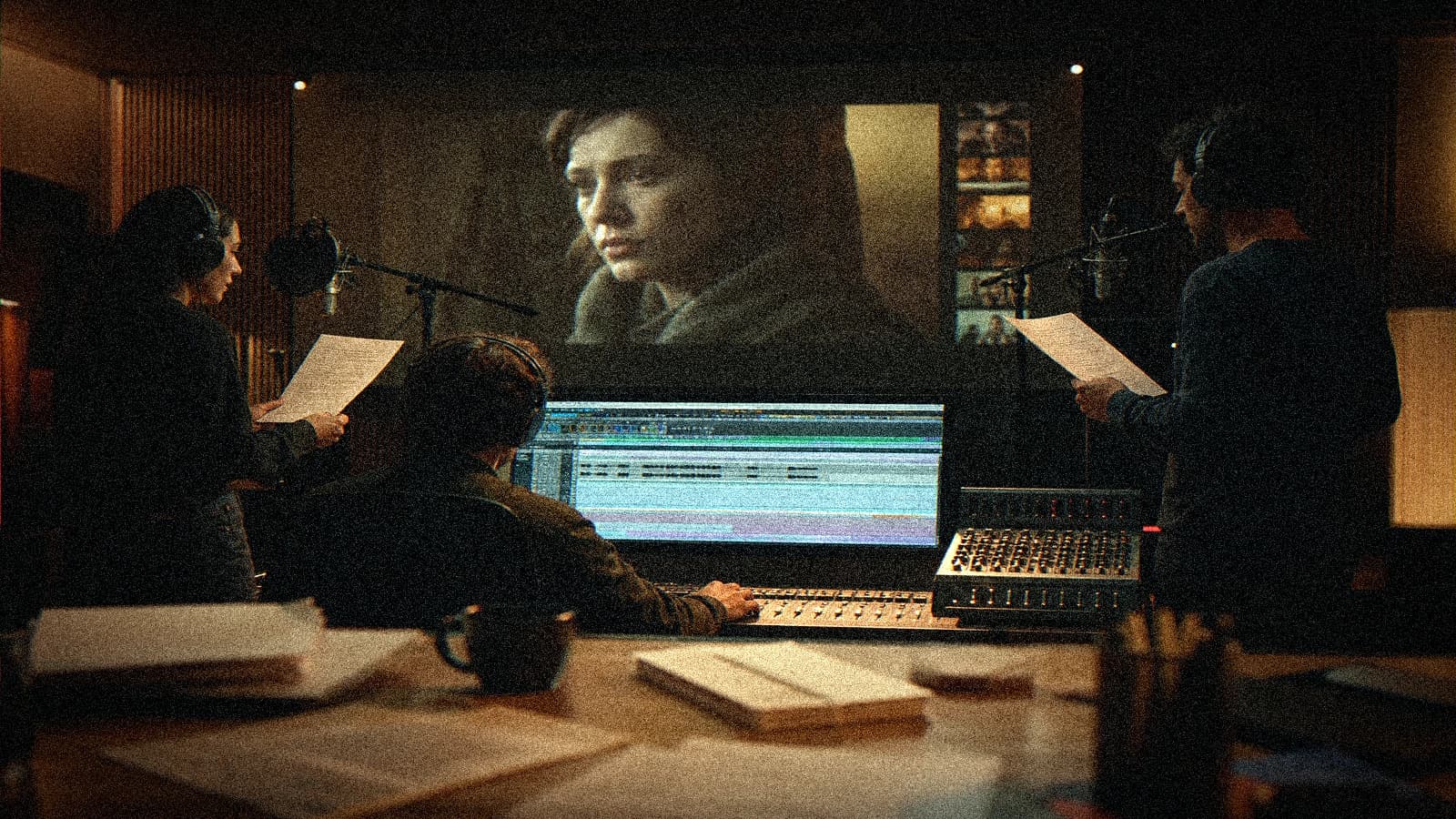
French version validated. The client wants English and Spanish for tomorrow. You paste a word-for-word translation into ElevenLabs. The sentences overrun the edit. The breaths fall in the middle of the cuts. Multilingual voiceover localization is not a translation: it is a rewriting for the mouth and the tempo.
This guide sets an AI + human workflow to deliver FR / EN / ES without losing the intention of the edit: adapted scripts, voices, rhythm, native QA, and lip-sync only when the image requires it.
Transcreation vs translation
The literal translation lengthens or shortens the sentences. The edit, for its part, is locked in seconds. You must adapt the meaning in a close duration. A 12-second FR script can become 11 s in EN and 13 s in ES: you must rewrite, not translate blindly.
Keep an "intention" column per line: emotion, key info, call-to-action. Each language must fill the same intention, not the same syllable.
💡 Frank's Cut: record the French VO after the image edit is validated, then adapt the other languages on the FR waveform as a metronome, not the opposite.
Multilingual workflow table
| Step | FR | EN | ES |
|---|---|---|---|
| Script | reference | transcreation | transcreation |
| Target duration | master | ±5% | ±8% |
| AI voice | profile A | native profile B | native profile C |
| QA | internal | native EN | native ES |
| Lip-sync | if face speaks | same rushes | same rushes |
Pipeline in six steps
1. Image edit master locked
No language version before the validated image timeline. Otherwise you recut three times.
2. Oral FR script
Short sentences, oral contractions, marked pauses. Read aloud.
3. EN and ES adaptation by speakers or reviewers
Brief: max duration, brand tone, forbidden words. Not Google Translate alone on a premium spot.
4. Voice generation (ElevenLabs or equivalent)
Same placement of the silences. Export separate stems. See ElevenLabs tutorial realistic voices for the timbre basics.
5. Timeline alignment
Paste each VO on the same scene start timecode. Adjust the end of the sentences with micro fades, not by stretching the video except for an owned debt.
6. Native QA + delivery
Checklist: product name pronunciation, tone, speed 150 to 165 words/min, no "robot voice" on the plosive consonants.
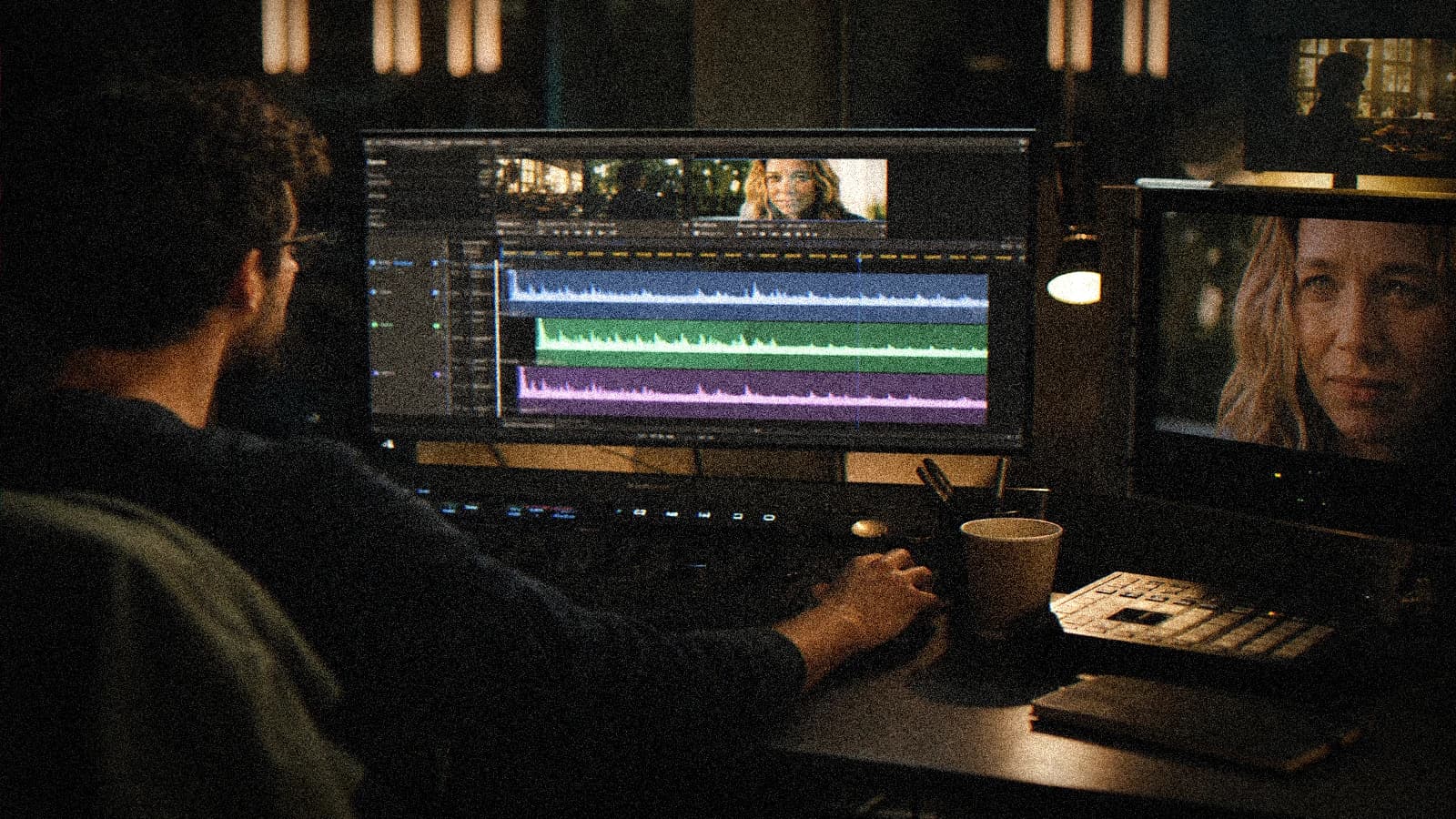
Lip-sync: only if necessary
If the shot clearly shows the mouth speaking, prepare the image for the lip-sync after the final VO. Otherwise, favor OTS, wide shots, voiceover. Cross-reference artistic dubbing and lip-sync preparation. To decide between a dubbed track with no lip sync and a video translation that carries one, the HeyGen vs ElevenLabs comparison breaks down what each platform bills per minute.
Scenarios
International campaign: 3 masters of 30 s, same color grade. B2B: sober tone, EN priority. Tourism: warm ES, place names verified.
Troubleshooting
Sentence too long: rewrite, do not speed up to 1.3x. Edit desync: re-align the VO, do not stretch the AI video. Wrong accent: change the voice profile, not more video prompt.
- complete Seedance 2 workflow
- two-character dialogue scene with no broken continuity
- transform an AI image into a fluid video
- structure an AI video like a real film
Foire aux questions
Réponses rapides aux questions les plus fréquentes sur cet article.
How many languages maximum in one session?
Three well-managed are worth more than five botched. Add languages in waves with the same rushes.
Does the AI voice replace an actor?
Exploration and short volumes yes. Sensitive premium spot: hybrid actor + AI or 100% actor depending on the brand.
Should you reshoot in AI per language?
No if the image is neutral or VO off. Yes lip-sync if the mouth is visible and the dialogue synchronous.
How to handle the legal claims?
Legal review per language, not auto-translation of the disclaimers.
Different duration between languages?
Acceptable ±10% if the edit allows it (cutaways, B-roll). Otherwise rewrite.
Is ElevenLabs enough for Spanish?
Test several profiles, get it validated by a native. The local ear detects the generic accent.
Where to archive the scripts?
Folder 03_scripts/ with FR_master, EN_v2, ES_v2 and validation dates.
How to bill the client?
Line per language (adaptation + voice + QA), not "translation included".
Pro localization is editing in time as much as words. You lock the image, you adapt the voices, you get it validated by local ears. AI speeds up the production, it does not replace the intention.
Field practice: client brief on one page
When you work on multilingual voiceover AI in real conditions, the chaos comes from the deadlines, not the tutorials. This section is what I put in the deliverable folder so the team lands on its feet a week later with no me.
Before each batch, reread the brief in five lines. A "quick" prompt change with no rereading the brief creates magnificent but unusable shots in the edit. The editor will thank you if each file carries a logical name and an A/B/C note.
For the validation, impose two screens: bright phone + neutral monitor. Many defects on multilingual voiceover localization: AI workflow and lip-sync only appear on one of the two. If it holds on both, you can move on. Otherwise, a single lever changes, not five.
In a client meeting, show a ten-second excerpt with sound, not a gallery of stills. The movement and the audio sell the credibility. The fixed images lie about the final quality of AI videos.
Document the owned debts (grain, micro drift, text composited in post). Transparency avoids the "redo everything" when the creative director sees the master on a big screen.
💡 Frank's Cut: if you do not feel like explaining a technical choice to the client, that choice is probably a debt to own in black and white, not to hide.
Always cross-reference with why my AI videos look fake when you doubt the global realism. Often the problem is not the subject of the article, but a missing pilot or sound upstream.
Typical session (45 min): brief 10 min, generation 20 min, QA 10 min, post 10 min, mobile export 5 min. If you do not have an A shot in one hour, pivot the brief, not the caffeine.
Final checklist: message readable with no sound (if subtitles), message audible with sound (if VO), consistency with the brand guidelines, platform export tested privately, files named and archived.
Related articles
 Tutoriels
Artistic Dubbing: Preparing the Image Before AI Lip-Sync
Takes, phonemes, safe shots and tools for a dubbing that fits the lips with no puppet effect.
 Tutoriels
Managing the Voice-Over for AI Documentary Narration
A voice-over pipeline from script to mix to keep clarity, emotion and credibility on a documentary format.
 Tutoriels
Dubbing and Voice-Over: Cloning and Directing a Voice for Your Film
A complete method of dubbing and voice-over with AI to clone, direct and mix a credible voice, with no robotic render or audio artifacts.