How to Make an AI Scene More Credible
Light consistency, props that have a function, human scale, and micro-imperfections: the real is read in the useful details.
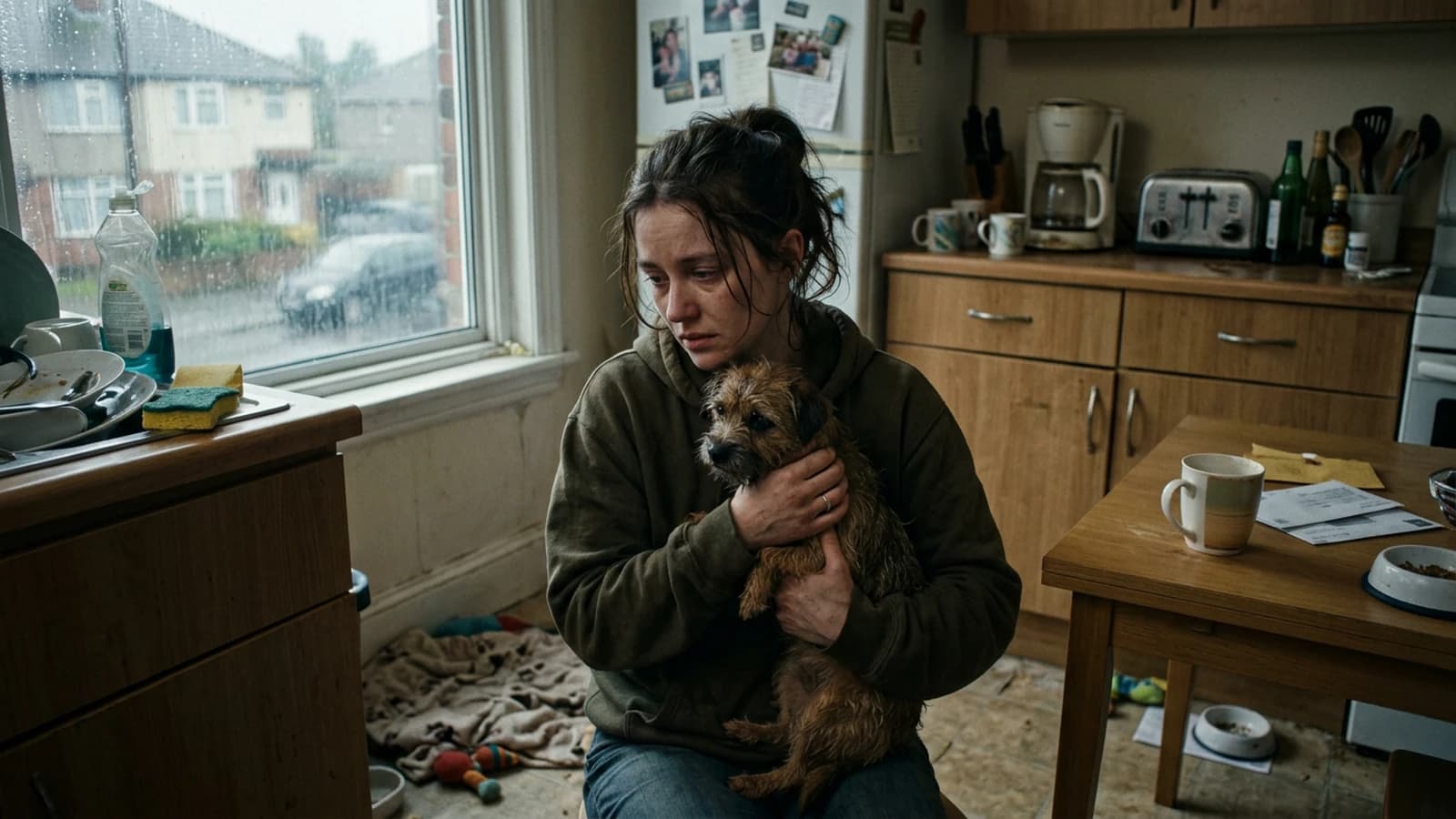
A credible scene is not a cluttered scene. It is a scene where each object seems to have a reason to exist, where the light falls in a readable direction, where the human scale holds, and where one or two organized imperfections avoid the brand-new showroom.
For the multi-shot structure: how to build a cinematic scene shot by shot. For the durable universe: how to create a coherent visual universe with AI.
Lever 1: one physical law per shot
Even if you stylize, keep a dominant source. The viewer does not believe the set, they believe the light.
See how to fix bad lighting in AI.
Lever 2: props with a function
A cup with a stain, a cable that goes somewhere, a closed magazine with a visible spine: details that occupy the space without stealing the subject.
Lever 3: scale
A character whose feet float relative to the floor breaks everything.
Fix: mention the ground contact, the cast shadow short or long depending on the source.
Lever 4: a controlled imperfection
Light dust, a badly fallen wrinkle, an imperfect reflection: signs of an inhabited world.
Careful: too many random imperfections become noise again.
Table: AI cliché, fix
| Cliché | Fix |
|---|---|
| brand new | localized wear |
| perfect symmetry | break a repetition |
| candy colors | reduced palette |
| empty sky | clouds with volume |
Credibility matrix in four columns
Before regenerating, note on paper or in a spreadsheet: subject, dominant light, plausible action, material proof. If one box stays empty, the viewer fills it with "fake". The material proof column is the most neglected: cable on the floor, footprint, dust on a ledge, label on a box, partial reflection in a dirty window. These are not decorative details, they are anchors that say "a human could have lived here".
| Column | Question | Example of useful answer |
|---|---|---|
| Subject | who carries the attention | delivery woman, child, broken object |
| Light | which source wins | lateral neon + wall bounce |
| Action | credible minimal gesture | puts down bag, turns the handle |
| Proof | trace of the world | mud print, partial tag |
Three scenarios with a pivot (45-minute workshop)
Scenario A, building hallway at night. First pass: symmetric neon, floor too clean, "showroom" walls. Pivot: add a cold source at the top of the frame (emergency neon), a puddle on the floor that cuts the symmetry, a dented mailbox in the blurred foreground. Regenerate only the background while keeping the subject fixed if your tool allows it, otherwise restart from a shorter prompt.
Scenario B, kitchen daytime. First pass: soft light everywhere, no cast shadow on the worktop. Pivot: impose a marked lateral window, a short hard shadow under the chin, a cup with the handle turned toward the camera to give a readable geometry. Check that the fridge reflects the same temperature as the window.
Scenario C, corporate open space. First pass: "catalog" open space with no traces of use. Pivot: add cables under the desk, a jacket on a chair back, a peeling post-it, a screen with a consistent window reflection. Reduce the global saturation by five percent before regenerating: often the "fake" comes from too-inflated mids.
Trench warfare: ten mistakes that kill credibility
- Three suns. Fix by ranking a key, a weak fill, an optional rim.
- Floating objects. Fix with ground contact + cast shadow.
- Unreadable text on a fictional screen. Fix by blurring the screen or removing the text.
- Too-perfect parallel perspectives. Fix by breaking a vanishing line with a prop.
- Skin with no story. Fix with micro texture and slight redness variation.
- Hands in complex action. Fix off-frame or with a trivial action.
- Mirror with no logic. Fix with a camera angle or by removing the mirror.
- Props of inconsistent size. Fix with a hand or standard chair reference.
- Cliché gradient sky. Fix with clouds with volume and a slightly hazy horizon.
- HDR overdose. Fix by lowering the local micro-contrast.
Session log (copy-paste template)
Date:
Tool / model:
Scene goal (one sentence):
Light hypothesis:
What worked:
What betrayed:
Next test (one variable):
Complementary FAQ
Do you need a "story" even for a still?
Yes, a minimal one: waiting, obstacle, micro reaction. A still with no tension reads like a stock ad.
Is credibility the same in fantasy?
The physical laws can change, but you need stable internal laws: magic with a cost, architecture with wear, culture with traces.
How many props maximum?
Three readable objects in the foreground, the rest suggested. Beyond that, the frame becomes an inventory.
Does grain help credibility?
Often yes in post, especially if the scene is too clean: see the site's cinema grain guide.
Should I frame tighter?
Sometimes: a tighter frame forces a gaze decision and hides background errors.
Stolen photo references?
No: generic inspiration, not a copy of an iconic photo.
The client does not see the difference?
Present an A/B version with one criterion sentence: "which one looks like an inhabited place".
And video?
Same light law between shots, same logical wear. Chain with the site's video realism article.
Where to place AI in the brief?
As a variation assistant, not as an author of truth. Document what is frozen by the human.
When to stop?
When three cold people say "I believe the place" with no technical comment.
Reading at three distances (workstation, desk, mobile)
A scene can seem credible on a monitor and collapse on a phone because the local contrast is too aggressive or because the micro-textures disappear in compression. Do three reading passes: first at "workstation" distance where you judge the global composition, then at desk distance where you read the hands and the reflections, finally as a mobile thumbnail where you must see only one dominant idea. If the dominant idea disappears in the thumbnail, your hierarchy was not a hierarchy, it was a stack.
Multi-shot continuity without turning the camera
Even in a series of stills, think continuity: skin temperature, shadow direction, camera height, grain density. If image two changes the time of day for no reason, the brain screams amateur editing. Note on your sheet "logical time" and "logical season". You can slightly shift the time for the rhythm, but then you announce it as a dramatic choice, not as an accident.
Advanced table: clues of "inhabited place" vs "brand-new set"
| Inhabited place clue | Brand-new set clue |
|---|---|
| dust on the window ledge | surfaces with no grain |
| cables with a natural curve | perfectly parallel cables |
| partial and dirty reflections | complete mirror reflections |
| objects with localized wear | symmetric objects |
| partially erased text | clean typographic posters |
Team validation chain (even solo)
Even alone, simulate three roles: director (intention), DP (light), editor (readability). Write three short sentences, one per role, after each series. If two roles contradict the third, you know what to fix first. This mini round table avoids optimizing the texture of a wall when the problem is the gaze axis.
Useful links on the same ground
For the depth that structures the space before the props, see why my AI render lacks depth. For the framing that imposes a decision, see how to fix a bad visual composition. For the catalog render to avoid, see how to avoid the "generated image" effect.
Express workshop, twenty minutes
Minute 0 to 5: write the sentence "if I had to show only one detail to sell the place, it would be". Minute 5 to 12: regenerate changing only the light. Minute 12 to 18: regenerate changing only the use props. Minute 18 to 20: choose A or B with the "inhabited place" criterion. You finish with a named decision, not ten floating images.
When credibility is not the priority
Some campaigns want owned surrealism. In that case, the rule changes: you announce the contract with the viewer from the first shot. As long as the contract is clear, the "fake" becomes a signature. The trap is the involuntary fake, the one that pretends to be documentary without being it.
Frequent case: interior "too design"
AI luxury interiors love perfect lines. Add a trace of humidity near a joint, a stack of books not aligned, a slightly rotated chair. These are measured micro disorders. The brain reads disorder as life, not as error, as long as it stays local.
Frequent case: exterior with no population
Empty street plus neon equals recognizable AI clip. Add a blurred passerby, a locked bike, a puddle, a partially torn ad. Keep the population in the blurred background to avoid the hands. The street breathes without stealing the subject.
Operational synthesis
Credible equals visible decisions plus material proofs plus law consistency. The model executes, you decide. When you hesitate between two versions, ask "which one tells a situation" rather than "which one is more beautiful". The situation beats the beauty in perceived credibility.
Final checklist before export
- The light has a direction you can trace with your finger on the screen.
- At least one object shows a wear trace consistent with the character.
- The floor and the subject share a plausible cast shadow.
- In a thumbnail, a single idea still dominates.
- No zone shows a "too perfect" detail that draws the eye in isolation.
- You can explain in one sentence why the camera is at this height.
- The reflections do not contradict the announced sources.
- The hands are either absent or in a trivial action.
- The palette holds on five dominant colors maximum.
- You named your file with the version and the date.
Field deep dive: How to make an AI scene more credible
This chapter extends the angle "Light consistency, props that have a function, human scale, and micro-imperfections: the real is read in the useful details." for the real subject behind comment-rendre-scene-ia-plus-credible. The goal is not to stack adjectives, but to install a short QA loop you can reuse on every deliverable: capture, note, compare, decide, archive. Most creators waste time because they mix three variables in one session, then blame the model. When you separate light, composition, texture, intention, you get back an honest diagnosis and measurable progress.
"One variable" protocol (30 minutes)
Minute 0 to 5: write the sentence "what the viewer must believe with no caption". Minute 5 to 12: list three possible visual proofs (cast shadow, prop in use, consistent reflection). Minute 12 to 22: generate two images that differ by only one of those proofs. Minute 22 to 28: test on a mobile thumbnail and full screen. Minute 28 to 30: choose A or B and name the winning criterion in the project file. This protocol avoids the drift where each regen changes everything except the initial problem.
Scenarios A, B, C with pivots
Scenario A. Render too clean, too showroom. Pivot: add a localized trace of use and a more marked side light, without touching the subject if the geometry is good. Scenario B. Cluttered image with no hierarchy. Pivot: remove two objects from the prompt, recenter the contrast on the subject, or tighten the framing. Scenario C. Spectacular but cold image. Pivot: lower the global saturation slightly, add a fine, even grain in post, then regenerate only if the geometry or the perspective still lies.
Trench warfare: ten frequent traps
- Fixing everything at once. You no longer know what saved the image.
- Comparing only full screen. Mobile often exposes fake luxury.
- Ignoring rhythm upstream of the video. Even upstream, think about cutting and the breathing of shots.
- Copy-pasting prompts with no local brief. The words must fit your real subject.
- Aggressive global sharpening. Garish edges read as "digital".
- Too many contradictory adjectives. One dominant intention is enough at the start.
- No archive text file. You lose the seed, the version, and the reason for the choice.
- Validating while tired. Fatigue makes "beautiful" out of what is only familiar.
- Stacking models on the same day. You compare different chains, not settings.
- Delivering with no A/B. The client or your future self will not know what was acceptable.
Quick decision table
| If you observe | Priority action |
|---|---|
| inconsistent light | simplify the sources |
| subject drowned | framing or contrast hierarchy |
| plastic texture | fine grain or less HDR |
| impossible hands | off-frame or trivial action |
| catalog set | micro wear and a functional prop |
| empty sky | cloud volume or motivated haze |
| impossible reflections | reduce the contradictory sources |
Client or commissioner workshop
Even for yourself, write a mini brief: audience, channel, expected reading time, prohibitions (violence, brands, real faces). For a team, add a "proof of compliance" column: capture of the service's terms, model version, export date. That column saves you when a broadcaster asks where the image comes from.
Extended FAQ
Should I deliver two versions? Yes, A and B with one named sentence of difference, otherwise the discussion stays vague. Should I document the prompts? Yes, even partially: it is your internal quality insurance. What if the model changes? Set a test brief and compare before continuing a series. Does manual retouching cheat? No if you own the chain and the contractual limits. How much time per serious image? Often longer in validation than in raw generation, plan for it in the quote. Do I need a technical target? Yes: final resolution, color space, headroom on highlights if there is social compression. And intellectual property? Check the terms of service and the rights on the references included in the prompt.
Multi-screen control station
Minimum chain: main monitor, standard laptop, smartphone. If you only have two screens, send a test export to your phone through a clean channel (not a messenger that recompresses endlessly). Note the perceived difference on skin, edges, and micro-contrasts. Many "AI" images become so mostly after a second involuntary compression.
Useful internal links
Cross-reference with why your prompt does not work, and how to fix it, the prompt mistakes that make an AI image look artificial, and how to control visual style in an AI generation. If your subject touches video, also link to how to structure an AI video like a real film and to how to improve motion realism in AI video.
End-of-session log (template)
Date:
Slug / file:
Hypothesis of the day:
Variable tested:
Result A vs B:
Decision:
Next test:
Operational summary
For comment-rendre-scene-ia-plus-credible, keep three lines in your notebook: intention in one sentence, lighting law in one sentence, material proof in one sentence. If one is missing, you are not ready to regenerate en masse: you are ready to diagnose. Long-term quality comes from that discipline, not from the latest model released on Tuesday.
Foire aux questions
Réponses rapides aux questions les plus fréquentes sur cet article.
Photo or illustration?
Same consistency logic, different vocabulary.
Characters?
Depth?
Composition?
AI effect?
Related articles
 Tutoriels
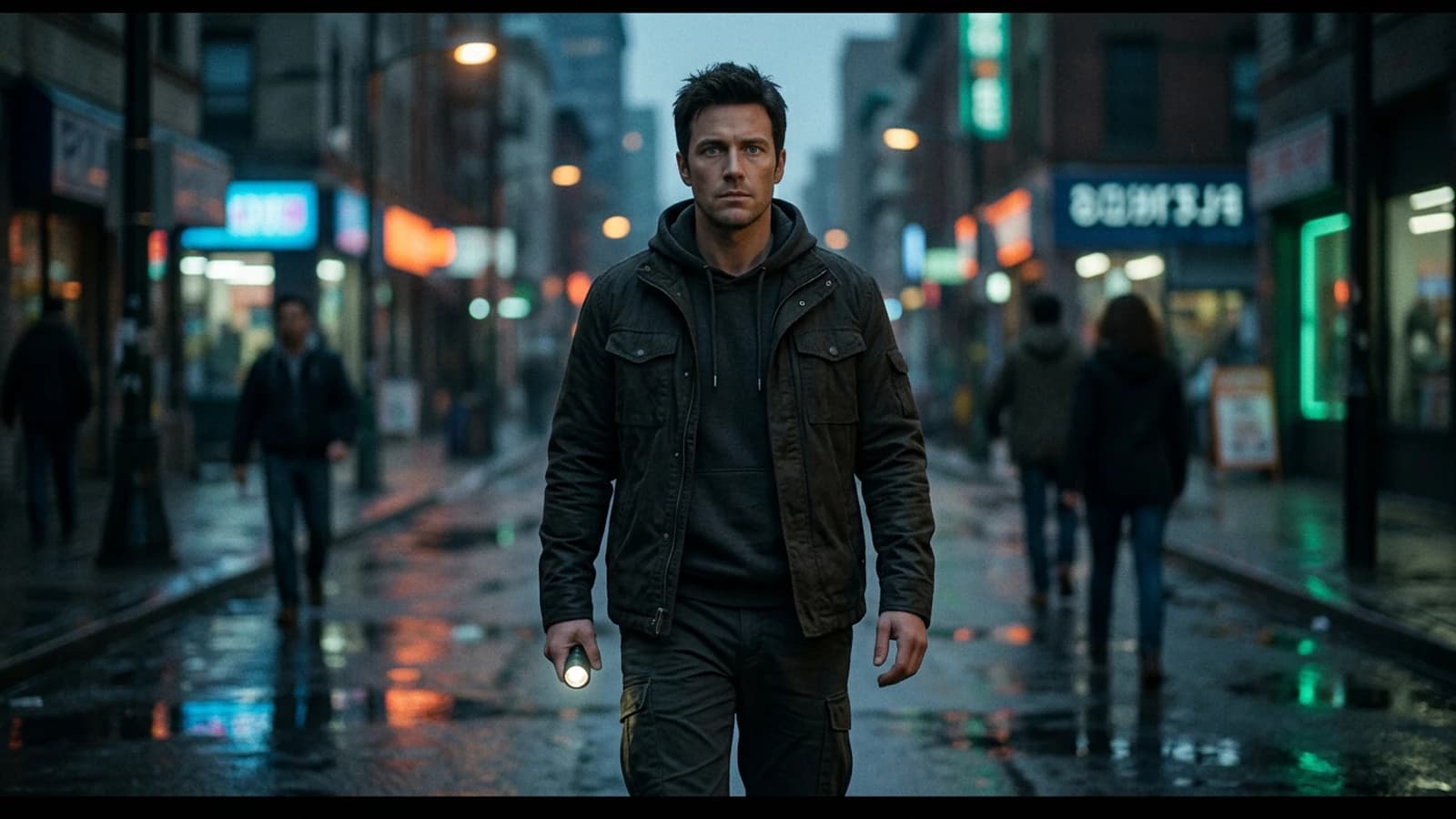
Why Do My AI Videos Look Fake, and How to Make Them Realistic
The signals that betray AI, from plastic to geometry, and concrete corrections for a credible render.
 Tutoriels
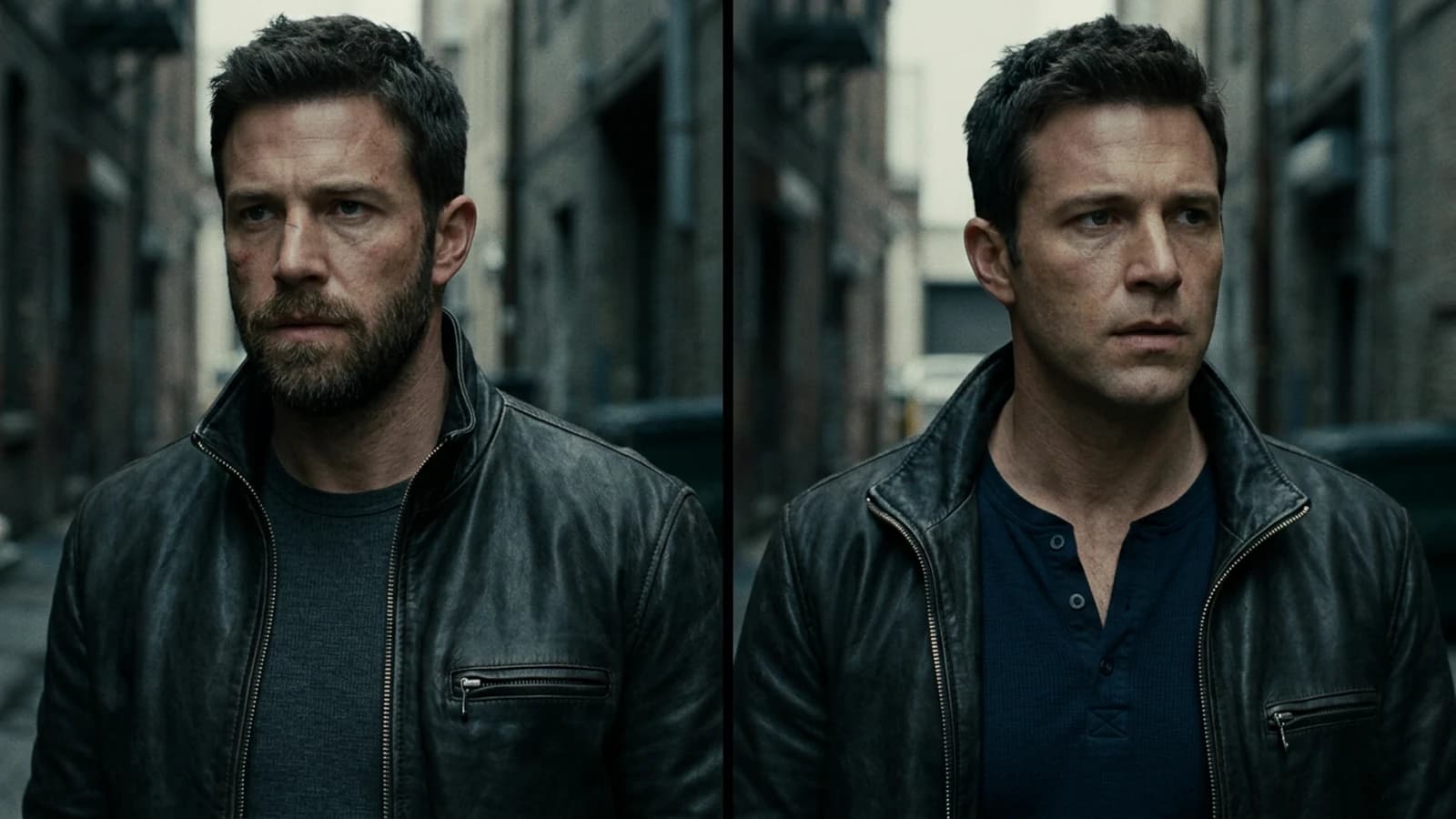
Why Do My Characters Change in Every Scene
Unstable prompt, uncontrolled seed, synonym costume, and absence of a sheet: continuity is a protocol, not a model option.
 Tutoriels
Google Veo 3: a Director's Brief for a Credible Long Take
How to frame light, action and duration for Veo 3 like on a real set, with rejection criteria and client deliverables.