Mistral AI, Grok AI, Meta AI: Which Ones Are Useful to Creators?
A field comparison of Mistral AI, Grok AI and Meta AI for creators: ideas, scripts, research, production, real limits and a pro workflow.

You want to write faster, find original angles, prepare a script, organize a production, and you wonder which conversational AI really serves your creative flow. You read everywhere mistral ai, grok ai, meta ai, and the opinions go in all directions. One would be "smarter", another "faster", another "more integrated". In reality, for a creator, the right question is not "who is the most powerful?". The right question is "which one helps me deliver better, without drowning me in generic text?".
I am going to answer you in field mode. I used these three tools for angle research, video script writing, article structuring, production plans, and fast creative iterations. Verdict: the three can be useful, but not for the same tasks nor at the same moment of the pipeline.
If you are a beginner, remember this immediately: a conversational AI is not your style. It is a copilot. Your style, your direction, your editorial eye stay the decisive layer.
What creators really expect from a conversational AI
A creator does not expect an essay. They expect clarity, speed, and help that respects an artistic intention. The real need is to move from the fuzzy idea to the concrete deliverable with less mental friction.
First need: generate leads without falling into the cliché. Second need: organize the ideas into an actionable structure. Third need: iterate quickly on a tone, an angle, a script, without losing the soul of the project.
Fourth need: minimal reliability of the info when preparing public content. Fifth need: ability to adapt a message to different formats without repeating mechanically.
This grid is crucial, because it protects you from a bad reflex: choosing the "most popular" AI instead of choosing the one that serves your work step.
Mistral AI: excellent for rigor, structure and efficiency
mistral ai is often very useful when you want to cleanly structure ideas, clarify an argumentative logic, or move from a draft to a usable plan quickly.
Where Mistral becomes strong is on the sobriety. You can get compact, action-oriented answers, less inflated with marketing verbiage. For a creator who wants to produce fast with no noise, it is a real advantage.
Its limit in pure creative use can appear if you expect a very "strong personality" spontaneity with no framing. It answers better when you supply a precise brief and tone constraints.
I often recommend it for the "organize and finalize" phase: article plans, structured scripts, production checklists, cleaner reformulations.
Grok AI: useful for brainstorming and bold angles
grok ai can be interesting when you want to provoke ideas, test more aggressive angles, or get out of a too-standard formulation.
Its interest for creators is the ability to propose leads that shake up the habits a bit. In the exploration phase, it can be very useful to avoid bland content.
The risk is obvious: if you take everything as is, you can drift toward a too-ironic, too-abrupt tone, or one less aligned with your editorial brand. You must therefore use Grok as a raw-material generator, not as a final pen.
In practice, I use it for creative divergence, then I switch to a more structuring tool to converge toward a publishable version.
Meta AI: handy for ecosystem integration and usage speed
meta ai becomes useful especially when you already work in a Meta environment and you want to save time on short tasks: post angles, copy variants, fast syntheses.
Its main asset is the access fluidity and the ease of iteration on micro-content. For a social media creator, this speed can make the difference daily.
Its limit appears when you want a strong editorial depth, a long reasoning, or a complex multi-deliverable strategy. You may then need to complement with a more robust tool in structuring.
Meta AI is therefore relevant as an execution accelerator, less as the single brain of long-format creative direction.
Direct comparison for creators
| Criterion | Mistral AI | Grok AI | Meta AI |
|---|---|---|---|
| Logical structure | very good | good | correct |
| Creative brainstorming | good | very good | good |
| Controllable tone | very good with brief | variable | good on short formats |
| Daily social use | good | good | very good |
| Long-format finalization | very good | average | average |
| Main risk | too sober with no direction | too provocative with no filter | too short for complex projects |
This table gives you a clear marker: Mistral to frame, Grok to shake, Meta AI to execute fast in a social flow.
The Trench Workflow: how I combine the three intelligently
Step 1: Grok AI to open unexpected angles.
Step 2: Mistral AI to structure and eliminate the noise.
Step 3: Meta AI to decline into short distribution formats.
Step 4: human re-reading to lock your style.
Step 5: final production with a quality checklist.
Scenario A, long article. Grok proposes 10 angles, Mistral turns it into a solid plan, then I write with a clean editorial voice.
Scenario B, short video script. Mistral structures, Grok challenges the opening, Meta AI produces hook variants for social media.
Scenario C, multi-format campaign. Mistral for the message doctrine, Meta AI for platform-first variations, final human control.
This workflow works because each tool plays a clear role.
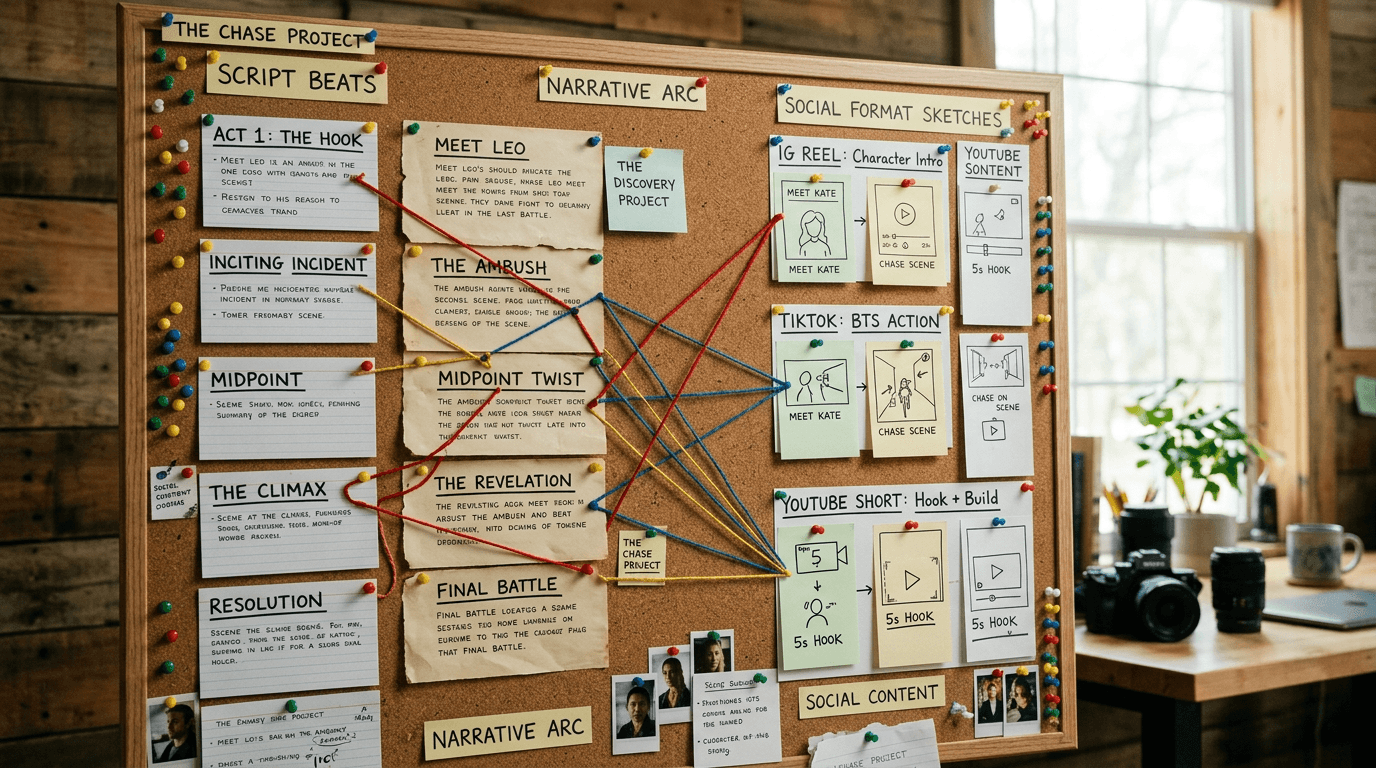
💡 Frank's Cut: one AI per function, not one AI for everything. As soon as you assign clear roles, the quality rises and the time drops.
Troubleshooting - What Beginners Break
Mistake 1: asking for a final text with no supplying a tone and target brief.
Mistake 2: publishing a raw output with no human re-reading.
Mistake 3: confusing originality and gratuitous provocation.
Mistake 4: using the same prompt for all the formats.
Mistake 5: forgetting the factual verification on sensitive info.
Mistake 6: changing tool every day with no stable method.
Core Concepts for a really pro use
First concept: the AI provides options, not a vision.
Second concept: your editorial style must be written in black and white.
Third concept: the quality depends on the brief more than on the model.
Fourth concept: the convergence is more important than the divergence.
Fifth concept: the human verification stays mandatory before publication.
To reinforce this production logic, read our complete creative workflow image video voice, our AI design tools guide, our best AI video tools comparison, and our method to write an efficient AI video script.
Business use cases according to your creative profile
Solo newsletter creator: Mistral AI for structure + personal-tone re-reading.
Social media manager: Meta AI for pace + Mistral for consolidation.
Creative studio: Grok for divergence + Mistral for editorial strategy.
B2B content team: Mistral as the backbone, Meta AI for distribution variants.
The essential is to never delegate the strategic intention to the tool.
Detailed real cases: what works when you produce every week
Case 1, educational YouTube creator. Goal: publish two scripts per week without sacrificing clarity. Efficient workflow: Mistral AI for the educational skeleton, Grok AI to challenge the intro angle, then manual finalization of the tone. Result: better regularity with no loss of personality.
Case 2, multi-client social media agency. Goal: produce a lot without copy-pasting the same formulas. Workflow: Meta AI for fast variations per platform, Mistral to harmonize the client messages, final human validation. The main gain is not the raw speed, it is the quality stability despite the volume.
Case 3, premium newsletter author. Goal: strong differentiation. Here, Grok AI serves to provoke unexpected angles, but the final text goes through a strict convergence step. This divergence/convergence separation avoids the "original but barely useful noise" effect.
Case 4, internal corporate training team. Goal: consistent educational documents. Mistral AI structures, Meta AI adapts into short modules, then subject-expert re-reading. The process reduces the writing load while keeping the necessary precision.
Case 5, creator who sells AI services. Goal: produce authority content. The winning combination is often Mistral for the backbone + manually written field proofs. The AI speeds up, but the credibility comes from concrete experience feedback.
Advanced mistakes that weigh down the quality at the scaling moment
Advanced mistake 1: industrializing too early. You automate before validating your editorial tone. Result: high volume, low value.
Advanced mistake 2: measuring only the speed. If you do not measure perceived quality and useful engagement, you optimize the wrong KPI.
Advanced mistake 3: mixing "generic internet" prompts with no business adaptation. The results become interchangeable.
Advanced mistake 4: forgetting the factual review. The more you speed up, the more the risk of contextual error increases.
Advanced mistake 5: not documenting the winning prompts. With no internal library, you restart the same exploration every week.
Advanced mistake 6: delegating the brand voice to the model. The model proposes, your editorial line decides.
30-day progression plan for beginner creators
Week 1: definition of your editorial frame. List audience, promise, tone, prohibitions, format.
Week 2: structured assisted production. Mistral for plans, Grok for alternative angles, Meta AI for short variations.
Week 3: editorial QA. Set up a checklist: clarity, usefulness, accuracy, differentiation, brand consistency.
Week 4: pipeline optimization. Keep what works, remove the useless steps, create a library of validated prompts and structures.
This plan is deliberately simple. It works because it turns the AI into a method, not a distraction.
Ultra-fast decision framework before each project
Question 1: am I looking for divergence or convergence?
Question 2: do I need an angle or a structure?
Question 3: will the content be long-format or short social?
Question 4: what level of factual verification is necessary?
Question 5: what exact tone must be respected?
Fast answer:
- Creative divergence: Grok AI first.
- Structure and logic: Mistral AI first.
- Fast social variation: Meta AI first.
- Publication finalization: human always.
This framework reduces the hesitations and improves the production consistency.
Final checklist before publishing AI-assisted content
First check the clarity of the promise on first reading. If the value is not obvious in ten seconds, rework the opening.
Then check the real information density. Too much "clean" but hollow content is a classic signal of badly directed assisted text.
Check the tone consistency with your brand. A good AI answer can be objectively correct but totally out of editorial personality.
Check the precision of the examples. The generic examples give an impression of superficiality, even when the substance is accurate.
Finally check the mobile readability: too-long paragraphs, flat sequences, absence of breathing. Good content must stay fluid in a fast scroll.
This checklist is an immediate quality multiplier. It forces you to switch back from "generated text" to "directed content". It is exactly what separates an AI-assisted creator from a creator replaced by AI.
If you apply this discipline on ten publications in a row, you will see a clear change: fewer discarded drafts, more voice consistency, and a better perception of expertise by your audience. It is not a marketing promise. It is a cumulative effect of method. The conversational tools evolve fast, but the real difference plays in your protocol of decision, verification and editorial finishing.
Internal links to deepen your creative pipeline
If you want to turn these conversational assistants into a real production system, complement with our guide to the real AI creative workflow in 2026, our HeyGen and ElevenLabs comparison for voices and avatars, and our method to write an ultra-realistic cinematic prompt.
For an angle more oriented toward acquisition and clients, also reread our method to find AI video clients.
External authority sources
FAQ (PAA Optimization)
-
Is Mistral AI really useful for content creators?
Yes, Mistral AI is particularly useful for creators who want to quickly turn fuzzy ideas into clear and usable structures. Its strength is the ability to produce clean plans, useful syntheses, and operational formulations with no too much verbiage. For long writing, it is a good structuring ally. On the other hand, you must always feed it with a precise editorial intention. With no clear brief, you will get correct but impersonal content. With a tone and goal frame, Mistral becomes a very serious accelerator for creative production. -
Is Grok AI too "provocative" for professional use?
Grok AI can seem more biting depending on the contexts, but it is not a problem if you use it in the right place of the pipeline. In the brainstorming phase, this energy can help break the flat ideas and find sharper angles. The risk appears when you publish its raw outputs with no editorial filtering. The good practice consists of using Grok for creative divergence, then going back through a structured convergence phase and a strict human re-reading. In this frame, it can bring real professional value. -
Is Meta AI enough to manage a complete content strategy?
Meta AI can be very handy for fast tasks and social media variations, especially if you already work in the Meta ecosystem. However, for a complete editorial strategy with narrative depth, a differentiating angle and long-format consistency, it is often preferable to combine it with a more structuring tool. Meta AI excels in fast execution, less in long strategic construction. In pro use, it works better as a component of a pipeline rather than as the single solution of creative direction. -
How to choose between mistral ai, grok ai and meta ai when starting?
Start with your main need. If you want structure and clarity, start with Mistral AI. If you want to open original angles, use Grok AI in the ideation phase. If you have to quickly produce social variations, Meta AI can be very efficient. The most important is to not use them at random. Assign a precise role to each tool, then keep a human-validation protocol. This simple approach will save you from the confusion and immediately improve the quality of your deliverables. -
Can you combine these three AIs in a single creative workflow?
Yes, and it is often the best approach. You can use Grok to provoke ideas, Mistral to structure the matter, and Meta AI to quickly adapt to the distribution formats. This multi-tool pipeline works very well provided you have a clear editorial charter and a final human-re-reading step. With no frame, the combination becomes messy. With a frame, it becomes a real lever of creative productivity. The challenge is not to multiply the tools, but to intelligently orchestrate their respective strengths. -
What are the main risks when a creator relies too much on conversational AI?
The first risk is the loss of editorial voice. The second is the publication of generic content that all looks alike. The third is the factual error when the verification is not done seriously. The fourth is the dependence on a single model with no backup protocol. To avoid these traps, you must keep an explicit brand line, define quality criteria, and impose a systematic human validation. The conversational AI is a pace multiplier, not a substitute for editorial responsibility. -
How to level up quickly with mistral ai to create better?
Work in short and measurable cycles. For a week, use Mistral only to structure your ideas. The following week, add a layer of tonal reformulation. Then integrate a validation grid before publication: clarity, usefulness, differentiation, accuracy. Finally, archive the prompts that give the best results and adapt them to your formats. This routine creates a tangible progression. You do not become better because the model changes. You become better because your usage system becomes more precise.
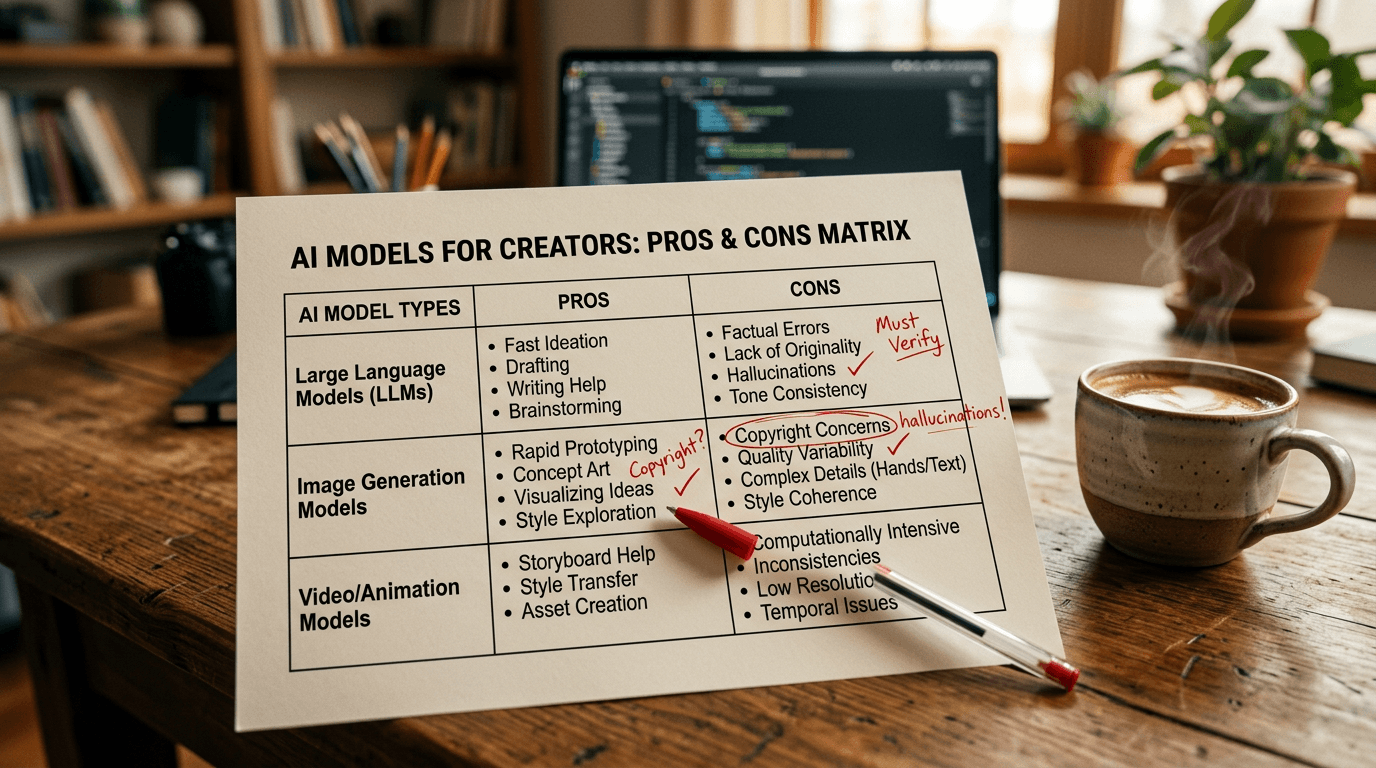
The right model never replaces an editorial line. It amplifies it, if it exists, durably and truly.
Related articles
 Comparatifs
Ideogram, Recraft or Leonardo AI: Which Tool to Choose?
A field comparison between Ideogram AI, Recraft and Leonardo AI to choose the best tool according to your goal: text in the image, brand consistency, speed and real quality.
 Tutoriels
ComfyUI: The Video Guide for Beginner Creators
A step-by-step guide to get started on ComfyUI, build stable workflows and avoid the most frequent technical mistakes.
 Comparatifs
The 10 Artificial Intelligence Sites Every Creator Must Know (2026)
A map of the platforms really useful in production: image, video, sound, writing, research and workflow, with selection criteria so you do not dilute your budget.